

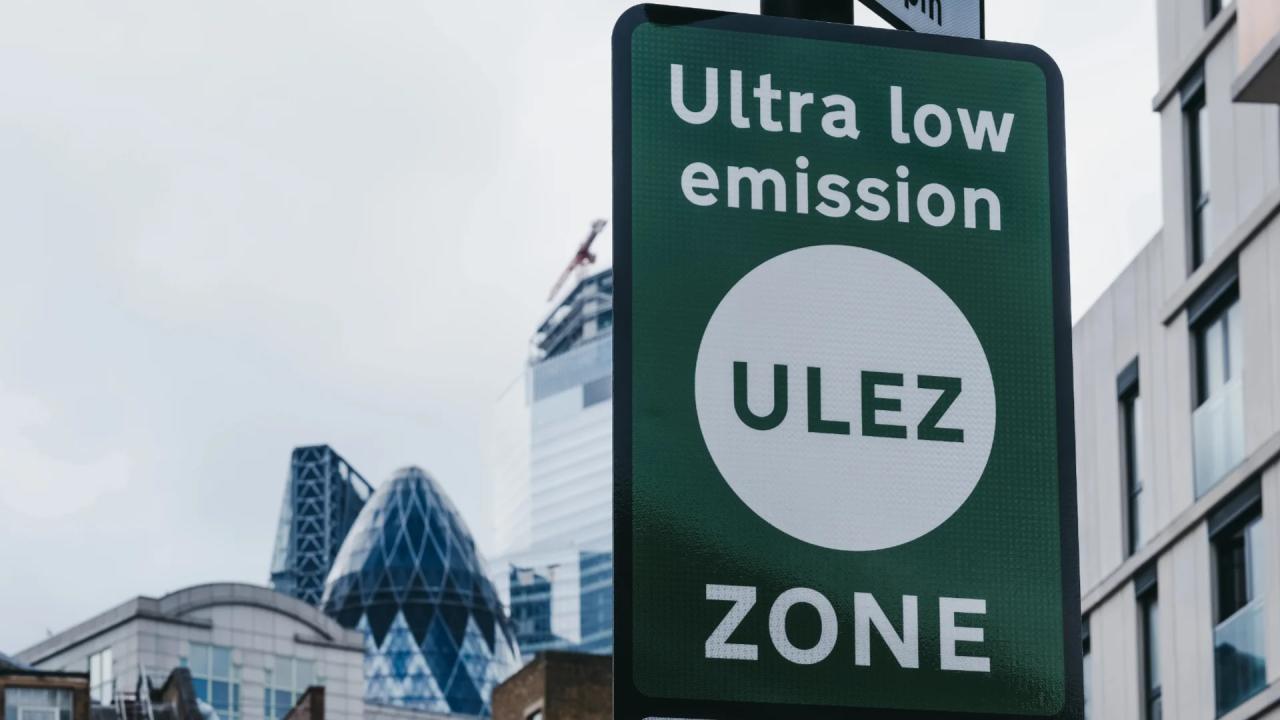
Checking whether your vehicle is compliant with a Clean Air Zone takes two minutes using the national GOV.UK Clean Air Zone checker. What takes more thought is planning around the indirect costs. These include the routes some drivers add to avoid zones, the tradespeople who factor a daily charge into their quotes, and the van operator who realises mid-winter that part of the fleet may need replacing sooner than planned.
This article covers the compliance check, the direct charges, and the less obvious costs that most CAZ coverage skips.
Key takeaways
- Compliance is based on your vehicle’s Euro emission standard, not its registration year. A 2015 diesel may be compliant or non-compliant depending on the specific model. The only reliable check is the national vehicle checker at gov.uk/clean-air-zones.
- The UK CAZ framework has classes A through D, with different vehicle types affected at each level. Not every city operates the same class. Bath charges vans but not private cars; Birmingham charges both. Check the specific city before assuming what applies.
- London’s ULEZ and Scotland’s LEZs are separate schemes under different legislation with different criteria. The national CAZ checker does not cover those areas.
- For small businesses and tradespeople, the compliance obligation is not just the daily charge, it is the vehicle replacement timeline. Building compliance into the next purchase decision costs less than deferring it.
- The indirect costs of CAZs, longer routes, fuel used on diversions, job pricing by non-compliant contractors, are diffuse but real. A one-time compliance check across the fleet is more useful than tracking daily charge exposure reactively.
What a Clean Air Zone is and what it is not
A Clean Air Zone is a designated area in a city where vehicles that do not meet a specified emission standard are charged a daily fee to enter. The zones are administered by individual local authorities under a national framework. The charge applies per vehicle per calendar day, regardless of how many times the vehicle enters the zone that day.
The framework has four classes. Class A covers buses and taxis. Class B adds HGVs. Class C adds LGVs and vans. Class D adds private cars. A city with a Class C zone charges vans but not private cars. A city with Class D charges both. This distinction matters: a private driver in Bath faces different obligations from a plumber driving a van in Birmingham.
This article covers the national CAZ framework in England. London's ULEZ is a separate scheme operated by TfL under different rules; check compliance at tfl.gov.uk. Scotland's Low Emission Zones are also separate. Check your vehicle at lowemissionzones.scot/vehicle-registration-checker.
Why vehicle age is not the same as compliance status
CAZ compliance is determined by a vehicle’s Euro emission standard, the pollution standard it was built to meet. Most CAZs require diesel cars to meet Euro 6 and petrol cars to meet Euro 4 to avoid a charge.
The complication: the transition from Euro 5 to Euro 6 for new diesel cars occurred around September 2015, but manufacturers introduced Euro 6 engines into some models earlier, and some older models remained in production on Euro 5 engines until the end of 2015. A diesel registered in October 2015 may be Euro 5 or Euro 6 depending on the specific make and model.
Registration year is therefore a rough proxy, not a reliable guide. Do not assume a post-2015 diesel is compliant. Do not assume a pre-2015 diesel is not. The national vehicle checker uses DVLA vehicle data and is the most reliable official way to check a specific registration.
What non-compliance costs: direct charges
Charges are set by individual local authorities and vary by city, vehicle type, and zone class. They change periodically. Rather than list figures that will date, here are two examples that illustrate the range.
Birmingham operates a Class D zone, so it charges both private cars and commercial vehicles that do not meet the required emission standard. As of 2 April 2026, the daily charge for a non-compliant private car is £8; for a van or LGV, £8.
Bath operates a Class C zone, so vans and larger commercial vehicles are charged, but private cars are not. The daily charge for a non-compliant van in Bath as of 2 April 2026 is £9.
Charges are set by local authorities and subject to change. Figures above are correct as of 2 April 2026. Verify current charges at the relevant city's official CAZ page before travel.
For all other cities, check the national GOV.UK Clean Air Zone service. It is the official source for active English CAZs, and charges, exemptions and local rules can change.
The indirect costs most coverage misses
For private drivers
The most common indirect cost is route diversion. Drivers who add distance to avoid a zone incur fuel costs and time costs that may equal or exceed the daily charge for an occasional visit. A driver who adds several miles to skirt a city centre is spending fuel and time. Whether that is cheaper depends on the extra distance, the current price per litre at the stations they use, and how they value their time.
The practical point: for a private driver who visits a CAZ city infrequently, paying the charge is often less costly than the diversion, particularly if the detour adds congested miles. Before defaulting to avoidance, run the numbers. You can check current petrol prices near your route to get the fuel cost input, then compare it against the daily charge.
For businesses and tradespeople
A non-compliant tradesperson working in a CAZ city faces a choice: absorb the daily charge, pass it to the customer, or add route time and fuel by staying outside the zone. In practice, some will pass the charge through. It appears on quotes either as a line item or rolled into a higher rate. Customers in CAZ cities therefore often face higher prices from non-compliant contractors, whether or not the reason is made explicit.
The compounding effect matters. A sole trader running a non-compliant van into a CAZ city three days per week accumulates charges quickly. Set that annual figure against the cost differential of replacing the vehicle with a compliant model, factoring in timing, finance, and the remaining useful life of the current van, and the compliance case often arrives earlier than expected.
A second indirect cost: the reactive decision. Many small businesses defer the compliance assessment until there is an immediate reason to do it. The cost of deferral is non-compliant vehicles accumulating daily charges, owners absorbing or passing on costs reactively, and vehicle replacement happening under time pressure rather than at an optimal point in the lifecycle.
How to check your vehicle: the compliance walkthrough
For all drivers: start with the national checker, then confirm payment rules and any local exemptions on the relevant city’s official CAZ page:
Go to gov.uk/clean-air-zones
Select “Check if your vehicle is affected”
Enter your vehicle registration number
The tool shows your vehicle’s emission standard and whether it meets the requirement for each active zone in England
A “compliant” result means no daily charge applies for that zone. A “non-compliant” result means a charge applies if you enter. The result does not mean the vehicle is unsafe or otherwise restricted, it is only about emissions compliance for that specific zone.
For London: the ULEZ has its own checker at tfl.gov.uk. The national CAZ checker does not cover London.
For Scotland: use the official LEZ vehicle checker at lowemissionzones.scot/vehicle-registration-checker. The national CAZ checker does not cover Scottish LEZs.
For businesses with multiple vehicles: businesses with 2 or more UK-registered vehicles can set up an account through GOV.UK to check and pay charges for multiple vehicles, upload number plates from a CSV, and add team members to manage the account.
What businesses and tradespeople need to plan for
The core compliance question for businesses is different from the private driver’s. It is not just “is my vehicle compliant today?” but “when will my current vehicle become non-compliant relative to the cities I work in, and what is the replacement timeline?”
For a sole trader or small business running one or two vans, the practical steps:
Check each vehicle using the national checker now, before a job requires entering a CAZ city
For each non-compliant vehicle, estimate how often it enters CAZ cities and what the annual charge exposure is at current rates
Compare that exposure to the cost differential of replacing the vehicle with a compliant model, factoring in finance, timing and remaining useful life
Build compliance into the next vehicle purchase as a specification requirement, not an afterthought
Most active CAZs that charge commercial vehicles apply the standard of Euro 6 for diesel vans and Euro 4 for petrol vans. Registration year is only a guide, especially for vans and vehicle categories close to the cut-off dates, so check the national tool rather than relying on age alone.
Retrofit and exemptions: honest scope
Retrofit: the national CAZ framework recognises vehicles retrofitted with technology accredited under the Clean Vehicle Retrofit Accreditation Scheme. In practice, approved retrofit solutions are aimed mainly at diesel commercial vehicles such as vans, minibuses, buses, coaches and HGVs. Do not assume retrofit is a realistic route for a private car; for most private cars, replacement is the more practical compliance route.
Exemptions: In some cities, individual CAZ schemes may include exemptions for specific groups such as Blue Badge holders, residents within the zone, certain vehicle types, or transitional periods. Exemptions vary by city and change over time. Check the specific city’s official CAZ page for current exemption status rather than relying on general guidance.
Misconceptions worth correcting
“If my car passed its MOT, it must be CAZ-compliant”
MOT testing checks that emissions meet the legal limit for the vehicle’s age and type. It does not assess whether the vehicle meets the Clean Air Zone Euro standard threshold. A car can pass its MOT while being non-compliant with a CAZ because it was built before the Euro standard that zone requires. The two assessments are separate and use different criteria.
“The daily charge applies every time I enter the zone”
In the English CAZ framework, the charge period runs from midnight to midnight. For the cities cited here, a vehicle can enter or leave multiple times on the same chargeable day after one payment. A tradesperson making multiple visits to different customers within the same zone on the same day still incurs only one daily charge.
“Compliance means Euro 6 for all vehicles”
The Euro standard requirement varies by vehicle type and sometimes by zone. For vans, minibuses, taxis, private hire vehicles and cars, the minimum standard is generally Euro 6 for diesel and Euro 4 for petrol, though local authorities may set a different standard for taxis and private hire vehicles. The national checker accounts for vehicle type automatically when the registration is entered, so it is the most reliable source for a specific vehicle.
“Avoiding the zone is always cheaper than paying the charge”
For infrequent visitors, the detour fuel cost and time cost often equals or exceeds the daily charge, particularly in congested conditions where the diversion adds significant miles and minutes. Run the calculation: distance of diversion, divided by your vehicle’s mpg, multiplied by current fuel cost per litre, plus the value of the additional time. In many cases, paying the charge is the lower-cost option.
Keep reading
UK Petrol Price History: The 2020–2026 Price Shocks, Record Highs, and What They Mean for Drivers Today
UK petrol prices went through more in six years than in the previous two decades. The collapse of 2020, the record-breaking surge of 2022, and the slow retreat that followed left p...
What Is a Good Petrol Price in the UK?
A good petrol price is one that is competitive for your area and station type, not just low against a national headline average. A price that looks expensive in a competitive super...

What Happens When Oil Supply Is Disrupted, and Why Prices Spike Before Any Shortage Reaches You
When an oil supply disruption makes the news, crude prices often move within hours. UK pump prices usually follow within one to three weeks, not because the petrol on UK forecourts...
PetrolSavings Editorial
Editorial Team
Explore fuel savings tools
Use calculators and local price searches to plan smarter journeys.
We check for new prices every 5 minutes. Every price shows when it last changed, so check that before comparing deals.