

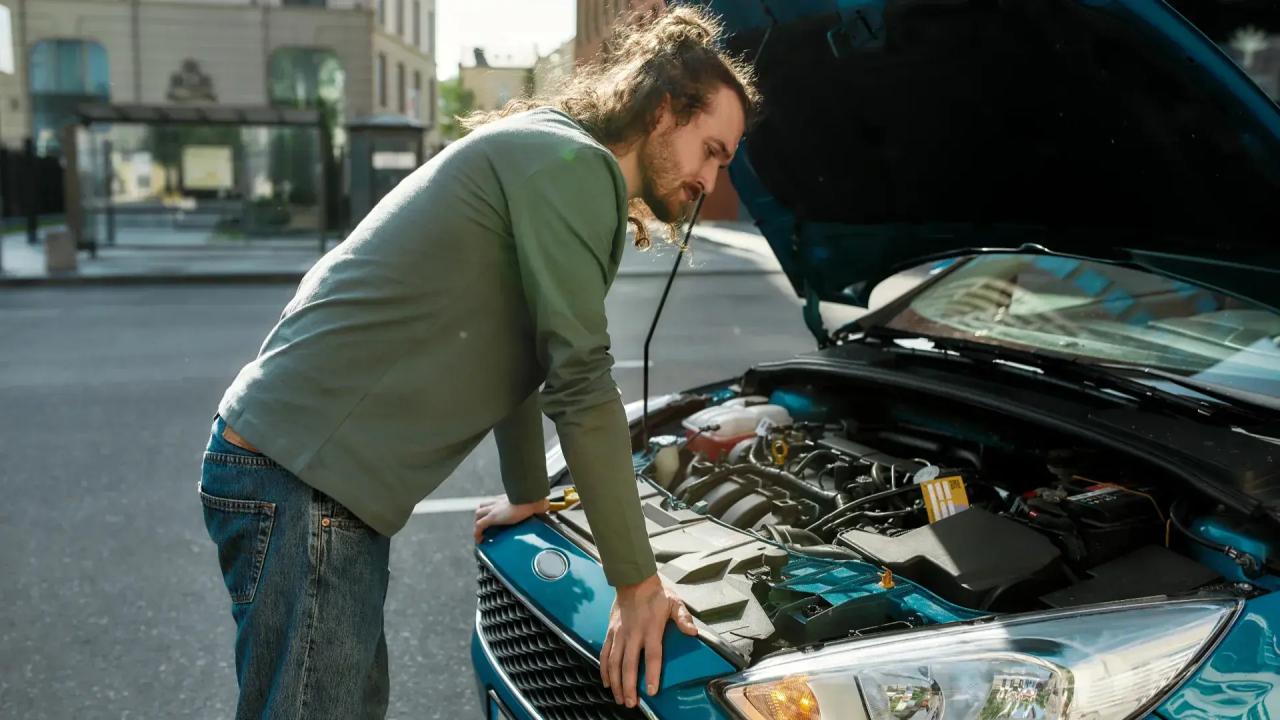
Yes, bad petrol can damage your car. Water contamination, cross-contamination during delivery, debris or particulates from storage tanks, and stale fuel are among the typical causes. But the harder problem for most drivers is not the fuel itself: it is proving the station’s fuel caused the symptoms, rather than a coincidental fault that happened to appear after a fill. This article covers how to tell the difference, what evidence to collect before it disappears, and how the complaint and claims process actually works in the UK.
Key takeaways
- Contaminated petrol does occur at UK forecourts, most often from water ingress, delivery cross-contamination, or tank debris. It is not common relative to total fuel dispensed, but it happens.
- The symptoms of contaminated fuel (rough running, misfiring, loss of power, warning lights) are identical to those caused by several common faults that have nothing to do with fuel quality. Timing relative to the fill and the absence of another likely cause are the two key diagnostic factors.
- A successful claim against a station requires proof: that the fuel was defective, that it caused the damage, and that no other cause was responsible. A receipt and a bad feeling are not sufficient.
- The evidence that matters most: a fuel receipt with pump reference, a contemporaneous note of symptoms and timing, a mechanic’s written report attributing causation to fuel quality, and a fuel sample if one was taken promptly.
- The Consumer Rights Act 2015 provides a legal basis for a claim, but the driver carries the burden of demonstrating the fuel was not of satisfactory quality and that it caused the specific damage.
What “bad petrol” actually means: four causes, not one
Bad petrol is not a single problem. The causes are different, and the severity varies.
Water contamination. The most common cause. Water enters storage tanks through a faulty vent, condensation, or a delivery error. Even small amounts cause misfiring and rough running because water does not combust in the same way as petrol.
Cross-contamination during delivery. If a tanker delivery is contaminated or delivered to the wrong storage tank, a batch of wrong-grade or mixed fuel can be dispensed. Rarer, but more immediately damaging when it happens.
Debris or particulates. Rust, sediment, or tank debris entering the fuel through an ageing or poorly maintained storage tank. More likely at older sites.
Stale or degraded fuel. Petrol degrades over time if stored incorrectly. More relevant at low-turnover sites. Less common at busy forecourts where fuel moves quickly.
What bad petrol is not: an ordinary difference between compliant fuels. Petrol sold at UK forecourts must meet the relevant petrol standard, BS EN 228. Pumps are then labelled E5 or E10 according to ethanol content. That means compliant supermarket petrol has to meet the same legal baseline standard as compliant branded petrol. There is no good evidence that supermarket petrol is inherently more likely to damage engines simply because it is sold by a supermarket.
If the phrase “bad petrol” brought you here because you suspect supermarket fuel is somehow worse, the short answer is: it is not. The myth is addressed in more detail later in this article.
If you put petrol into a diesel car or diesel into a petrol car, that is a misfuelling problem and the immediate response is different. If you chose the wrong petrol grade, that is a separate issue again. And if the car already had a developing fault, filling up may simply be coincidence rather than cause. If the issue was driver error rather than contaminated fuel from the station, see putting the wrong fuel in your car.
How to tell whether contaminated fuel might be the cause
Symptoms that point towards a fuel cause:
Rough running, misfiring, or hesitation beginning soon after leaving the forecourt, often within the first few miles.
Loss of power under acceleration that was not present before filling.
Engine warning light illuminating shortly after filling.
Stalling or difficulty restarting immediately after filling.
Visible smoke or unusual exhaust behaviour shortly after filling.
Symptoms that are less clearly fuel-related:
Rough running that develops hours or days after filling. The time gap introduces many alternative causes.
Symptoms that were intermittent before the fill but worsened after.
A single warning light for a sensor or system not directly connected to fuel delivery.
Timing matters. Contaminated fuel symptoms often appear soon after filling, frequently within the first few miles, and may affect several cars that filled at the same station in the same period. An isolated case where one car develops symptoms two days later is less likely to be fuel-related, though it is not impossible. The longer the gap between the fill and the first symptom, the harder the causal case becomes.
Before concluding the fuel is to blame, the mechanic should rule out: failing spark plugs or ignition coils (symptoms are nearly identical to water-contaminated petrol), clogged or dirty injectors, a faulty mass airflow or oxygen sensor, and any coincidental unrelated fault.
Symptoms overlap significantly between causes. This table provides general guidance. A written diagnostic report from a mechanic who has inspected the fuel system is required before attributing cause.
Symptom | Contaminated fuel | Misfuelling | Existing unrelated fault |
|---|---|---|---|
Rough running within first 2 miles of filling | Consistent | Consistent | Possible |
Loss of power under acceleration | Consistent | Consistent | Possible |
Engine warning light immediately after filling | Consistent | Consistent | Possible |
Misfiring or stalling | Consistent | Consistent | Common |
Symptoms delayed by hours or days | Less consistent | Less consistent | Common |
Several cars at same station affected | Strongly suggests fuel | Unlikely | Unlikely |
Symptoms resolve after drain and flush | Supports fuel cause | Supports fuel cause | Unlikely |
The immediate steps: what to do and what to keep
If symptoms develop while driving: if the car is driveable and it is safe to continue, get to a garage or a safe stopping point rather than stopping on a live road. If a serious warning light illuminates (oil pressure, overheating, catalytic converter temperature), pull over safely as soon as it is safe to do so. Do not return to the forecourt to fill with more fuel if symptoms have started.
Evidence degrades quickly. The most useful thing you can do in the first hour is preserve it.
Evidence checklist: gather these as soon as possible
- Fuel receipt (or card statement showing station, date, and time).
- Pump number (on the receipt or the pump face).
- Mileage at the point of filling.
- Mileage and time when symptoms first appeared.
- Written note of symptoms in chronological order, made at the time, not recalled later.
- Written garage report attributing causation to fuel quality (not just “fuel flush performed”).
- All invoices: diagnostic fee, drain, parts, labour.
If other drivers at the same station are also experiencing problems, their accounts strengthen the case significantly. Some forecourt staff may be aware of a delivery issue. Ask directly, calmly, and note the response.
If practical, photograph the pump you used. Do not try to collect a fuel sample from the tank yourself. A driver-kept sample can sometimes support the timeline, but it is weaker evidence because its source and handling can be challenged. A garage-taken sample during a drain is stronger, and laboratory analysis is stronger again where the repair costs justify it.
The diagnosis and repair path
Tell the garage at the outset that you suspect a fuel quality issue. This prompts them to document their findings in terms relevant to a potential claim.
Ask for a written report that states: what was found in the fuel system, whether the findings are consistent with contaminated fuel, and what repairs are required as a result. A report that says “vehicle presented with rough running, no fault found on usual systems, fuel drained, symptoms resolved” is useful. A report that simply says “fuel flush performed” is not.
A fuel sample taken during a professional drain and analysed by a laboratory provides the strongest technical evidence. Not all garages offer this, and it adds cost, so it is usually most worth considering where the repair costs are significant or the station disputes causation. A sample you kept yourself can still be useful as supporting material, but it does not carry the same evidential weight as a properly taken garage sample with a clearer chain of custody.
Keep every invoice. If the garage attributes the problem to a failing spark plug or sensor unrelated to fuel, accept that conclusion. Pursuing a claim that the evidence does not support wastes your time and damages your credibility if you have a genuine case later.
Your UK consumer rights: what the law says and what it means in practice
Under the Consumer Rights Act 2015, goods sold to consumers must be of satisfactory quality, fit for purpose, and as described. Fuel sold at a forecourt is a good. If you can prove the fuel was contaminated or otherwise defective, and that defect caused the damage to your car, the retailer could be liable for the reasonable losses that follow.
The practical challenge is proof. You need evidence that the fuel was defective, evidence that it caused the specific damage, and evidence that another fault is not the more likely explanation. In practice, that usually means a receipt, a pump reference, a clear timing record, and a written garage report that does more than say “possible”.
The complaint route below is the standard escalation path. Not every case requires every step. Start with the station, keep everything in writing where possible, and escalate only if the response is missing or unsatisfactory.
Step | Who to contact | What to bring | Notes |
|---|---|---|---|
1. Station manager | Forecourt manager, in person or in writing | Receipt, pump reference, symptom timeline, garage invoice | Ask for the complaint route and, if appropriate, the insurer’s details. |
2. Retailer head office | Customer services for the brand or fuel company | Same evidence pack plus a written record of the station response | Ask for a final response if the complaint is rejected or goes nowhere. |
3. Card issuer | Debit or credit card provider | Copy of your complaint, proof of purchase, evidence of the problem | This may help in some cases, but chargeback is not guaranteed and is not a substitute for the main evidence-backed complaint to the retailer. |
4. Citizens Advice consumer service | Full documentation | They can advise on next steps and pass wider concerns to Trading Standards. | |
5. Alternative dispute resolution (ADR) | Relevant ADR body, if the retailer has a scheme or agrees to use one | Full evidence file and any final response or deadlock letter | ADR is only available if there is a scheme or the retailer agrees to participate. |
6. Small Claims Court | HM Courts and Tribunals Service | Full evidence file | In England and Wales, small claims are generally for claims up to £10,000. Scotland and Northern Ireland use different court routes and limits. |
What compensation may cover depends on the evidence. In a strong case, it could include the cost of the contaminated fuel, recovery or towing, the diagnostic fee, and the parts and labour needed to fix damage directly caused by the fuel. It may also include reasonable consequential losses, such as a hire car, if you can evidence them properly. It is less likely to cover costs that would have arisen anyway because of a pre-existing fault.
What the station or its insurer will usually do is investigate the batch as well as your individual complaint. That can include testing fuel from the relevant storage tank, checking delivery records, and reviewing your garage report or sample. Calm, specific, evidence-led communication is usually more effective than accusation.
The “supermarket petrol” myth, and what bad petrol actually is not
Supermarket petrol must meet the same legal baseline fuel standards as branded forecourt petrol. That does not mean every fuel product is identical in additive package or branding, but it does mean compliant supermarket petrol is not inherently substandard. There is no good evidence that it causes engine damage at a higher rate simply because it was bought at a supermarket forecourt.
This distinction matters for claims. “I filled up at a supermarket and the car ran badly” is not evidence that the fuel was defective. The question is whether the specific batch was contaminated or otherwise out of spec, not whether the retailer was a supermarket. High-volume sites also generate more coincidence stories, because more cars fill there and more unrelated faults happen after those fills.
Keep reading
Should You Fill Up at Half a Tank or Wait Until Near Empty?
For most drivers, filling up at or before the quarter-tank mark is the sensible habit. Not because running lower is acutely dangerous, but because it removes a cluster of small dis...
Wrong Fuel in Your Car: What to Do in the Next Five Minutes
Stop. Do not start the engine. If the car has a keyless ignition system, keep the key fob well away and do not switch the ignition on; on some models, activating the car’s…
How to Read a Petrol Station Price Board: the Display Tricks That Make Fuel Look Cheaper Than It Is
A UK forecourt price board takes about five seconds to read correctly, but there are three things most drivers scan past that make that reading wrong more often than it should be.

PetrolSavings Editorial
Editorial Team
Explore fuel savings tools
Use calculators and local price searches to plan smarter journeys.
We check for new prices every 5 minutes. Every price shows when it last changed, so check that before comparing deals.