

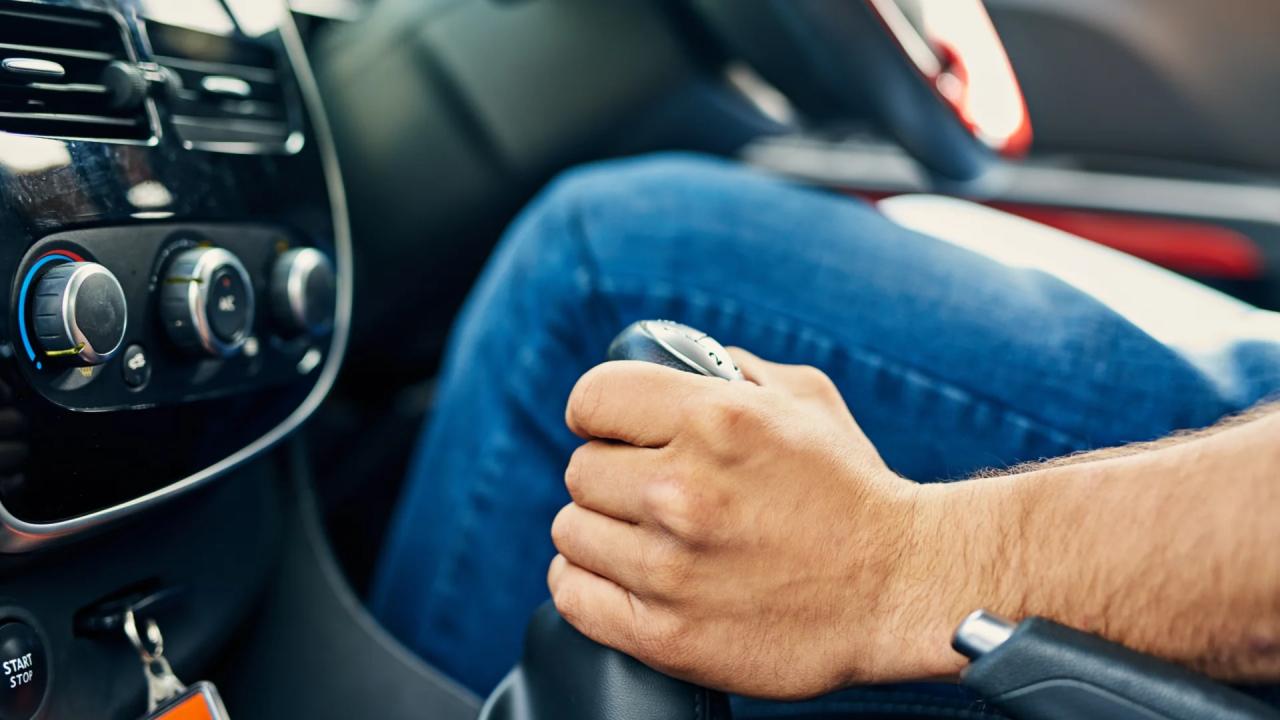
Using a higher gear during steady cruising at the right speed does save fuel. The same gear at the wrong speed, engine struggling, throttle pressed further than it should need to be, uses more. The difference comes down to throttle demand, not the gear number itself.
This article explains when the rule works, when it breaks, and how to tell the difference by feel rather than by memorising rev targets.
Key takeaways
- During steady cruising at adequate speed, a higher gear with light throttle usually means fewer engine revolutions per mile and typically uses less fuel than a lower gear at the same speed.
- The rule breaks when the engine is labouring: running at low revs under heavy throttle demand. In this state the engine works harder per unit of power produced, which can increase fuel consumption compared to a lower gear.
- The key variable is not gear number but the combination of gear, speed, and throttle demand. Light throttle in a high gear is efficient; heavy throttle in a high gear at low speed is not.
- Modern turbocharged petrol engines may not behave like older naturally aspirated units at the low end of the rev range. The “change up early” advice applies differently to them.
- Automatic transmissions manage gear selection based on throttle demand. The practical advice here is mainly for manual gearbox drivers.
Why a higher gear can save fuel
In a petrol or diesel engine, fuel use per mile is not fixed. At a steady speed, a higher gear usually means fewer engine revolutions per mile, which can reduce fuel use if the engine is still running smoothly without strain. This is the basis for the fuel-saving argument behind early upshifts.
During steady motorway cruising, a car in 6th gear at 60mph is doing fewer revolutions per minute than the same car at the same speed in 5th. If the throttle demand in 6th is light and the engine is turning over comfortably, the car uses less fuel per mile. This is the situation where the rule holds cleanly: light throttle, adequate speed for the gear, no requirement for immediate acceleration.
When the rule breaks: what engine labouring actually feels like
Labouring is what happens when the engine is in too high a gear for the current speed and load. You are asking it to produce power it cannot generate efficiently at that rev range. The throttle has to be pressed further to maintain speed. The engine vibrates more than usual. Acceleration feels flat and reluctant. There is a rough, strained character that would not be there in a lower gear at the same speed.
In this state, the engine is not saving fuel. It is working harder than it needs to, and may consume more fuel per mile than it would in the correct gear at appropriate revs.
Practical examples: driving at 25mph on a town road in 5th gear; pulling away from a junction without downshifting first; climbing a hill in top gear while pressing the throttle progressively harder. In all of these, the higher gear is costing more in fuel and engine strain than a lower gear would.
The feel test: if the car feels sluggish, the engine vibrates more than usual, or you are pressing the throttle noticeably more than feels right for the speed, the gear is probably too high. Drop one. If the car instantly feels smoother and more responsive, it was.
Labouring adds unnecessary strain and is best avoided. The main point here is fuel economy and drivability: if the engine feels rough, reluctant, or needs more throttle than seems natural for the speed, the gear is too high.
This table provides general guidance for a typical modern petrol or diesel car with a manual gearbox. Results vary by engine, speed, gradient, and load.
Situation | Higher gear: helpful or harmful? | Why |
|---|---|---|
Steady motorway cruise, light throttle | Helpful | Low revs, light load, engine operating efficiently |
Urban 30mph zone, light traffic, flat road | Usually helpful in 4th; sometimes 5th in a taller-geared car if speed is steady and throttle demand stays light | Keeps revs low without pushing the engine into labouring |
Urban 20mph zone or slow-moving traffic | Harmful if in 5th or 6th | Speed too low for high gear; engine labours |
Pulling away from a junction | Harmful in high gear | Engine needs torque at low speed; requires lower gear |
Climbing a hill at moderate speed | Harmful if throttle is heavy | Drop a gear before pressing the throttle harder |
Joining a motorway (accelerating to 70mph) | Harmful if changed up too early | Engine needs revs for acceleration; change up progressively |
Overtaking on an A-road | Harmful if in top gear | Drop a gear for responsive, efficient acceleration |
Throttle demand is the real variable
The reason gear number alone does not determine fuel economy is that what matters is what the engine is being asked to do at the current gear and speed. Light throttle in a high gear during cruising: engine not working hard, fuel use per mile is low. Heavy throttle in a high gear at low speed: engine working very hard to compensate, fuel use per mile is higher than it would be in a lower gear.
Rather than memorising a gear number or a rev target, use feel. If the car is responding smoothly and the throttle position feels relaxed for the speed, the gear is probably appropriate. If the throttle has to be pressed noticeably harder than feels natural, the gear is probably one too high. This is a more reliable guide than any specific number, because it adjusts automatically for gradient, load, weather, and engine type.
Practical guidance by road type
Urban driving (20–30mph). Third or fourth gear is often appropriate for 30mph in a typical petrol or diesel car. Fifth or sixth is usually too high for stop-start conditions where frequent acceleration is needed. In 20mph zones, second or third depending on speed and traffic flow.
A-road at 40–60mph. Fourth or fifth gear depending on speed and gradient. On a flat, open A-road at 50mph, 5th with light throttle is appropriate for most cars. On the same road with a gradient or an approaching hazard, being in 4th means the response is available without pressing the throttle into labouring territory.
Motorway cruise. Top gear (5th, 6th, or 7th depending on the car) with light throttle is where the higher-gear rule works best. Steady-speed motorway cruising is the driving scenario where the rule applies most cleanly. Once you are already in an appropriate top gear, speed usually matters more to fuel use than chasing one more ratio or holding top gear under heavier throttle. When you need to accelerate (lane change, joining traffic), dropping a gear before pressing the throttle is usually smoother and more responsive, and often more efficient, than pressing it hard in top gear.
Climbing a hill. This is where many drivers incorrectly stay in the highest gear to save fuel. Holding a high gear on a hill requires pressing the throttle further and further. Drop one gear before the throttle demand increases. It is more efficient and smoother.
Approaching a junction. Lift off early and stay in gear as you slow down. On most modern fuel-injected cars this can activate fuel cut-off during deceleration. You do not need to change down through every gear just to save fuel; use the brakes normally, then select the gear you need for the next phase.
Smooth, anticipatory driving (reading the road ahead, maintaining momentum, avoiding unnecessary braking) matters more than any specific gear rule.
Where the advice differs: diesel, turbo petrol, and automatics
Diesel vs petrol. Diesel engines generally produce maximum torque at lower revs than petrol engines and are often more tolerant of lower revs under moderate load. A diesel driver can comfortably change up slightly earlier than a petrol driver in a comparable car. Labouring still applies: even a diesel can be worked inefficiently at very low revs under heavy throttle.
Modern turbocharged petrol engines. Small turbocharged petrol engines often make useful torque at relatively low revs, but they can still feel flat if you ask for too much from them below their most effective range. The practical rule is the same: change up early only while the engine remains smooth, responsive, and comfortable on light throttle.
If the car feels flat below a certain point, or needs noticeably more throttle than seems natural for the speed, staying slightly higher in the rev range before upshifting often produces smoother, more efficient progress.
Automatic transmissions. Modern automatics (DCT, CVT, newer torque-converter boxes) manage their own gear selection based on throttle demand, speed, and mapped shift points. A driver who backs off the throttle to encourage an early upshift is communicating reduced demand to the transmission, which is itself a fuel-saving signal. The direct manual advice (change up at X revs, avoid labouring) is less applicable. For automatic drivers, the relevant advice is smooth, progressive throttle input and avoiding unnecessary heavy accelerations.
Shift indicators. Many modern manual cars display a shift-up prompt. These are designed to encourage fuel-efficient driving and are generally correct for steady driving. They are not context-aware: they may prompt an upshift just before overtaking, on a gradient, or when you need the engine in a responsive range. Use them as a guide, not as a requirement.
Keep reading
What Is a Good Petrol Price in the UK?
A good petrol price is one that is competitive for your area and station type, not just low against a national headline average. A price that looks expensive in a competitive super...
Is Eco Mode Worth Using? What It Actually Changes and When It Helps
Eco mode does save fuel. The changes it makes are real, and in the right conditions they produce a genuine if modest improvement in economy. The catch is that what Eco mode changes...
Do Older Cars Use More Fuel? How to Tell What’s Age, What’s Neglect, and What’s Fixable
Older cars often do use more fuel. But the reason is rarely just age. The most useful distinction is between genuine mechanical wear that accumulates over time, maintenance neglect...
PetrolSavings Editorial
Editorial Team
Explore fuel savings tools
Use calculators and local price searches to plan smarter journeys.
We check for new prices every 5 minutes. Every price shows when it last changed, so check that before comparing deals.