

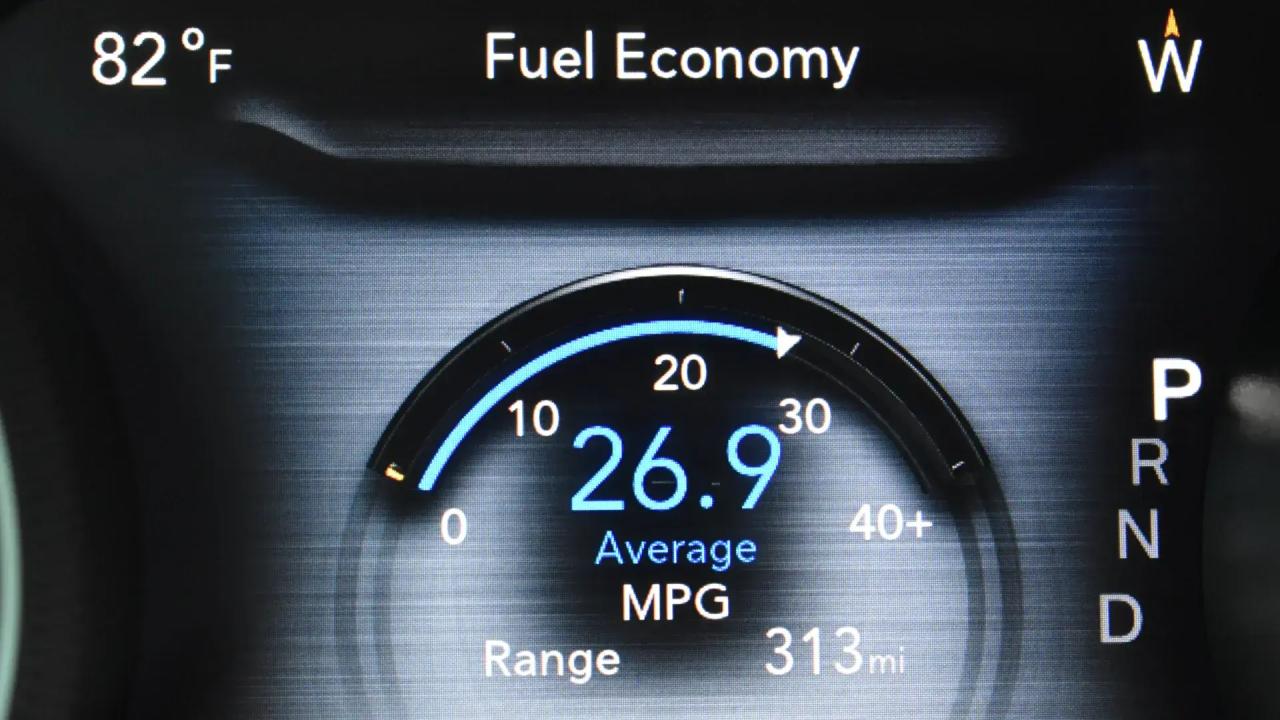
The mpg figure on your dashboard is a calculation, not a direct measurement, and it often flatters. If you want to know what your car is actually achieving, and whether that figure is quietly dropping, the most reliable method takes under a minute per fill and requires nothing more than your phone's notes app and the trip odometer.
Key takeaways
- The dashboard mpg display calculates fuel economy differently from a receipts-and-odometer method, and typically reads higher. A manual log is the only way to know what the car is actually achieving.
- The method needs three numbers per fill: trip odometer reading, litres purchased, and price paid. Everything else follows from those.
- A meaningful mpg drop is one that persists over multiple fills in similar conditions. A single low reading is noise. Sustained drops of 10–15% below your own recent baseline are worth investigating.
- Seasonal variation is real: winter mpg is naturally lower than summer for the same car on similar routes. Compare like with like.
- The log becomes more useful over time: six months of data gives a reliable personal baseline; two or three fills do not.
What you need — and what you do not
You need: a car with a trip odometer, a smartphone with any notes app, and the pump receipt or a note of the litres dispensed.
You do not need: a dedicated app, a spreadsheet, a logbook, or any setup beyond opening the notes app you already have.
Optional extra: a calculator app for the mpg division at the pump. Or do it later at home, the log works either way.
One important note: if you use any fuel-economy comparison tool or website, confirm that it is set to UK mpg using the imperial gallon (4.546 litres). US mpg uses a smaller gallon (3.785 litres) and will show a figure roughly 20% lower for the same consumption. Many online tools default to US figures.
The method — five steps, under a minute
1. Reset the trip odometer when you fill up
Do this before driving away. Most cars have two trip odometers, use the same one each time. Reset to zero so you know exactly how many miles you drive between fills.
2. Fill to the brim
Fill until the pump clicks off automatically. Do not top up beyond the first click, accuracy depends on consistent fill levels. If you fill to a fixed spend amount, the method still works but is slightly less precise.
3. Note three numbers before driving away
Open the notes app. One line: miles on the trip odometer since the last fill, litres dispensed (from the pump display or receipt), and price paid in pence per litre.
Example entry (illustrative):
15 Mar — 287 miles / 42.3 litres / 143p
4. Calculate mpg when convenient
The formula:
MPG = miles ÷ (litres ÷ 4.546)
The 4.546 converts litres to UK imperial gallons. Do not use 3.785; that is the US gallon and will give an incorrect figure roughly 20% lower than the actual UK value.
Worked example (illustrative):
287 miles driven, 42.3 litres purchased.
42.3 ÷ 4.546 = 9.30 imperial gallons.
287 ÷ 9.30 = 30.9 mpg (UK).
Add to the note:
15 Mar — 287 miles / 42.3 litres / 143p / 30.9 mpg
5. Repeat at every fill
Three to five fills give a rough baseline. Ten or more give a reliable one. A rolling 60-day window is sufficient for most drivers.
The cost-per-mile extension — more useful than mpg alone
MPG tells you how efficiently the engine is burning fuel. Cost per mile tells you what that efficiency actually costs in money, and it changes when you fill at a cheaper station even if mpg stays the same.
Cost per mile (pence) = (litres × price in pence per litre) ÷ miles driven
Worked example (illustrative):
42.3 litres × 143p = 6,049p total spend.
6,049 ÷ 287 miles = 21.1p per mile.
A 5p-per-litre saving at a cheaper forecourt reduces this directly. At 42 litres and 287 miles, that saving is roughly 0.7p per mile - about £84 per year at 12,000 miles. Check nearby prices to see whether your usual forecourt is still the cheapest within a few miles.
How to read the log — spotting a meaningful drop
Normal variation: single-fill mpg varies for legitimate reasons. A longer motorway run, cold weather, a full car, a headwind or extra weight. A reading 3-5 mpg below your recent average on one fill is noise, not signal.
The signal to watch for is a sustained downward trend over five or more consecutive fills in broadly similar conditions, consistently 10-15% below your personal baseline.
Seasonal adjustment: winter mpg is naturally lower than summer mpg for the same car on the same routes. Winter-blend petrol has marginally lower energy content, cold engines run richer until warm, tyre rolling resistance rises in cold temperatures, and heaters add electrical load. A driver whose summer average is 40 mpg might see 34-36 mpg in January without anything being wrong. After one full year of logging, you have a personal seasonal baseline to compare against.
Compare to your own recent history in similar conditions. Not to manufacturer WLTP figures, which are test results and will be higher than most drivers achieve in the real world.
Decision guide:
What the log shows | What it probably means |
|---|---|
One low fill, rest normal | Normal variation — short trip, cold start, headwind. No action needed. |
3–4 fills slightly lower, then recovering | Possible temporary cause — colder weather, heavier load, different route. Monitor. |
5+ consecutive fills 10–15% below baseline | Investigate. Check tyre pressure first, then service items. Show log to a mechanic. |
Gradual decline over 3+ months, no seasonal explanation | Likely a developing mechanical issue. Service may be overdue, or a component deteriorating. |
Sudden large drop (20%+) persisting beyond one fill | Mechanical issue or misfire. Do not delay — see a mechanic promptly. |
What to do when the log shows a drop
First check: tyre pressures. They are free to check and free to correct. Underinflated tyres are one of the most common causes of a gradual mpg decline and the easiest to fix.
Second check: service history. When was the last service? Oil condition, air filter, and spark plug condition (petrol engines) all affect combustion efficiency. If the service is overdue, that is the most likely explanation.
Third step: mechanic with data. If tyre pressure and service history are in order and the drop persists, take the log to a mechanic. A sustained fuel-economy drop with documented figures and dates is more useful than saying, “I think my mpg has dropped.”
What not to do: do not self-diagnose from the log alone. It shows that something has changed. It does not tell you what.
Common mistakes that make the log less reliable
Mixing brimmed and partial fills in the same calculation, the mileage-per-fill figure will be inconsistent and the mpg result will be wrong
Using the US gallon conversion (3.785) instead of the UK imperial gallon (4.546), this produces a figure roughly 20% lower than the true UK mpg
Comparing log figures with manufacturer WLTP claims - official figures are produced under test conditions and will be higher than most real-world driving achieves
Comparing winter figures with summer figures without allowing for seasonal variation, this alone can account for a 10-15% difference
Drawing conclusions from two or three fills, a reliable baseline needs at least five, and ideally ten
Forgetting to note the price paid, mpg alone misses the cost-per-mile picture, which is what matters to your wallet
Keep reading
Should You Fill Up at Half a Tank or Wait Until Near Empty?
For most drivers, filling up at or before the quarter-tank mark is the sensible habit. Not because running lower is acutely dangerous, but because it removes a cluster of small dis...
How to Stop Wasting Fuel in Winter Without Sitting in a Cold Car
Your car uses more fuel in winter. Some of that is unavoidable because cold engines run richer, cold air is denser, and more electrical systems are in use.
Tyre Pressure and Fuel Economy: How to Check It, How Often, and What Goes Wrong
Underinflated tyres increase rolling resistance and raise fuel consumption. That part is well known.
PetrolSavings Editorial
Editorial Team
Explore fuel savings tools
Use calculators and local price searches to plan smarter journeys.
We check for new prices every 5 minutes. Every price shows when it last changed, so check that before comparing deals.