

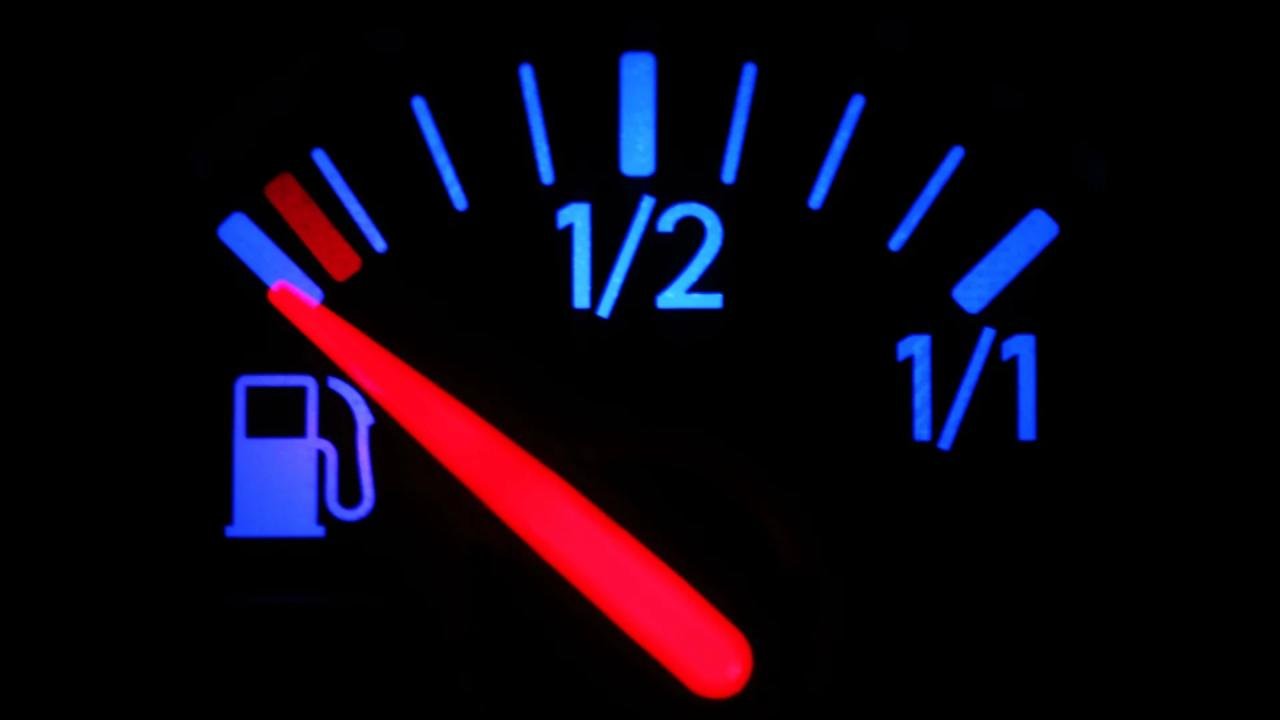
For most drivers, filling up at or before the quarter-tank mark is the sensible habit. Not because running lower is immediately dangerous, but because it removes a cluster of small disadvantages without creating any meaningful downside of its own. The concern about fuel pump damage from low fuel has some basis, but it is frequently overstated.
This article explains which parts of the warning are real, which are not, and why where you fill up tends to matter more than the level at which you do it.
Key takeaways
- Filling up at or before the quarter-tank mark is the practical rule for most UK drivers. It avoids a cluster of small disadvantages with no real benefit to running lower.
- The fuel pump cooling concern is real but overstated as an acute risk. Running very low occasionally is unlikely to cause immediate damage; doing it repeatedly over years may accelerate pump wear. These are different things.
- The weight argument against a full tank is technically correct but too small to act on. Carrying more fuel does add weight, but for most drivers the real-world effect is too small to notice.
- The warning light does not mean the tank is empty. In many cars it comes on with several litres still remaining, usually enough to reach a convenient station, though the exact reserve varies by model.
- The more important variable is where you fill up, not when. Price flexibility from filling at a convenient cheap station beats any tank-level optimisation.
The case for filling up earlier: why quarter tank is the practical rule
Convenience and flexibility. A driver who fills up before the quarter-tank mark can choose when and where to fill. A driver who waits until the warning light is on fills wherever is available. In urban areas with multiple nearby stations, this may not matter much. On a motorway, at night, in poor weather, or in a rural area with few options, it matters considerably. The price flexibility argument is real: having enough range to wait for or detour to a cheaper station requires fuel in the tank. If you want to work out whether a slightly cheaper station is worth the extra distance, our guide to whether a cheaper station is worth the small detour covers the calculation.
What the warning light actually means. In many cars, the fuel warning light comes on when a meaningful reserve is still left in the tank, often around 10–15% of capacity, or roughly 4–8 litres in a 50-litre tank, but the exact trigger varies by model. In practical terms that can mean several litres and a useful buffer rather than “almost nothing”, though real-world range can change quickly with speed, traffic, weather, terrain, and driving style. You are not about to stop. But you are in the range where flexibility drops and whichever station is available can start to matter more than the one you would actually choose.
A note on range displays: many drivers rely on the estimated range readout rather than the fuel gauge itself. These estimates change with speed, traffic, weather, gradient, and recent driving style. They are useful guidance, not a fixed promise. A display reading “40 miles” in heavy traffic may drop to 25 after a fast dual-carriageway stretch.
The practical rule
Default: fill up at or before the quarter-tank mark. Remote area or limited stations nearby: fill at or before the half-tank mark. Long journey ahead with few services: fill before setting off if below half. Severe winter conditions: more conservative is better. Fill at half tank if conditions are difficult.
The pump-cooling concern: real mechanism, frequently overstated risk
In many modern petrol and diesel cars, the electric fuel pump sits inside the tank and is cooled by the fuel surrounding it. When the fuel level is very low, the pump operates at a higher temperature than when submerged. This is the basis for the pump-damage concern.
The mechanism is real. The risk in practice is a long-term wear factor, not an acute failure risk. Driving on the warning light occasionally (the tank runs low, you fill up, this happens a few times a year) is unlikely to cause measurable pump damage. Repeatedly running the tank as low as possible every fill, for years, may shorten the pump’s service life compared to a driver who fills more conservatively.
Not all vehicles use the same fuel-pump layout. Many modern cars still use in-tank pumps, but fuel-system design and pump-temperature management vary, including in some hybrids and newer systems, so your owner’s handbook is the right reference for model-specific guidance.
The honest version of this concern: it is not fabricated, but it is often repeated in exaggerated form, as if a single low-fuel episode will destroy the pump. The accurate version is a cumulative long-term wear argument, not a one-off risk.
Sediment and condensation: historical concerns, reduced modern relevance
Sediment. The claim: debris or particles sitting at the bottom of the fuel tank can be drawn into the fuel system when the level is very low. In older vehicles with deteriorating metal tanks, this had some basis. In modern cars with plastic tanks and multi-stage filtration, the risk is considerably lower. Not zero, but not the pressing concern it once was for most drivers in cars made in the last two decades.
Condensation. A low fuel level leaves more airspace in the tank, which can allow condensation to form and introduce small amounts of water into the fuel. This was more significant in older metal tank designs. Modern plastic tanks and sealed fuel systems have reduced this risk substantially. In UK ambient conditions, the practical effect for most modern car drivers is negligible.
Both claims have a real historical basis but reduced relevance in modern vehicles. They are not reasons to panic, but they are a marginal additional argument in favour of not running very low as a routine habit.
The weight argument: real but too small to act on
A full tank of petrol weighs approximately 36–45kg more than a near-empty tank in a typical UK car (a 50-litre tank holds roughly 37kg of petrol; diesel is slightly denser at around 42kg). Carrying that extra mass requires slightly more fuel to accelerate the car.
The direction is correct: more weight uses slightly more fuel. But this is the wrong optimisation for almost everyone. In real-world driving, the difference between running a fuller tank and a lower one is usually too small to notice, and far too small to outweigh convenience, price flexibility, and the benefit of not regularly running low. It is technically true and practically irrelevant as a strategy.
Do not deliberately under-fill the tank to save on weight. The inconvenience of more frequent stops, the loss of price flexibility, and the mild exposure to the low-tank risks above all outweigh a fuel saving too small to measure in normal driving.
Summary of the main arguments for filling up earlier vs waiting until near empty. All fuel economy effects are directional; specific values vary by car, speed, and conditions.
Factor | Fill up earlier (half to quarter tank) | Wait until near empty (warning light range) |
|---|---|---|
Price flexibility | Higher: can choose when and where to fill | Lower: fills wherever is available |
Fuel pump wear (long term) | Lower cumulative exposure | Higher if done repeatedly over years |
Sediment and condensation risk | Lower | Marginally higher, mainly in older vehicles |
Weight and MPG | Slightly more weight carried | Slightly less weight; negligible MPG benefit |
Emergency resilience | Higher: range to reach preferred station | Lower: any available station only |
Practical convenience | Fewer stressful low-fuel moments | More frequent low-fuel situations |
Verdict | Preferable for most drivers in most conditions | No meaningful advantage; several small disadvantages |
How the advice changes by situation
Urban commuter with multiple nearby stations
The quarter-tank rule is the right default. Stations are plentiful, but the advantages of filling earlier (price choice, no stress) still apply.
Long motorway journey ahead
Fill before setting off if the tank is below half. Motorway services are expensive. Filling at a competitive local forecourt before the motorway junction is both cheaper and removes the decision from the drive.
Rural area or limited services
Tighten the rule to half tank or earlier. In areas where the next station might be 15–25 miles away, running low is a real practical risk.
Winter driving
More conservative is better. Cold-weather fuel consumption is higher than summer, range estimates are less reliable, and the consequences of running out in severe cold are more serious.
Driver who passes a cheap station on their regular commute
This is the clearest argument for paying attention to tank level proactively. If you pass a consistently cheap supermarket forecourt on the way to work and the tank is approaching quarter, fill up there. The alternative, running lower and filling at a more expensive station when forced to, costs money for no benefit.
Diesel drivers
The broad advice applies equally. If anything, diesel owners may want to be slightly more conservative about repeated low-fuel habits, particularly for long-distance or remote driving where running very low can introduce air into the fuel system and make restart or bleeding more awkward if the car runs dry.
Keep reading
The 30-Second Fuel Log: Spot Falling MPG Before It Gets Expensive
The mpg figure on your dashboard is a calculation, not a direct measurement, and it often flatters. If you want to know what your car is actually achieving, and whether that figure…
How to Stop Wasting Fuel in Winter Without Sitting in a Cold Car
Your car uses more fuel in winter. Some of that is unavoidable because cold engines run richer, cold air is denser, and more electrical systems are in use.
Tyre Pressure and Fuel Economy: How to Check It, How Often, and What Goes Wrong
Underinflated tyres increase rolling resistance and raise fuel consumption. That part is well known.

PetrolSavings Editorial
Editorial Team
Explore fuel savings tools
Use calculators and local price searches to plan smarter journeys.
We check for new prices every 5 minutes. Every price shows when it last changed, so check that before comparing deals.