

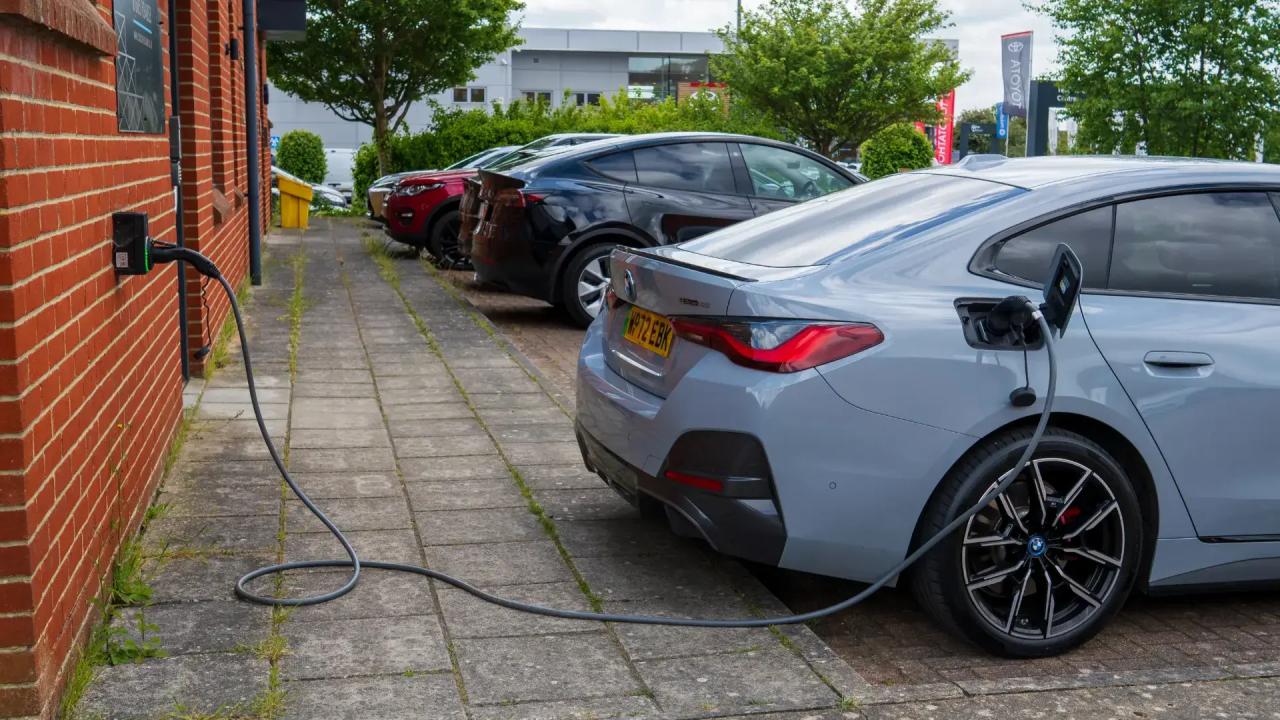
A plug-in hybrid driven without regular charging still carries a large battery, but most of the work is being done by the petrol engine in a car that weighs more than its non-hybrid equivalent. Some drivers in this position end up paying more per mile than they would in a standard petrol.
The difference between a PHEV that saves money and one that does not is driven mainly by one factor: how often the battery is charged.
This article explains the mechanism, identifies which driver profile you fall into, and gives an honest assessment of what to do about it.
Key takeaways
- A plug-in hybrid driven without regular charging can return worse real-world fuel economy than the equivalent conventional petrol model. The battery adds weight that the petrol engine must carry when the car is running mainly in charge-depleted mode.
- WLTP official figures for PHEVs assume the battery starts fully charged and a specific proportion of the test runs on electric power. For drivers who rarely or never charge, these figures bear almost no relationship to actual running costs.
- Whether a PHEV saves money depends mostly on driver profile: home charging plus short daily trips offers the best chance of savings; no charging plus high motorway mileage can deliver worse economy than petrol.
- Electricity charged at home on a standard tariff costs significantly less per mile than petrol. Electricity from a public rapid charger often costs as much as, or more than, petrol per mile, so the saving depends on where and when you charge.
- Many UK PHEVs are company cars chosen for favourable Benefit-in-Kind treatment. The exact tax rate depends on CO2, electric range and registration details, which helps explain why so many PHEVs end up with a charging setup that is less than ideal.
How a plug-in hybrid differs from a full hybrid
A full hybrid (HEV) charges itself through regenerative braking and the engine; no plug required. Its fuel economy still varies with route, speed and temperature, but not with charging behaviour in the way a PHEV’s does. For the full comparison of hybrid types in city and short-trip driving, including when each type earns its keep, our guide to which hybrid suits your driving covers the breakdown.
A plug-in hybrid has a much larger battery that must be charged from an external source to deliver its quoted electric range. Regenerative braking recovers some energy during driving, but it is a modest contribution compared to a full external charge. If the battery is not externally charged, the PHEV operates largely as a petrol car, but one that is heavier than its petrol equivalent because of the battery pack it carries. The rest of this article covers plug-in hybrids only.
Why the official figures are particularly misleading for PHEVs
The official WLTP fuel economy test for a PHEV is run with the battery starting fully charged. The test protocol specifies a mix of electric-only and hybrid running, producing a combined mpg figure that can look extremely impressive, 100mpg or higher for some models. This figure has almost no relationship to real-world running cost for a driver who does not regularly charge the battery.
For conventional petrol and diesel cars, WLTP figures diverge from real-world results because of driving style and test conditions. For PHEVs, the divergence is structural: the test models a charging behaviour that many drivers do not maintain. The gap between official and real-world mpg is therefore larger and more predictable for PHEVs than for any other vehicle type.
The weight penalty: a PHEV’s battery pack adds meaningful weight, typically 100–200kg depending on battery size. When the battery is depleted and not recharged, the car no longer gets its headline plug-in benefit or full EV range, but it can still operate in charge-sustaining hybrid mode. The petrol engine does more of the work in a heavier car, and real-world fuel economy is often close to, or sometimes worse than, the petrol equivalent depending on route, speed, temperature and charging pattern.
The three driver profiles: which one are you?
Profile 1: Home charger, mostly short trips
You charge the car every night or most nights at home. Most daily driving is within your PHEV’s electric range: commuting, school runs and local errands. The petrol engine runs mainly on longer trips. This is the profile the WLTP figure broadly assumes. You have the best chance of seeing meaningful real-world savings, but the official figure is still a weighted test value rather than a target you should expect to match.
Profile 2: No reliable home charging, or infrequent charging
You do not have access to home charging, or you charge less often than every other day. Daily trips frequently exhaust the battery and shift to petrol power. You are getting a fraction of the potential saving, possibly none, and in the worst case you are paying more per mile than a petrol driver. Many UK company car PHEVs sit in this profile: the car may make tax sense on paper, but the fuel saving only shows up if the charging routine is there in real life. For some company-car PHEVs first registered on or after 1 January 2025, HMRC currently applies a temporary benefit-in-kind easement, so registration date and test regime can materially affect the tax outcome.
Profile 3: High-mileage or long-trip dominated
Most of your driving is on motorways or longer A-road runs that exceed your PHEV’s electric range within the first 20–40 miles. For the remainder of every long run, the petrol engine is carrying a heavy car. The electric range covers a relatively small proportion of total mileage.
What to do: guidance by profile
Profile 1: Home charger, mostly short trips: getting the most out of the system
Charging: Charge every night, not just when the battery is nearly empty. If you have a smart tariff with off-peak rates, scheduling the charge for overnight hours significantly reduces the electricity cost per mile. A wallbox charger is faster than a three-pin domestic socket, if you do not have one, the investment typically pays back within a reasonable period for daily PHEV use.
Driving modes: Use EV-only mode for urban and short-distance driving where available. Reserve the petrol engine for motorway sections where the electric motor is least efficient. If your car has a “Save” mode that holds battery charge for later, use it to preserve electric range for urban sections at the end of a motorway run rather than depleting it all at cruise speed.
Using the current average home electricity unit rate of 24.67p/kWh, 10kWh of electricity costs about £2.47. At an illustrative 3.5 miles per kWh in EV running, that is roughly 35 miles of electric driving, or about 7.0p per mile. Compare that with petrol at the latest published UK average pump price of 158.01p per litre: a petrol car returning 40mpg costs about 18.0p per mile in fuel.
Figures use 24.67p/kWh electricity, 158.01p/litre petrol and a 3.5 miles per kWh / 40mpg worked example, using the latest published UK averages available in mid-April 2026. Your car’s battery size, electric efficiency and petrol mpg will vary.
Profile 2: No reliable home charging: the honest assessment
Without regular home charging, a PHEV’s fuel saving versus petrol is small or negative. The petrol engine runs more of the time, on a heavier car, than it would in a conventional petrol equivalent. If you are in this profile and are not seeing fuel savings, the car is behaving as expected, not as advertised.
Public charging: when it helps and when it does not. The latest published UK weighted average PAYG price for public charging is 54p/kWh on 3kW to 49kW chargers and 76p/kWh on 50kW and above rapid and ultra-rapid chargers. Using the same 3.5 miles per kWh assumption, that works out at about 15.4p per mile on lower-power public charging and about 21.7p per mile on rapid charging, before charging losses. Against petrol at 158.01p per litre, a 40mpg petrol car costs about 18.0p per mile in fuel.
Figures use 54p/kWh and 76p/kWh public charging, 158.01p/litre petrol and a 3.5 miles per kWh / 40mpg worked example, using the latest published UK averages available in mid-April 2026. Public charging can still help occasionally, but it rarely transforms the cost picture if you cannot charge regularly at home or at work.
The practical conclusion: occasional public charging may slightly reduce fuel spend but will not transform the running cost picture. If you regularly drive a PHEV without charging, you are running a heavy petrol car at petrol car costs, plus the higher purchase price of the PHEV.
If you cannot change this, no driveway, no workplace charging, housing situation that rules out a wallbox, the PHEV may not be the right vehicle for your situation. If it is a company car and you are keeping it: acknowledge the actual fuel cost in your budgeting, and find the cheapest petrol near you, because the pump price matters as much as it does for any conventional petrol driver.
Profile 3: High-mileage or long-trip driver: adjusting expectations
Quoted electric range varies widely by model, but many current PHEVs sit somewhere between roughly 20 and 80+ miles on paper depending on model. At motorway speeds, actual range is lower than quoted, typically by a meaningful margin, because sustained cruising draws more power than the mixed-cycle test that produces the headline number. On a 200-mile motorway run, the electric range may cover only the early part of the journey; the petrol engine then runs the remaining miles in a heavier-than-equivalent car.
Save and Charge modes: If your car has a “Save” mode, consider preserving battery charge at the start of a long motorway run for the urban sections at the destination, town driving, the final miles. This is more efficient than using the electric range immediately on the motorway and running on petrol only for the urban portion.
Do not use “Charge” mode as a routine strategy. It uses the petrol engine to recharge the battery while driving, using petrol to generate electricity to power an electric motor is a worse energy pathway than simply running the petrol engine directly. Use it only to prepare battery charge for a specific upcoming urban section.
A high-mileage PHEV driver doing primarily longer runs should expect fuel economy meaningfully below the official WLTP figure, and often close to the petrol equivalent, or sometimes worse depending on route, speed, temperature and charging pattern. The economic case for this profile may depend more on company car tax treatment than on fuel saving.
Four misconceptions worth correcting
“The battery charges itself while driving so I don’t need to plug in”
Regenerative braking does recover some energy and feeds it back to the battery, this is real and genuine. But the amount recovered during normal driving is a modest contribution compared to a full external charge. A PHEV relying solely on regenerative braking will not maintain the battery state-of-charge that delivers the quoted electric range. External charging is required for the system to work as advertised.
“A PHEV is always better than petrol on fuel costs”
Only when charged regularly and driven in ways that use the electric range. A PHEV that is rarely charged and spends most of its time in charge-sustaining running can return worse fuel economy than the petrol-only equivalent. For UK fleet drivers without home charging, this is a common experience, not a worst-case edge case.
“Charging at a public rapid charger is essentially free saving”
Public rapid charging costs have risen substantially and in many locations now cost as much as, or more than, petrol per mile. As a current UK guide, the weighted average PAYG rapid and ultra-rapid price is 76p/kWh. On PHEV-style electric running, that can work out dearer per mile than petrol.
“Premium fuel or fuel additives improve PHEV efficiency”
They do not. A PHEV’s fuel economy is determined by its charging behaviour, driving pattern, and the efficiency of its petrol engine and electric motor, not by fuel grade. Premium fuel benefits relate to combustion quality and injector cleanliness over time; they do not change the fundamental charge-depleted running cost.
Is a PHEV right for your situation?
Before buying or committing to a PHEV, check your actual usage against these criteria.
Suitability checklist:
- Do you have off-street parking where you can install a home charging point or use a domestic socket?
- Is your typical daily mileage within or close to the PHEV’s quoted electric range?
- Is your driving mostly local and urban rather than long motorway runs?
- Can you commit to charging the car every night or most nights?
- If a company car: does your employer have workplace charging, or will you install home charging?
- Have you checked the current home electricity rate and calculated the per-mile cost versus petrol for your specific car?
If you answered no to most of these: a PHEV is unlikely to deliver the fuel savings its official figures suggest. A conventional efficient petrol, a full hybrid, or a full EV (if charging is available) may be a better fit.
If you answered yes to most of these: a PHEV can genuinely deliver meaningful real-world savings versus petrol, provided you maintain the charging habit consistently.
Getting the best out of a PHEV you already own
Charging habits:
- Charge the battery every night, or at minimum every other night
- Use a smart tariff or schedule overnight charging during off-peak hours if available
- If you do not have a wallbox, consider installing one, faster charging makes the habit easier to maintain
- Track your charge frequency: if you are charging less than 4 times per week on typical weekdays, you are not capturing most of the potential saving
Driving modes:
- Use EV-only mode for urban driving, short trips and town sections
- Use Save mode at the start of longer motorway runs to preserve electric range for later urban driving
- Avoid using Charge mode as a routine strategy, it is less efficient than external charging
- On motorway sections, switch to hybrid mode, the electric motor is least efficient at sustained higher speeds
Tyre pressure and maintenance:
- Check tyre pressure monthly, a PHEV is heavier than a conventional petrol and underinflated tyres have a larger efficiency penalty
- Keep the battery system serviced per manufacturer schedule, a degraded battery delivers less range
Tracking performance:
- Use your car’s trip computer to track real-world electricity consumption and petrol use separately
- Compare your actual per-mile costs with your own electricity and petrol costs, and treat WLTP figures as context for range and consumption, not a real-world cost target
You can also check local forecourt prices to make sure you are paying as little as possible for the petrol portion of your running costs.
Keep reading
Diesel or Hybrid for Motorway Driving? The Total Cost Comparison Most Buyers Miss
For years, the answer for a high-mileage motorway driver was straightforward: diesel. Better fuel economy at sustained speeds, competitive running costs, and strong residuals…
Which Hybrid Suits Your Driving? City Trips, Short Runs, and the Type That Actually Matters
Stop-start city traffic is the one driving condition where a full hybrid genuinely earns its efficiency premium over a conventional petrol car. The electric motor and…

What Is a Good Petrol Price in the UK?
A good petrol price is one that is competitive for your area and station type, not just low against a national headline average. A price that looks expensive in a competitive super...

PetrolSavings Editorial
Editorial Team
Explore fuel savings tools
Use calculators and local price searches to plan smarter journeys.
We check for new prices every 5 minutes. Every price shows when it last changed, so check that before comparing deals.