

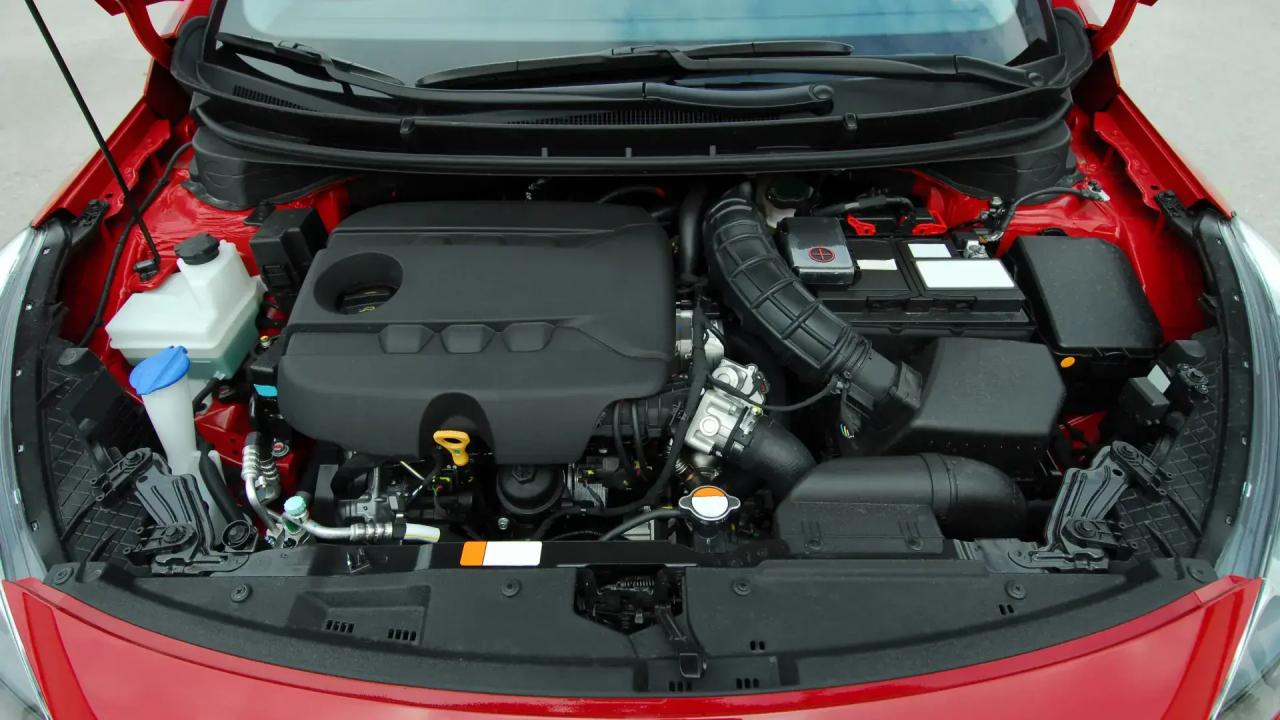
Engine size does affect fuel consumption, and larger engines often use more fuel on average. But it is one of the weaker predictors of real-world running costs. Vehicle weight, driving conditions, and how hard the engine is being asked to work typically matter more. A 1.0-litre turbocharged engine in a heavy crossover can easily use more fuel than a 1.6-litre naturally aspirated engine in a lighter hatchback. This article explains why, ranks the variables that actually determine your fuel bill, and helps you use something more reliable than the badge when choosing or evaluating a car.
Key takeaways
- Engine size and fuel consumption are correlated in general, but engine size is a poor single predictor of real-world running costs.
- Vehicle weight matters more than engine size in urban and mixed driving. A small engine working hard to move a heavy car may use more fuel than a larger engine in a lighter one.
- The downsizing trend (small turbocharged engines in increasingly heavy vehicles) has exposed this clearly. A 1.0-litre turbo in a 1,500kg crossover does not automatically beat a 1.6-litre in a 1,100kg hatchback.
- At sustained motorway speeds, aerodynamic drag is the dominant fuel consumption variable. Engine size matters less than the car’s drag profile at 70mph.
- Engine displacement is not the same as power output. A modern 1.0-litre turbocharged engine may produce more power, and run at higher stress under load, than an older 1.6-litre naturally aspirated unit.
Why engine size is only a partial predictor
Engine displacement (the volume swept by the pistons, measured in litres or cc) is one dimension of an engine’s fuel consumption, but only one. Larger displacement engines have more internal friction and more thermal mass to heat, and can consume more fuel when all else is broadly comparable. That is the basis for the general rule.
But engine size does not determine how hard the engine is working. A 2.0-litre engine in a lightweight car cruising on a motorway at light throttle may use less fuel per mile than a 1.0-litre engine in a heavy SUV working much harder to maintain the same speed. Engine size also does not determine vehicle weight, aerodynamic profile, or the gearbox’s ability to keep the engine in an efficient operating band.
The practical consequence: two cars with the same engine size but different bodies, weights, and transmissions may have meaningfully different fuel economies. Two cars with different engine sizes but similar weights and aerodynamics may have surprisingly similar ones. Displacement is not the same as power output either. A modern 1.0-litre turbocharged engine can produce more power than some older larger naturally aspirated engines, while still having to work hard when fitted to a heavy car.
Official WLTP fuel-consumption figures are most useful when comparing closely similar cars, not when comparing very different body styles, weights, or drivetrain layouts. That is another reason engine size on its own is a weak guide.
The variables that typically matter more, ranked
1. Vehicle weight (most important in urban and mixed conditions). Every acceleration event, from rest, from slow traffic, from a junction, requires energy proportional to the mass being moved. A heavier car requires more energy per acceleration cycle regardless of engine size. In UK urban driving with frequent stops and starts, vehicle weight is typically the primary determinant of fuel consumption. This is why a small engine in a heavy crossover may produce disappointing economy: the engine is working proportionally harder than a larger engine in a lighter car at the same speed.
2. Driving conditions and speed (most important at higher speeds). At sustained motorway speeds, aerodynamic drag (which increases with the square of velocity) is the dominant fuel consumption factor. A car with a favourable drag coefficient and low frontal area achieves better motorway economy regardless of engine size. This is where streamlined lower-profile cars show an advantage over taller, more upright ones. The same principle is why drag-heavy accessories such as roof boxes can have a surprisingly large effect on fuel use at speed.
3. Engine load: how hard the engine is working. An engine’s fuel efficiency is not constant across its operating range. Most engines tend to be most efficient when they are not either idling along under strain or being worked flat out. A large engine at light load in a high gear during motorway cruise may be in its efficient zone. A small engine working at near-maximum capacity to maintain the same speed is in a less efficient part of its range. The question is not “what size is the engine?” but “what proportion of its capacity is the engine using at this speed and load?”
4. Gearbox type and calibration. A well-calibrated automatic or CVT that keeps the engine in its efficient operating band can produce better real-world economy than a manual where the driver selects sub-optimal gears. Conversely, a skilled manual driver may outperform a poorly calibrated automatic. Gearbox efficiency is a meaningful variable the engine-size comparison often ignores.
5. Driving style. Smooth, anticipatory driving reduces the number of acceleration cycles, which reduces the fuel penalty from vehicle weight. A driver who brakes frequently and accelerates hard negates much of the benefit of a smaller engine.
Other variables worth noting: trim level can change fuel economy through wheel size, tyre width, and equipment weight. All-wheel drive versus front-wheel drive shifts the result even when engine size stays the same. The litres on the badge are only one piece of a much larger picture.
The downsized turbo complication: why the simple rule stopped working
Over the past decade or so, manufacturers and buyers embraced the downsizing trend: fitting small-displacement turbocharged engines to vehicles that were previously powered by larger naturally aspirated units. The official justification was improved fuel economy and lower CO2 emissions.
The result in practice has been more complicated. Turbocharged engines can feel very efficient at light loads and gentle urban cruising, but their real-world economy depends heavily on load, gearing, boost use, and the vehicle they are fitted to. At heavier loads, such as real-world acceleration, gradients, or sustained motorway cruising, a small turbo engine may be working hard enough that the expected economy advantage narrows. More significantly, the cars these engines were fitted into were not getting lighter. A crossover with a 1.0 or 1.2-litre turbocharged engine may weigh 1,400–1,600kg. In that kind of vehicle, the small engine can end up working hard enough under load that the expected fuel-saving advantage narrows in real-world use. That is why a small turbo petrol can look efficient on paper yet disappoint if it spends much of its life fully loaded, on hills, or at sustained motorway pace.
The real-world result: many drivers found their 1.0-litre turbocharged crossover did not deliver the economy implied by the badge. For a closer look at how much the heavier vehicle costs in annual fuel, our article on how much more a larger car typically costs in fuel across different mileage bands breaks down the comparison.
Illustrative comparison (not a model test). Take two mixed-use cars: a 1.0-litre turbo crossover weighing about 1,500kg and a 1.6-litre naturally aspirated hatchback weighing about 1,100kg. On paper, the smaller engine looks cheaper to run. In practice, if the heavier crossover spends much of its time in traffic, on gradients, or carrying passengers, the smaller engine may be working hard enough that the real-world fuel gap narrows sharply or disappears.
That is why the badge alone is a poor buying guide. Real-world MPG for the specific car matters more than the litre figure, especially once weight, body shape, and gearing differ.
Directional comparisons only. Real-world MPG depends on specific models, driving conditions, and driving style. Verify specific models against independent real-world test data.
Comparison | Engine size signal | What often happens in practice |
|---|---|---|
1.0-litre turbo in 1,500kg crossover vs 1.6-litre NA in 1,100kg hatchback | Smaller = cheaper to run | Not necessarily; the heavier crossover’s small engine may work harder and produce similar or worse real-world economy |
2.0-litre in a light, aerodynamic saloon vs 1.5-litre in a tall, heavy MPV | Larger = less economical | Not necessarily; the lighter, lower-drag car may match or exceed the smaller-engined, heavier alternative |
2.0-litre diesel at motorway cruise vs 1.0-litre turbo petrol at same speed | Diesel + larger = more fuel | Not necessarily; the diesel’s torque curve may keep it in a more efficient operating range at cruise |
Modern 1.5-litre turbo vs 2005-era 1.8-litre NA | Smaller modern = more efficient | Often yes; modern engine technology and transmission improvements matter as much as displacement |
When engine size does matter more
Engine size correlates more reliably with fuel consumption when you are comparing engines in similar vehicles: two versions of the same model with different engine options, where the car’s weight, aerodynamics, and transmission are held roughly constant. In that controlled comparison, the smaller engine typically does achieve better economy, because the confounding variables are removed.
Engine size also matters more at lower speeds where aerodynamic drag is less dominant and engine displacement is more relevant to the energy output required. And very large engines (3.0-litre and above) typically produce noticeably higher fuel consumption than smaller equivalents in otherwise similar vehicles, because they have significant internal friction losses regardless of how lightly they are being used.
The practical rule: engine size is a useful guide when comparing like with like (same model, different engine option). It is a much less useful guide when comparing different body styles, weights, or drivetrain layouts.
Practical guidance by driver profile
Primarily urban driver (stop-start, short trips). Vehicle weight matters most here. A lighter car with a moderately sized engine will generally outperform a heavier car with a smaller engine in stop-start conditions. Look at real-world urban MPG data for specific models rather than engine size. A full hybrid hatchback is particularly strong in this profile.
Primarily motorway commuter. Aerodynamic efficiency and engine load at cruise speed matter most. A sleek, lower-profile saloon or hatchback with any engine size that achieves a comfortable 65–70mph cruise at light throttle will produce good motorway economy. Very large engines may be less efficient; highly downsized small engines may be working hard. Look for real-world motorway MPG data.
Mixed driving at moderate mileage. Real-world tested MPG for the specific model is the best guide. Engine size alone is an unreliable indicator.
Buyer evaluating two versions of the same car with different engines. This is the case where engine-size comparison is most reliable, because the confounding variables are controlled. The smaller engine in the same platform typically does produce better economy. The question is whether the smaller engine is adequate for the driving demands (motorway load, towing, gradients) without being worked hard enough to close the efficiency gap.
Keep reading
What MPG Should My Car Be Getting? Realistic UK Ranges by Car Type
The MPG figure on your car’s brochure is a laboratory test result, not a target you should expect to hit on real roads. Real-world fuel economy in the UK depends on your car…
UK Petrol Price History: The 2020–2026 Price Shocks, Record Highs, and What They Mean for Drivers Today
UK petrol prices went through more in six years than in the previous two decades. The collapse of 2020, the record-breaking surge of 2022, and the slow retreat that followed left p...
What Is a Good Petrol Price in the UK?
A good petrol price is one that is competitive for your area and station type, not just low against a national headline average. A price that looks expensive in a competitive super...

PetrolSavings Editorial
Editorial Team
Explore fuel savings tools
Use calculators and local price searches to plan smarter journeys.
We check for new prices every 5 minutes. Every price shows when it last changed, so check that before comparing deals.