

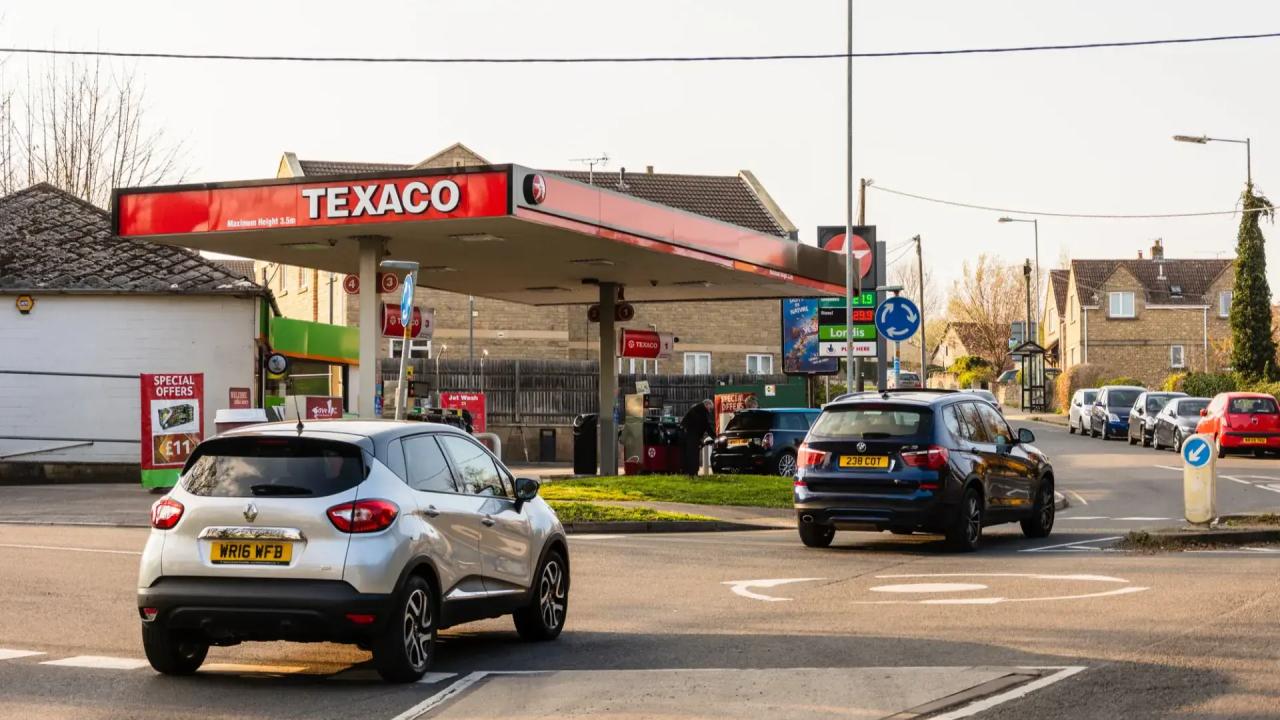
If your nearest forecourt is also your only forecourt, you already know the price is higher. What is less obvious is why.
The intuitive explanation is that delivering fuel to remote locations costs more. That is part of the story, but only a small part. The bigger reason is simpler: a petrol station with no nearby competitor faces little pressure to lower its price.
That distinction matters because it changes which tactics are actually worth your time.
This article explains the mechanics behind the rural premium, estimates what it can cost over a year, and focuses on the adjustments that still work when driving to a supermarket forecourt is not an option.
Key takeaways
- The rural fuel price premium is real and persistent across every part of the UK where forecourt density is low. The Scottish Highlands and Islands typically see the largest gap, but Cornwall, Powys, Cumbria and rural Lincolnshire all pay above the national average.
- Reduced competition is the dominant driver, not delivery costs alone. A forecourt with no competitor within 20 miles has no reason to match city prices.
- The number of UK forecourts has fallen from around 37,000 in the 1970s to under 8,000 today, with rural areas losing stations at a higher rate. Fewer forecourts means less competition, which sustains the premium.
- The most effective tactic for rural drivers is filling up in town on trips they are already making. The saving on a 55-litre fill at a town forecourt can be £4–£6 per visit.
- Price comparison tools are most useful for rural drivers on journeys, not at home. Checking live forecourt prices along a route you are already driving is where the value sits.
What’s actually behind the rural premium
Two factors drive the gap. They are not equal.
Logistics costs are real but modest. Fuel is delivered by tanker from regional distribution terminals. Rural forecourts are further from these terminals, take smaller deliveries less frequently, and absorb higher per-litre transport costs as a result. This accounts for a genuine portion of the premium, but typically only a few pence per litre, not the full gap.
Lack of competition is the dominant factor. Where a forecourt has no nearby rival, there is no market mechanism forcing the price down. The Competition and Markets Authority’s road fuels market study identified this as central to price dispersion across the UK. A supermarket forecourt in suburban Birmingham operates in a market where three or four competitors sit within a mile. A village station in rural Northumberland or the Highlands may be the only option for 20 miles. That difference in competitive pressure, not the cost of getting fuel there, explains most of the premium.
If logistics were the primary cause, the premium would be roughly uniform across rural areas. It is not. It varies sharply with the number of nearby competitors.
Fewer forecourts, less competition, higher prices
The UK had around 37,000 forecourts in the 1970s. The current figure is under 8,000. The closures have not been evenly distributed, rural and village stations have disappeared at a higher rate than urban ones, because they serve fewer customers and cannot generate the volume needed to remain viable at tight margins.
The practical result: in parts of Cornwall, mid-Wales, the Borders and the Highlands, drivers increasingly have one realistic option. This structural concentration is self-reinforcing. Once an area loses its only forecourt, remaining demand consolidates to the next nearest station, which can then price with even less competitive pressure.
What the gap costs you over a year
The size of the rural premium varies significantly by location. To see what forecourts near you are charging compared to the national average, you can see how prices vary across the UK on the PetrolSavings price map. GOV.UK also publishes weekly regional price data.
For illustration: if your local premium is 8p per litre, a figure within the common range for higher-premium rural areas, over a 55-litre fill that is £4.40 extra per visit. At one fill per week, the annual cost of the premium is £229.
Illustrative, based on an 8p per litre rural premium and 55-litre fill. Your actual premium depends on which forecourts are available to you and current local prices.
At 12p per litre, which is not unusual in parts of the Scottish Highlands, the same calculation produces £343 per year. That is a meaningful sum, and it is entirely a function of where you fill up, not how you drive.
What rural drivers can actually do about it
The standard advice, use a supermarket forecourt, shop around more, assumes you have a Tesco or Asda within a short drive. For drivers in rural Powys, the Highlands, or the lanes of central Devon, that assumption is wrong. The tactics below are calibrated to the constraint.
Fill up in town on trips you are already making
This is the single highest-return change. If you commute to, or regularly visit, a larger town, filling up there rather than at your local forecourt saves the full premium on every fill, at zero incremental cost, because you are already making the journey.
The maths: if the town forecourt is 8p per litre cheaper and you fill a 55-litre tank there, that is £4.40 saved per visit. Do it weekly and you recover £229 per year. The only requirement is planning: know your tank range, check the gauge before you leave, and check prices at forecourts along your route before you go.
Use a price comparison tool on every journey, not just at home
Rural drivers often dismiss price comparison tools because the results near home show one station. The correct use is different. A trip to a market town, a hospital appointment, a school run that passes through a larger settlement, these are the moments to fill up. You can see live forecourt prices near your destination before you leave, and decide whether a two-minute stop is worth the saving. It usually is.
Keep the tank fuller, not emptier
Counter-intuitive for cost-conscious drivers, but it matters where the nearest forecourt is far away. Running low and being forced to fill up at whatever is nearest removes all choice from the equation. Keeping the tank above a quarter preserves the option to hold off until a cheaper station is accessible.
This is a planning tactic, not a fuel-saving one. A fuller tank does not cost less to fill. But it prevents forced fill-ups at the worst-available price, the most expensive habit a rural driver can fall into.
Bulk fuel purchasing — for those with the option
Some rural households, farms and smallholdings store road-legal fuel in approved static tanks. This is not a mainstream option, and the setup requires compliance with storage regulations. But for those who already have the infrastructure, buying in bulk can reduce the per-litre cost. Worth investigating if you fill multiple vehicles on a rural property.
Ask about loyalty schemes at your local independent
Some independent rural forecourts operate loyalty schemes or accept fuel cards offering a small per-litre discount, typically 1–3p. If you are filling up at the same station every week regardless, it compounds. Worth asking about at the counter.
The Rural Fuel Duty Relief Scheme — and why it probably doesn’t apply to you
A Rural Fuel Duty Relief Scheme does exist, but its scope is narrow. It applies to a small number of designated Scottish island and remote communities, where eligible retailers can claim a 5p per litre rebate on fuel duty. The expectation is that this saving is passed on to consumers.
The scheme does not apply to rural England, Wales, or mainland Scotland. The majority of rural UK drivers are not in a qualifying area. The GOV.UK guidance on the scheme lists current qualifying postcodes.
Misconceptions that stick around
“Rural petrol is expensive mainly because of delivery costs”
Delivery costs contribute, but they are not the dominant factor. If they were, the premium would be roughly uniform across rural areas. It is not, it varies sharply with the number of nearby competitors. The CMA’s work on road fuel markets supports this reading.
“There’s nothing you can do about it”
Partly true, you cannot conjure competition where none exists. But the cost of the premium can be reduced significantly through planning. Filling up in town on trips you are already making costs nothing extra. The gap between doing this consistently and filling up locally by default can run to £150–£250 per year.
Illustrative range — based on 8–12p per litre rural premium, 55-litre fill, weekly frequency.
“Price comparison tools aren’t useful in rural areas”
They are useful in a different way. The relevant question for a rural driver is not “what’s cheapest within 2 miles of home?” but “what’s cheapest on the route I’m driving on Thursday?” Price comparison tools answer that question directly.
“Just use the Asda or Tesco forecourt”
For many rural readers, the nearest supermarket forecourt may be 20–40 minutes away. Advice that assumes one is around the corner does not translate. The tactics in this article are built around the constraint, not around pretending it does not exist.
Keep reading
What Is a Good Petrol Price in the UK?
A good petrol price is one that is competitive for your area and station type, not just low against a national headline average. A price that looks expensive in a competitive super...
How Petrol Is Made: What Actually Happens Between the Oil Well and the Forecourt Pump
Petrol does not come out of the ground ready to use. Crude oil is a mixture of hydrocarbons that must be separated, chemically upgraded, and precisely blended before it becomes the…

Where Does UK Petrol Come From? The Supply Chain from Oil Field to Forecourt
The petrol at your forecourt comes from a combination of crude oil refined in the UK and refined product imported from overseas. Some of that crude is UK North Sea production, but...

PetrolSavings Editorial
Editorial Team
Explore fuel savings tools
Use calculators and local price searches to plan smarter journeys.
We check for new prices every 5 minutes. Every price shows when it last changed, so check that before comparing deals.