

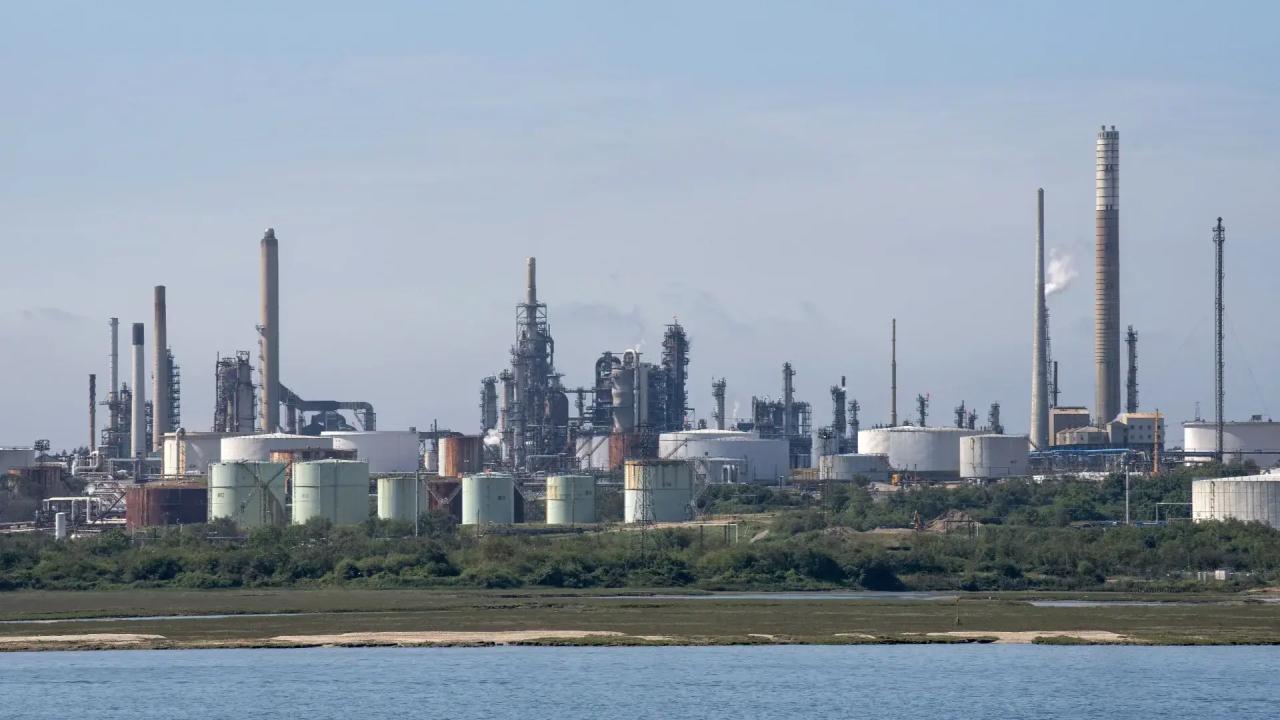
Petrol does not come out of the ground ready to use. Crude oil is a mixture of hydrocarbons that must be separated, chemically upgraded, and precisely blended before it becomes the regulated fuel that goes into a modern petrol engine. This article walks through each stage of that process in plain English, explains what E10 actually is, and connects the refinery to the forecourt.
Key takeaways
- Crude oil cannot be used directly as petrol. It is a mixture of hydrocarbons that must be separated, chemically upgraded, and precisely blended through a multi-step refinery process.
- Distillation alone is not enough. Catalytic cracking breaks down the heavier fractions that distillation cannot convert to petrol, making it possible to produce more petrol per barrel.
- The finished petrol you fill up with is a carefully engineered blend, not a single substance. It includes a base hydrocarbon blend plus additives and, in the case of standard UK petrol (E10), up to 10% ethanol.
- A refinery produces many products besides petrol: diesel, aviation fuel, heating oil, bitumen, and petrochemical feedstocks all come from the same crude oil.
- The refinery stages are broadly the same for standard and premium petrol, but the finished fuels can still differ in octane rating, ethanol content, and additive package. In the UK, standard petrol is 95-octane E10, while super unleaded is usually 97+ octane E5.
What crude oil actually is: the starting point
Crude oil is a naturally occurring mixture of hydrocarbons (molecules made of hydrogen and carbon atoms) of varying sizes and boiling points. Lighter hydrocarbons are gases or liquids that vaporise easily; heavier ones are viscous liquids or solids. Different crude oils from different fields have different compositions: some are “light” and sweet (low sulphur, more lighter fractions), some are “heavy” and sour (high sulphur, more heavier fractions). For the full picture of where UK crude comes from and how it reaches a refinery, see our separate guide to the UK supply chain from oil field to forecourt.
None of this mixture is petrol in its finished form. Petrol is a specific product defined by performance specifications (octane rating, volatility, energy content) that crude oil does not naturally meet. The refinery process produces it.
Stage one: distillation (separating the fractions)
Fractional distillation is the first stage. Crude oil is heated to high temperatures and fed into a tall distillation column. Different hydrocarbons vaporise at different temperatures: heavier molecules need more heat than lighter ones.
As vapours rise up the column, they cool and condense at different heights, producing distinct fractions: gases at the top, petrol-range naphtha and light distillates above the middle, kerosene (the basis for aviation fuel) and diesel in the middle, and heavy fuel oil at the bottom.
The fraction that falls in the petrol boiling range is called naphtha. But this fraction alone does not produce enough volume to meet petrol demand. That is what cracking is for.
Distillation is a physical separation process. It does not change the molecules; it separates them by boiling point.
Simplified overview of the main refinery stages. The actual process involves multiple interconnected units operating simultaneously. This is a directional guide, not a comprehensive technical description
Stage | What happens | Why it matters |
|---|---|---|
1. Distillation | Crude oil heated; fractions separated by boiling point | Produces the initial naphtha fraction and other products; not enough petrol yield from this stage alone |
2. Cracking | Heavier fractions broken into lighter molecules | Converts fuel oil and heavy products into additional petrol-range hydrocarbons; increases total petrol yield |
3. Reforming | Naphtha molecules rearranged to improve octane rating | Raises the quality of the petrol fraction; increases octane number |
4. Finishing and blending | Multiple refinery blend components combined; additives are added and ethanol blending may be completed at a refinery or terminal | Produces finished petrol to the required grade and volatility, including E10 or E5/super unleaded |
5. Treatment and quality control | Components are treated to remove sulphur and other contaminants, then checked against BS EN 228 before dispatch | Ensures the finished fuel is clean, stable, and on-spec before it enters the distribution system |
Stage two: cracking (making more petrol from heavier fractions)
Fractional distillation does not produce enough petrol to meet demand from crude oil alone. A large proportion of crude falls in the heavier fractions: fuel oil, heavy diesel, vacuum gas oil. These are less commercially useful at high volumes.
Catalytic cracking uses heat, pressure, and a catalyst to break long hydrocarbon chains into shorter ones. The shorter chains fall in the petrol and diesel boiling ranges, effectively converting heavy fractions into lighter, more commercially valuable products.
The process significantly increases the proportion of a barrel of crude that becomes petrol and diesel. Without cracking, modern petrol demand could not be met from the distillate fractions alone. This is why articles that describe petrol-making as “just distillation” are giving an incomplete picture.
Stage three: reforming (improving quality)
Some straight-run naphtha from distillation has too low an octane rating to serve as finished petrol on its own. Catalytic reforming uses heat, moderate pressure, and catalysts to turn low-octane naphtha into higher-octane blend components such as reformate.
This matters because straight-run naphtha does not resist premature ignition in a petrol engine as well as finished petrol needs to. Real refineries also use other upgrading units, so reforming is one important quality-improvement step rather than the only one.
Catalytic reforming rearranges the molecular structure of naphtha hydrocarbons, converting lower-octane molecules into higher-octane forms. This raises the octane rating of the petrol fraction without adding new material. The output is a higher-octane petrol component called reformate, one of the main blend streams that becomes finished petrol.
Stage four: blending, additives, and E10
Finished petrol is a blend of multiple streams from the refinery process: reformate, cracked naphtha, and other components, combined to meet the required specification for octane rating, volatility, energy content, and other performance parameters.
Additives. These are introduced at the blending stage and typically include deposit-control detergents, corrosion inhibitors, antioxidants, and other treatment chemicals used to keep the fuel system clean, protect components, and improve storage stability. The additive package varies by product: standard forecourt petrol must meet the relevant BS EN 228 specification, while branded premium fuels may include proprietary additive packages above that baseline. All forecourt petrol must meet the relevant road-fuel standard, but standard and super grades can still differ in octane rating, ethanol content, and additive package.
The consumer question of whether premium additives are worth paying more for is answered in our article on which petrol grade your car needs and whether premium additives are worth it.
One subtle detail is that petrol is not blended exactly the same way all year round: volatility requirements vary seasonally, so summer and winter petrol can differ slightly even within the same grade.
E10: what it is and why it exists
Standard 95-octane petrol became E10 in Great Britain in September 2021 and in Northern Ireland in November 2022. Today, E10 is the standard petrol grade at almost all UK filling stations, meaning it contains up to 10% renewable ethanol by volume.
Ethanol is a biofuel derived from plant material. It has a high octane rating and its inclusion helps meet renewable transport fuel targets.
E5 remains available mainly in the super 97+ octane grade. That keeps an option open for older E10-incompatible vehicles, and it also serves engines that require higher-octane fuel.
E10 is not a lower-quality product. Its slightly lower energy content per litre means fuel economy can be marginally lower than with E5 in the same engine. GOV.UK says the reduction is around 1% and is unlikely to be noticeable in everyday driving.
For vehicle compatibility information, the GOV.UK E10 petrol guide covers which cars can use E10 and which need E5.
Stage five: treatment and quality control
Another important refinery step is treatment. Petrol components are hydrotreated or otherwise treated to remove sulphur and other contaminants and to stabilise the blend. Before dispatch, the finished fuel is checked against the relevant fuel specification, including BS EN 228 for petrol sold into the UK road-fuel market.
What else a refinery produces
A crude oil refinery does not exist to produce petrol alone. A barrel of crude yields a range of products from the same process: diesel, aviation fuel (kerosene), heating oil, lubricant base oils, bitumen for road surfacing, heavy fuel oil for shipping, and petrochemical feedstocks for plastics and other materials.
The proportion of each product varies with the crude grade, the refinery’s configuration, and market demand. Refineries adjust their operations based on the relative value of different products. Petrol is one of the most commercially significant outputs in the UK, but it is never the only one.
After the refinery: what happens next
After refining, petrol blend components and finished petrol move into storage and terminal networks. In UK practice, bioethanol blending is often completed at rail supply locations or road distribution terminals so that water contamination can be controlled.
Once the finished fuel has been checked against specification, it moves by pipeline, ship, rail, or road tanker to regional depots and then to forecourts. Some suppliers also inject additive packages at the terminal or during tanker loading rather than inside the refinery itself.
For the full last-mile explanation, see our separate guide to how finished fuel moves from the refinery to your local forecourt.
Bottom line
The petrol in your tank is the result of a multi-stage industrial process that separates crude oil, converts heavier fractions into lighter ones, improves octane, removes contaminants, and blends the final fuel to a tightly controlled specification. That is why petrol is not a raw substance pulled from the ground, but an engineered product shaped by refinery chemistry, fuel standards, and downstream finishing.
It also explains why E10 is now the standard grade, why super unleaded is not just “the same petrol with more additives”, and why some of the final finishing work may happen at terminals rather than entirely inside a refinery. You can check what nearby stations are charging right now and make the practical decision that matters most.
Keep reading
Where Does UK Petrol Come From? The Supply Chain from Oil Field to Forecourt
The petrol at your forecourt comes from a combination of crude oil refined in the UK and refined product imported from overseas. Some of that crude is UK North Sea production, but...
How to Read a Petrol Station Price Board: the Display Tricks That Make Fuel Look Cheaper Than It Is
A UK forecourt price board takes about five seconds to read correctly, but there are three things most drivers scan past that make that reading wrong more often than it should be.
Petrol or Diesel for Low Mileage? It’s Not Just About Fuel Price
The usual advice is that diesel makes financial sense if you drive enough miles. What that advice often leaves out is the other half of the calculation: a diesel engine’s…

PetrolSavings Editorial
Editorial Team
Explore fuel savings tools
Use calculators and local price searches to plan smarter journeys.
We check for new prices every 5 minutes. Every price shows when it last changed, so check that before comparing deals.