

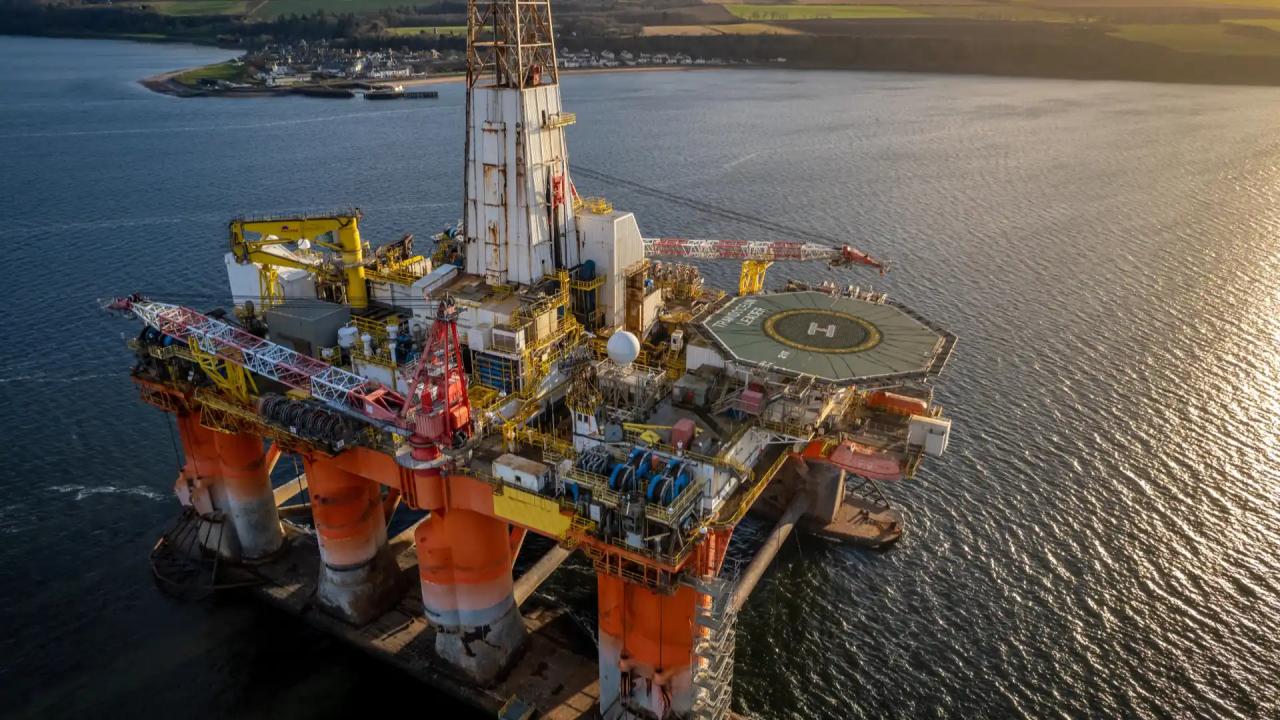
UK petrol reaches forecourts either as fuel refined in the UK or as finished product imported from overseas, then supplied through terminals and delivery networks as E10 or E5. Some of the crude behind that fuel comes from the UK North Sea, but it is bought and sold at globally benchmarked prices, which is why living close to UK oil production does not create a built-in discount at the pump.
This article walks through the full supply chain from well to pump, explains why the structure of that chain shapes the price you pay, and hands off to companion articles for each stage in depth.
The North Sea misconception
UK crude oil is sold on the global market at internationally benchmarked prices. A UK refinery buying North Sea crude does not get a special domestic discount just because the oil was extracted in UK waters. That is why being physically close to North Sea production does not create a separate cheaper petrol market for UK drivers.
Key takeaways
- UK petrol reaches forecourts either as fuel refined in the UK or as finished product imported from overseas, and standard 95-octane petrol is now usually supplied as E10, with up to 10% renewable ethanol. The balance between domestic refining and imported finished product changes over time.
- UK North Sea crude oil enters the global market. It does not create a cheaper domestic supply because refineries buy crude at globally determined prices regardless of where it was extracted.
- The UK both exports some refined products and imports others simultaneously. This is rational in a globally integrated market where different grades suit different refineries and delivery economics vary.
- The pump price tracks global crude oil and refined-product prices, plus biofuel costs, refining margins, distribution, fuel duty, VAT, and retailer margin. Domestic production levels affect supply resilience more than they create any separate UK-only discount at the pump.
- UK refinery capacity has declined sharply. Following the end of refining at Grangemouth and the closure of Lindsey in 2025, the UK has four major operating refineries: Fawley, Humber, Pembroke, and Stanlow. The UK is more reliant on imported refined product than it once was.
The six stages of the UK fuel supply chain
The chain from crude oil to your forecourt passes through six main stages: production, crude trading and import, refining, blending, wholesale distribution, and last-mile delivery. Each stage adds cost, and each helps explain why UK pump prices follow global markets rather than UK production alone.
Simplified overview of the UK fuel supply chain. The balance between domestic refining and imported refined product changes over time.
Stage | What happens | UK-specific detail |
|---|---|---|
1. Crude oil production | Oil extracted from UK fields, mainly the North Sea and west of Shetland, plus a small amount from onshore fields | UK still produces significant crude domestically, but output has declined sharply from its late-1990s peak |
2. Crude oil trading and import | Crude sold and bought on global markets; shipped to refineries | UK crude is exported to global markets; crude is imported to UK refineries from Norway, the US, the Middle East, and elsewhere |
3. Refining | Crude processed into petrol, diesel, kerosene, and other products | Following the end of refining at Grangemouth and Lindsey’s closure in 2025, the UK has four major operating refineries; capacity has declined; some refined product is imported directly |
4. Blending | Petrol is blended with renewable fuel before final distribution to forecourts | Standard 95-octane petrol is now E10, containing up to 10% renewable ethanol; super grade often remains E5 |
5. Wholesale distribution | Refined product stored at terminals, moved by pipeline, coastal tanker, or rail to regional depots | Pipeline infrastructure in England and Wales, combined with rail and maritime shipping, helps move fuel between refineries, terminals, and regional depots; some imports arrive directly at terminals |
6. Last-mile delivery | Tanker lorries deliver to individual forecourts | More frequent to high-volume stations; less frequent to smaller sites |
Upstream: where the crude comes from
UK North Sea and domestic production
The UK extracts crude oil mainly from the North Sea and from fields west of Shetland, with a small number of onshore fields as well. Production has declined sharply from its late-1990s peak, but domestic output still matters to the wider supply chain.
DESNZ/DUKES says UK production of crude oil and natural gas liquids fell to 30.4 million tonnes in 2024. But UK refineries took receipt of only 4.0 million tonnes of crude produced from the UK Continental Shelf in 2024, meeting just 7.7% of refinery demand.
DESNZ also says nearly 90% of UK crude oil production is exported, mainly to the Netherlands. That is one of the clearest reasons North Sea output does not translate into a separate cheaper domestic petrol market.
The global market mechanism
UK crude oil is sold by operators on the global market. The price is set by global supply and demand, benchmarked against internationally traded crude grades. A UK refinery buying North Sea crude pays the global market price for it, not a domestic discount. This is why UK production levels do not translate into lower pump prices: the crude is valued at its global market price regardless of its origin.
Imports
The UK imports crude oil from a range of countries to supplement domestic production. In 2024, the United States was the UK’s largest crude supplier, accounting for over a third of crude imports, with Norway second at 31.1%. Other producers can also supply UK refineries depending on the grade required and market conditions.
This mix changes over time because refineries buy the crude grades that best fit their equipment and economics, not simply the geographically nearest barrels.
Refining in the UK: what happens and what has changed
Crude oil is a complex mixture of hydrocarbons. Refining separates and processes these into usable products such as petrol, diesel, aviation fuel, heating oil, and petrochemical feedstocks through fractional distillation and further processing.
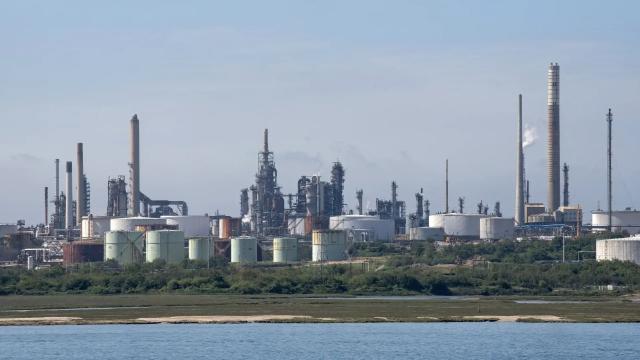
Following the end of refining at Grangemouth and the closure of Lindsey in 2025, the UK has four major operating refineries: Fawley, Humber, Pembroke, and Stanlow. That is down sharply from historic levels. Fewer refineries do not automatically mean a shortage, but they do leave the UK more exposed to global refining, shipping, and import conditions than when domestic refining capacity was larger.
For a full explanation of what happens inside a UK oil refinery, see our article on how petrol is made.
Blending: why UK petrol is now E10 or E5
One stage often missed in simplified fuel-chain explainers is blending. Standard grade 95-octane petrol became E10 in Great Britain in September 2021 and in Northern Ireland in November 2022, meaning it contains up to 10% renewable ethanol.
In practice, petrol can be blended with ethanol either at refineries or further downstream in the supply network before it reaches filling stations. Super grade 97+ petrol usually remains E5 at stations that sell two petrol grades, though drivers should always check the pump label.
Why the UK both exports and imports fuel at the same time
The UK exports some petrol and diesel while importing other refined products at the same time. That is not contradictory; it is how an integrated fuel market works.
Different refineries are optimised for different crude slates and different product yields, and UK demand is also skewed heavily toward diesel and jet fuel. DESNZ says that in 2024 UK refiners produced a quarter more petrol than was needed, but met only 54.9% of road-diesel demand and 28.8% of jet fuel demand. Excess petrol was exported, while imports helped meet diesel and jet demand.
Geography matters too. In some cases it is cheaper to import refined product into a nearby terminal than to move it across Britain from a UK refinery. That is why the UK can export petrol, import diesel, and still have a functioning market rather than a contradiction.
Distribution: from terminals to forecourts
Once refined or imported, finished fuel is stored at major terminals, many of them coastal. From there it moves through a mix of pipelines, rail, and maritime shipping to inland terminals and regional depots. The CMA notes that England and Wales have pipeline infrastructure combined with rail and maritime options, but there are no pipeline connections between Scotland and England.
From regional depots, road tankers deliver fuel to individual forecourts. High-volume sites may be replenished daily, while smaller sites are usually served less often. That delivery pattern helps explain why changes in wholesale prices do not reach every forecourt at exactly the same speed.
For the full last-mile explanation, our article on how finished fuel moves from terminal to your forecourt covers the logistics.
Why this supply chain means prices track global markets
Every stage of the supply chain adds a cost component to the pump price. The biggest variable is global crude and refined-product pricing, but UK pump prices also reflect exchange rates, biofuel costs and RTFO compliance, refining margins, distribution, fuel duty, VAT, and retailer margin.
Because the UK is integrated into global markets at the crude, refining, and refined-product stages, pump prices move mainly with international price signals rather than with UK production volumes alone. That is why events in the Middle East can move UK forecourt prices within days, while steady North Sea output does not create any separate UK-only discount.
The supply chain also helps explain regional price variation: distance from major terminals and refineries can affect distribution costs, but local competition and site economics still matter. For more on why prices often rise faster than they fall, our article on why pump prices follow rises faster than they follow falls covers the CMA’s findings.
Import resilience: why global access is also a strength
The UK’s reliance on imported crude and refined product is sometimes framed only as a vulnerability. In reality, it is both a dependency and a source of resilience: access to multiple suppliers and routes can help the market absorb disruptions, even though imports can also leave the UK exposed to global shocks.
The 2021 forecourt crisis was mainly a logistics problem, not a case of the UK physically running out of fuel. Government said overall fuel supplies remained strong, but HGV-driver shortages and a spike in localised demand disrupted deliveries to filling stations.
The UK is also required to hold emergency oil stocks under international obligations. Those stocks are not a US-style state-owned strategic petroleum reserve; the UK meets the obligation by directing companies to hold minimum stock levels that can be used in a supply disruption.
Keep reading
How Petrol Is Made: What Actually Happens Between the Oil Well and the Forecourt Pump
Petrol does not come out of the ground ready to use. Crude oil is a mixture of hydrocarbons that must be separated, chemically upgraded, and precisely blended before it becomes the…
How to Read a Petrol Station Price Board: the Display Tricks That Make Fuel Look Cheaper Than It Is
A UK forecourt price board takes about five seconds to read correctly, but there are three things most drivers scan past that make that reading wrong more often than it should be.
Petrol or Diesel for Low Mileage? It’s Not Just About Fuel Price
The usual advice is that diesel makes financial sense if you drive enough miles. What that advice often leaves out is the other half of the calculation: a diesel engine’s…

PetrolSavings Editorial
Editorial Team
Explore fuel savings tools
Use calculators and local price searches to plan smarter journeys.
We check for new prices every 5 minutes. Every price shows when it last changed, so check that before comparing deals.