

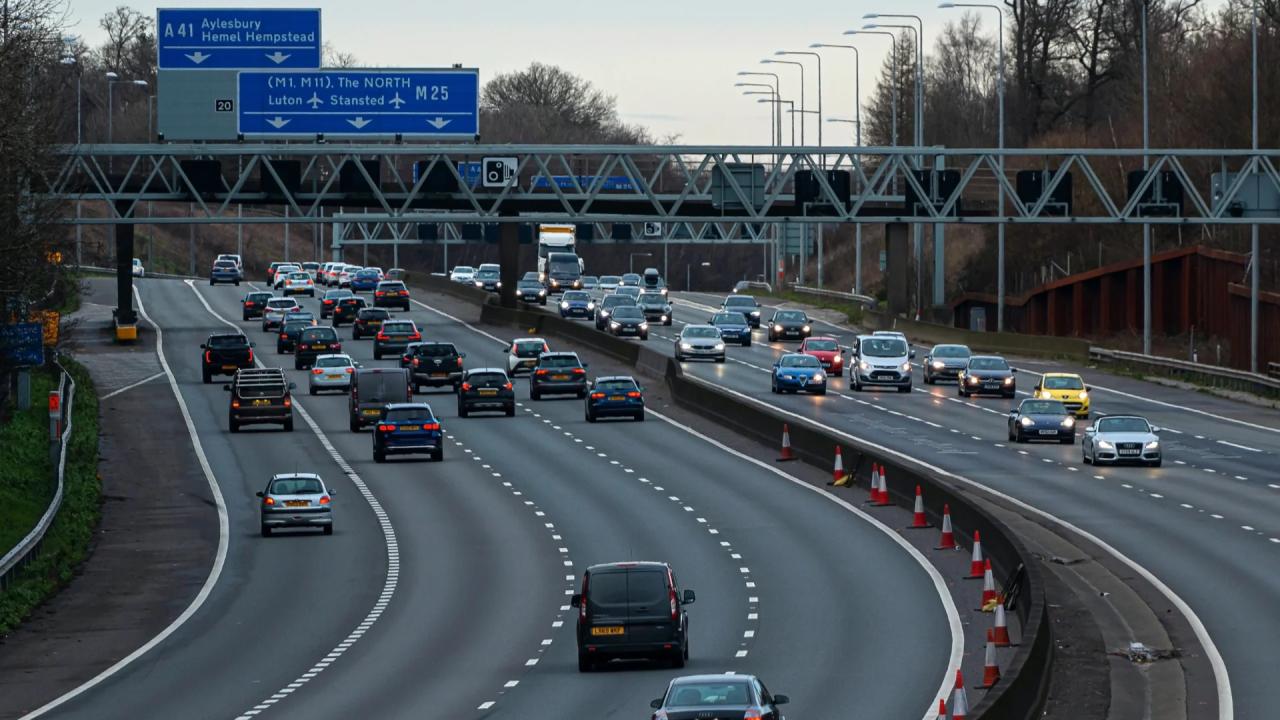
For years, the answer for a high-mileage motorway driver was straightforward: diesel. Better fuel economy at sustained speeds, competitive running costs, and strong residuals. Those advantages have not entirely disappeared.
But the total cost picture has shifted. Purchase premiums, Clean Air Zone exposure, and softer residuals have changed the equation, while modern full hybrids have narrowed the efficiency gap.
The answer is no longer automatic. This article works through the full cost framework, not just mpg, and ends with a practical guide by driver profile.
Key takeaways
- Full hybrids achieve their biggest efficiency gains in low-speed stop-start driving, precisely where this comparison matters least. At sustained motorway speeds, diesel’s efficiency advantage over a comparable full hybrid is more pronounced than most hybrid marketing implies.
- Total cost of ownership for a high-mileage driver includes fuel spend, purchase price differential, maintenance costs, VED, Clean Air Zone exposure, and residual value. Fuel alone is not the comparison.
- Diesel’s total cost position has weakened since 2017: purchase premiums remain, residual values have been under pressure in some segments, and CAZ charges affect drivers who pass through city zones regularly.
- The hybrid case is strongest for a driver who mixes motorway miles with significant urban mileage, the hybrid recovers substantially more of its efficiency advantage when the mix includes town and traffic sections.
- Neither option is universally cheaper. The answer depends on annual mileage, specific model choice, ownership duration, and whether the driver’s routes include Clean Air Zone cities.
Why the hybrid type matters and what this article compares
"Hybrid" covers three meaningfully different technologies. This article compares diesel to full hybrid (HEV) only, the type that charges via regenerative braking with no plug required. A PHEV driven predominantly on motorways without charging is carrying battery weight at a disadvantage; a mild hybrid provides minimal assist at motorway speeds. For the full comparison of all three hybrid types and where each earns its keep, our guide to which hybrid suits your driving covers the breakdown. For the specific question of whether a PHEV saves money, our PHEV fuel economy guide covers charging dependency.
This article compares diesel to full hybrid (HEV) only. That is the technology with a genuine efficiency proposition for a predominantly motorway driver who does not plug in. If you are considering a PHEV with regular charging, the comparison is different, and if you are considering an EV, that is a separate calculation entirely.
The efficiency picture at motorway speeds, where diesel's advantage persists
Full hybrids generate their most significant efficiency gains from two mechanisms: electric motor assist at low speeds and regenerative braking recovering energy during deceleration. At sustained motorway speeds of 65 to 70mph, neither mechanism contributes much. The electric motor cannot meaningfully assist at sustained higher speeds without depleting the small battery rapidly, and regenerative braking only captures energy when the driver slows, which on a clear motorway is infrequent.
At sustained motorway speed, a full hybrid is running predominantly on its petrol engine. Diesel fuel contains roughly 10% more energy per litre than petrol, which is a physical property rather than a marketing claim. At higher speeds where both vehicles are relying mainly on their combustion engine, that energy-density advantage helps explain diesel's real-world efficiency edge.
For a driver doing 90% or more of their mileage at motorway speeds, a modern diesel from a reputable manufacturer typically achieves better real-world economy than a comparable full hybrid on those specific miles. The gap varies by model and speed, and it narrows as the driving mix includes more urban mileage, where the hybrid recovers substantially more of its advantage.
The five cost variables that actually determine the answer
1. Fuel cost per mile
This is the variable most drivers consider and the one where diesel has traditionally held its advantage for motorway use. The calculation requires current diesel and petrol prices and real-world mpg for the specific models being compared at motorway speeds.
Using the latest published GOV.UK weekly road fuel prices for the week commencing 13 April 2026, unleaded petrol is 158.01p per litre and diesel is 192.06p per litre. That 34.05p per litre gap is materially wider than normal, which matters because it can reduce or even erase diesel's usual per-mile advantage unless the mpg gap is strong. As an illustrative fuel-only example, a diesel returning 55mpg at motorway speeds costs about 15.9p per mile at these prices, while a full hybrid returning 48mpg costs about 15.0p per mile. Figures correct as of 14 April 2026; use current local pump prices and model-specific motorway mpg before deciding.
Diesel typically trades at a premium over petrol at UK forecourts, and the gap can widen materially with wholesale market conditions. The energy-density advantage of diesel offsets some of this price differential in fuel cost per mile, but the net advantage varies. Check current diesel and petrol prices near you to run the calculation with live figures for your area.
2. Purchase price differential
Diesel variants of the same model typically carry a purchase price premium over petrol or hybrid equivalents. Full hybrid models also carry a premium over a base petrol car. Which is larger depends on the specific models being compared. For a total cost calculation, the purchase premium must be recovered through running cost savings to reach break-even.
For a like-for-like new-car comparison, use current list prices for the exact trims you are considering. For used cars, compare asking prices for examples of the same age, mileage, gearbox and condition.
3. Maintenance cost differences
Diesel: fuel filter replacements, DPF management with risk reduced but not eliminated for predominantly motorway drivers, and potentially higher oil-change sensitivity under some conditions. Full hybrid: regenerative braking reduces pad and disc wear, there is no diesel particulate filter to manage, and mainstream HEV systems have a long real-world durability record. Maintenance differences are real, but they are usually secondary to fuel, purchase price and CAZ exposure.
4. VED, Clean Air Zones, and regulatory costs
First-year VED depends on CO2, but the important point here is that diesel cars that do not meet the RDE2 standard pay the higher diesel first-year rate. From 1 April 2026, a car in the 1 to 50g/km band pays £115 if it is petrol, alternative-fuel or RDE2-compliant diesel, but £135 if it is a non-RDE2 diesel. In the 51 to 75g/km band the figures are £135 versus £280. From the second licence onwards, the standard annual rate is £200. This matters most on a new-car comparison; on a used-car purchase, the first-year rate has already been paid.
Clean Air Zone charges are the potentially decisive variable, but for private cars the picture is not the same in every city. Birmingham and Bristol operate Class D zones that can charge non-compliant private cars. Bath, Bradford, Sheffield and Tyneside do not charge private cars, though they can charge vans, taxis and heavier vehicles, and Portsmouth's Class B zone does not charge private cars or vans. For cars and vans, the national minimum standard is generally Euro 6 for diesel and Euro 4 for petrol, but always use the official checker for the specific vehicle. Many full hybrids are compliant in practice because they are petrol cars that meet the standard, not simply because they are hybrids.
5. Residual value
Diesel residual values have been under pressure in parts of the UK passenger-car market since around 2017, driven by the diesel emissions scandal, urban air-quality policy and uncertainty about future regulation. The pattern is not uniform: some prestige and commercial-sector diesels have held up better than mainstream passenger cars. Full hybrid values have often looked steadier in recent years, but residuals still depend heavily on the exact model, mileage and market conditions when you sell.
How to run the calculation for your situation
The total cost of ownership calculation requires: purchase price differential, annual fuel saving (based on real-world mpg at motorway speeds multiplied by annual mileage multiplied by the current fuel price differential), annual maintenance cost differential, annual VED and CAZ differential, and estimated residual value differential at end of ownership.
Illustrative example only, using current UK average pump prices for the week commencing 13 April 2026. A driver covering 20,000 miles per year with 85% motorway use would burn about 1,653 litres a year at 55mpg in a diesel, versus about 1,894 litres at 48mpg in a full hybrid. At 192.06p per litre for diesel and 158.01p per litre for petrol, that is about £3,175 a year in diesel fuel and about £2,993 a year in petrol. On fuel alone, the hybrid is roughly £182 a year cheaper at this price gap. Narrow the pump-price gap, or widen the diesel's motorway mpg advantage, and the result can flip.
The calculation is sensitive to fuel prices (which change), mpg assumptions (which vary by model and conditions), and residual values (which are estimates). Run it with your own figures rather than relying on a generic conclusion formed in different market conditions.
Comparison at a glance
This table compares general characteristics for a driver doing predominantly motorway miles. Results vary significantly by model, annual mileage, ownership period, fuel prices, and CAZ exposure.
Factor | Diesel | Full hybrid (HEV) |
|---|---|---|
Motorway fuel economy | Strong, typically best at sustained speeds | Competitive but less advantage than in urban driving |
Fuel cost per mile (motorway) | Depends on diesel/petrol price differential and model mpg | Depends on petrol price and model mpg |
Purchase price premium vs base petrol | Typically higher | Typically higher, compare specific models |
DPF maintenance risk | Reduced for predominantly motorway use, passive regeneration conditions are usually met | Not applicable |
Brake wear (high mileage) | Standard wear rates | Reduced, regenerative braking lowers pad and disc wear |
VED first-year rate (non-RDE2 diesel) | Higher first-year rate if the diesel is non-RDE2 | First-year rate still depends on CO2 band, but there is no extra non-RDE2 diesel surcharge |
Clean Air Zone charges | Applicable if pre-Euro 6 | Usually compliant in practice, but check the vehicle's standard rather than assuming from the badge |
Residual value trajectory | Under pressure in some segments since 2017 | Generally steadier in recent years, check segment |
Battery longevity concern (used) | Not applicable | Lower risk for HEV than PHEV, because it is not deep-cycled in the same way |
Best for motorway miles | Pure motorway driver, no CAZ exposure, longer ownership | Mixed motorway/urban, CAZ exposure, shorter ownership |
Best for by driver profile
Pure motorway driver, 20,000+ miles per year, 90%+ motorway, no CAZ exposure, five-year ownership: Diesel remains competitive on a total cost basis. The fuel economy advantage at sustained speeds is real, and DPF risk is lowest for this profile. Run the purchase price and residual value calculation for the specific models you are considering before committing.
High-mileage mixed driver, 20,000+ miles, 65 to 70% motorway, regular urban legs: The hybrid case is stronger here. The urban portion recovers more of the hybrid's efficiency advantage, and regenerative braking benefit compounds across the urban mileage. CAZ exposure also matters more if those urban legs include Birmingham or Bristol.
High-mileage driver with regular CAZ city routes: The CAZ charge calculation can be decisive. A driver entering Birmingham in a non-compliant diesel car five days a week would face about £2,000 a year in charges at the current £8 daily rate over 250 working days. In Bristol, the equivalent figure is about £2,250 a year at the current £9 daily rate. Model this explicitly before buying.
Company car driver on a three-year lease cycle: Benefit-in-Kind tax rates favour lower CO2 vehicles, and diesel-only cars can also attract a 4% supplement unless they meet the RDE2 standard. That can make some full hybrids more attractive than diesels on a company-car basis, even when the motorway fuel-economy case still favours diesel.
Used vehicle buyer: For a used diesel, check Euro standard (Euro 6 for CAZ exemption in most zones), DPF service history, and whether the previous owner’s driving pattern was appropriate for DPF health. For a used hybrid, battery health is less critical for a full HEV than for a PHEV. Manufacturers such as Toyota back hybrid batteries for long periods when servicing requirements are met.
Driver uncertain about future policy direction: The regulatory environment for diesel is directionally more uncertain, with Clean Air Zone coverage, local charging rules and wider policy risk all worth watching. The hybrid regulatory environment is currently simpler. If you plan to own for five or more years and are unsure about policy developments, factor that uncertainty into the decision rather than assuming today's position will stay fixed.
Five myths worth correcting
“Hybrids are always more efficient than diesel”
At sustained motorway speeds, modern diesel typically achieves better real-world fuel economy than a comparable full hybrid. The hybrid’s efficiency advantage is concentrated in urban and mixed driving.
“Diesel is always better for high mileage”
This was more reliably true before Clean Air Zones changed the cost calculation for some drivers. For a high-mileage driver with significant CAZ exposure, the total cost case for diesel has weakened materially.
“Hybrid battery replacement is an inevitable large cost”
Full hybrid battery replacement on mainstream models is not commonly required within normal ownership periods. Long-running Toyota and Lexus taxi use has helped build confidence in HEV battery longevity, although condition still matters on older or very high-mileage cars. The risk exists, but it is not the near-certain cost some buyers assume.
“The brochure mpg figure applies to motorway driving”
WLTP figures include a weighted mix of driving conditions. Real-world motorway mpg at 70mph for many hybrids is lower than the WLTP headline, which reflects the urban cycle where hybrids perform best. The diesel’s real-world motorway figure is typically closer to its WLTP figure.
“Clean Air Zone charges only apply to old diesels”
For private cars, the English CAZ picture is mixed. Birmingham and Bristol can charge non-compliant private cars, while Bath, Bradford, Sheffield and Tyneside do not charge private cars, and Portsmouth does not charge private cars or vans. For diesel cars, Euro 6 remains the key benchmark in the national framework, but the safest route is to use the official checker rather than rely on age alone.
Routes and landmarks
Jump straight to route planning or landmark fuel pages while you read.
Keep reading
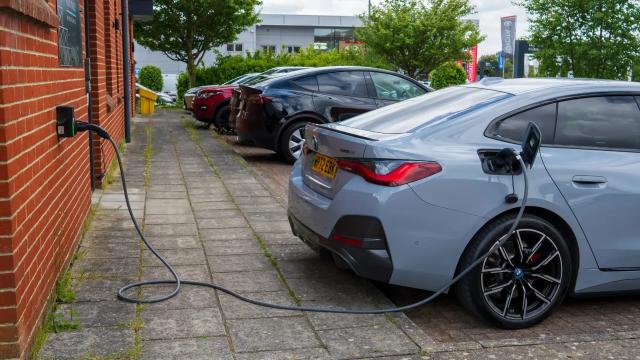
Plug-In Hybrids: Why Real-World Fuel Economy Often Disappoints and What Changes That
A plug-in hybrid driven without regular charging still carries a large battery, but most of the work is being done by the petrol engine in a car that weighs more than its…
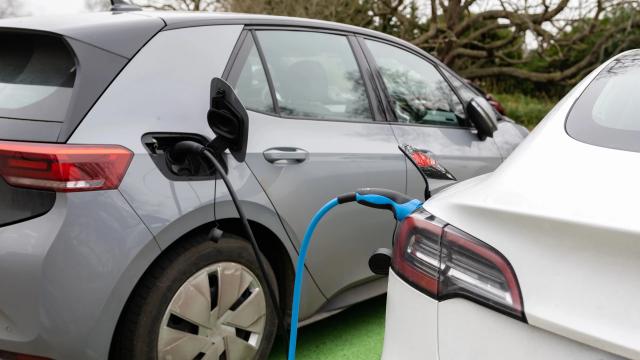
Which Hybrid Suits Your Driving? City Trips, Short Runs, and the Type That Actually Matters
Stop-start city traffic is the one driving condition where a full hybrid genuinely earns its efficiency premium over a conventional petrol car. The electric motor and…

Why Rural Petrol Costs More and the Tactics That Help Close the Gap
If your nearest forecourt is also your only forecourt, you already know the price is higher. What is less obvious is why.

PetrolSavings Editorial
Editorial Team
Explore fuel savings tools
Use calculators and local price searches to plan smarter journeys.
We check for new prices every 5 minutes. Every price shows when it last changed, so check that before comparing deals.