

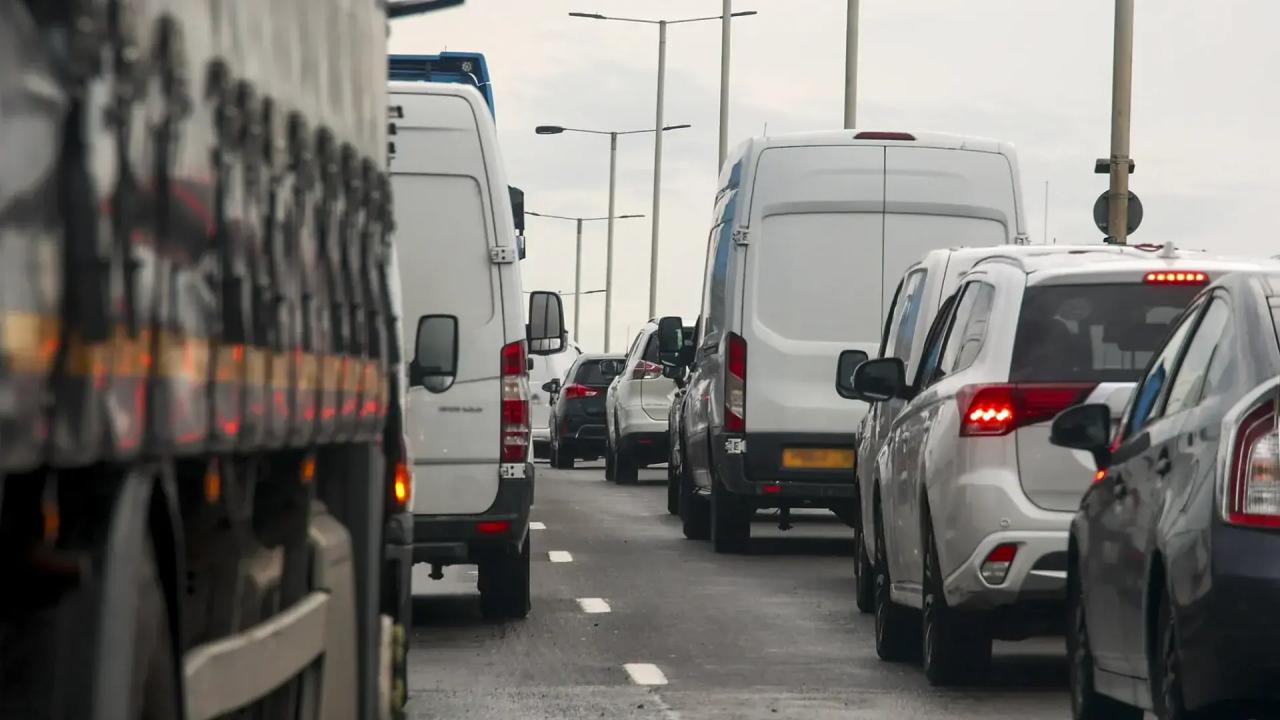
A 2-mile school run costs more per mile in fuel than a 20-mile motorway run in the same car. The reason is mechanical: every time you start a cold engine, it runs on a richer fuel mixture for the first few minutes before reaching operating temperature.
The shorter the trip, the larger the proportion of distance spent in that inefficient phase.
This article explains the mechanism and covers the habits that reduce it, most of which cost nothing to implement.
Key takeaways
- Every cold start runs the engine on a richer fuel mixture until it reaches operating temperature. On a short trip, this inefficient phase makes up the majority of the distance, which is why cost per mile is higher, not lower, than on a longer run.
- Combining errands into one trip instead of making separate short runs is the single most effective change available. It reduces the number of cold starts, which is the primary cost driver.
- Idling to warm up the engine before driving does not help fuel economy on a modern fuel-injected car. Gentle driving from a cold start warms the engine faster and uses less fuel.
- Diesel drivers doing predominantly short trips face the additional risk of DPF problems, a diesel that never reaches operating temperature cannot clear its particulate filter passively.
- Trips under half a mile in good conditions are worth questioning on purely financial grounds, the cold-start cost and parking time often exceed any time saved over walking.
Why short trips cost more per mile — the cold-start mechanism
When a petrol engine starts cold, the fuel injection system enriches the mixture, more fuel relative to air, to compensate for the poor fuel vaporisation that occurs before the engine reaches operating temperature. This is not a design flaw; it is a necessary calibration for reliable cold starts. The engine management system gradually leans the mixture back to normal as the coolant temperature rises.
Two other factors compound the cold-start penalty. The catalytic converter requires time to reach its working temperature, typically around 300°C, before it operates efficiently. Until it does, fuel is not being burned as cleanly. And engine oil is more viscous when cold, increasing internal friction until it warms and flows properly. This places additional mechanical load on the engine that warm oil does not.
All three factors, rich mixture, cold catalyst, viscous oil, resolve as the engine warms up. On a 30-mile motorway run, the warm-up phase represents perhaps the first mile or two. On a 2-mile town trip, it represents the majority of the distance. The result: fuel consumption per mile is substantially higher on short cold trips than on warm longer ones, even at the same average speed.
A driver doing two 2-mile school runs per day, five days a week, is making ten cold starts per week. Each cold-start phase uses more fuel per mile than the same miles would cost mid-run in a warm engine. The cumulative cost over a school term is not trivial, and the price per litre at the pump is the other variable in that equation. Filling up at the cheapest petrol station near you reduces the per-mile cost of those cold starts alongside every other mile you drive.
The diesel short-trip problem — an additional layer
Diesel engines have an additional short-trip vulnerability that petrol engines do not: the diesel particulate filter. The DPF captures soot from combustion and periodically burns it off during a regeneration cycle, which usually requires the engine to reach and sustain a higher temperature for around 20–30 minutes.
A diesel that only ever does short cold trips may never reach the temperature needed for passive regeneration. The DPF accumulates soot until it triggers a warning light and eventually requires forced regeneration, or in severe cases, replacement. DPF replacement on a typical family diesel can cost £1,000–£3,000 including parts and labour. This risk, added to the base cold-start fuel cost, makes short-trip diesel driving genuinely expensive in a way that is not visible at the pump.
The idling myth — why warming up by sitting still makes things worse
Many drivers, particularly those who learned in older cars, idle the engine for several minutes before driving in cold weather. On carburetted engines, pre-1990s for most UK cars, this had some justification because the mixture needed time to stabilise before the car would drive smoothly.
Modern fuel-injected engines do not benefit from prolonged cold idling. The ECU manages the fuel mixture electronically, and the engine is ready to drive within seconds of starting. More importantly, the engine warms up faster under gentle load, light acceleration, low revs and smooth progress, than it does while idling stationary. An idling engine burns fuel without warming the coolant, oil and catalytic converter as efficiently as gentle driving does.
Idling on a public road is also an offence. Rule 123 of the Highway Code and the Road Traffic (Vehicle Emissions) Regulations 2002 prohibit unnecessary idling. Fixed penalty notices can be issued.
The correct technique: start the engine and drive away gently almost immediately. Keep revs low for the first mile or two. The engine warms faster and fuel is used more productively than if you had sat on the driveway for five minutes.
The highest-impact habit — combining trips
Every separate short trip involves a cold start. A driver who makes three separate 1.5-mile trips, to the pharmacy, the supermarket and back, makes three cold starts. A driver who combines all three into one round trip makes one cold start while covering the same total distance.
Three trips of 1.5 miles each cost more in total fuel than one trip of 4.5 miles covering the same destinations, because the combined trip involves only one cold-start phase. The mileage is identical. The number of inefficient warm-up phases is not.
The practical application takes five seconds: before making a short local trip, ask whether any other local errand can be combined. This can eliminate one or two cold starts per week with no change to the destinations or the total distance.
Route planning also matters within a combined trip. Doing errands in an order that avoids backtracking and keeps the engine warm throughout is more efficient than a stop-start route involving multiple short hops with the engine switched off between each stop. Sequence the furthest errand first, then work back towards home, and the engine stays warm for more of the total distance.
Route and timing choices that reduce stop-start exposure
Short local trips often involve the worst possible driving conditions for fuel economy: frequent stops, slow speeds, traffic lights, school zones, car parks. These are also the conditions where the cold-start penalty compounds with stop-start inefficiency.
Route choice can reduce exposure to the worst stretches without significantly increasing distance. A slightly longer route on a faster-moving road may use less fuel than a shorter route through congested streets, particularly if the engine is still in its warm-up phase on the shorter route.
Timing matters on short trips more than on longer ones. Leaving five minutes earlier to avoid the peak school traffic can convert a 2-mile crawl into a 2-mile run at a reasonable pace. The difference in fuel cost per mile between 5mph stop-start and 20mph flowing traffic is significant, and for a cold engine the gap is wider still.
Idling during the trip — the smaller but real saving
Beyond the start-up myth, unnecessary idling during a trip also wastes fuel. An idling engine on a modern car consumes fuel continuously. The rate varies by engine size and by which accessories are running, but several minutes of unnecessary idling per day still adds up to a modest but real weekly cost.
Common situations include waiting in a school car park with the engine running, sitting in a drive-through queue, warming the car while it defrosts, or waiting for a passenger outside a building. None of these situations requires the engine to be running. Modern stop-start systems handle brief stops automatically; for drivers without stop-start, the threshold for switching off manually is generally accepted as around one minute of stationary waiting.
Avoiding idling saves less than combining trips over a typical week. It’s still worth doing, but get the order right: cut down on cold starts first, then reduce time spent idling.
When the car may not be the cheapest option
For trips under roughly half a mile in reasonable weather, the combination of cold-start fuel cost, parking time, and wear on the vehicle often makes the car the more expensive and slower option. A driver who replaces two 400-metre errands per week with walking has eliminated two cold starts, saved a small but real amount of fuel, and probably arrived in less time than if they had driven and parked. This is a cost observation, not a lifestyle instruction.
What it adds up to — an illustrative calculation
The following uses round illustrative figures. Actual costs depend on your car, your engine, and ambient temperature.
A driver making 10 short cold-start trips per week of roughly 2 miles each covers 20 miles. The same driver combining those into 4 trips, same destinations, same total distance, reduces cold starts from 10 to 4, eliminating 6 inefficient warm-up phases per week.
If local short-trip driving costs approximately 30p per mile in fuel, including the cold-start phase, compared with a warm-engine figure of roughly 20p per mile, those 20 miles cost £6.00 in separate trips versus approximately £4.80 in combined trips. That is a saving of around £1.20 per week, or roughly £62 per year. The figures are illustrative, but the direction holds: fewer cold starts on the same mileage means less fuel used.
That saving stacks with any per-litre saving from filling up at a cheaper local forecourt. Checking local prices before your next fill can make a bigger difference on high-consumption short-trip driving than it does on an efficient motorway run.
Winter makes it worse
Cold-start fuel enrichment is significantly worse in winter than in summer. The same 2-mile trip in January costs more per mile than the same trip in July, not just because of the richer fuel mixture, but also because cold tyres have higher rolling resistance, the heater places additional electrical and sometimes mechanical load on the engine, and the engine takes longer to reach operating temperature in lower ambient temperatures. If your fuel log shows higher costs in winter, this is usually the explanation rather than a mechanical fault.
Full hybrids reduce the cold-start penalty significantly because the electric motor assists from the start and the combustion engine can sometimes be held off briefly. But even full hybrids still have a cold-start phase when the engine does engage. Only EVs are genuinely free of combustion cold-start costs, though they have their own cold-weather range penalty from battery chemistry and cabin heating.
Routes and landmarks
Jump straight to route planning or landmark fuel pages while you read.
Keep reading
What Is a Good Petrol Price in the UK?
A good petrol price is one that is competitive for your area and station type, not just low against a national headline average. A price that looks expensive in a competitive super...
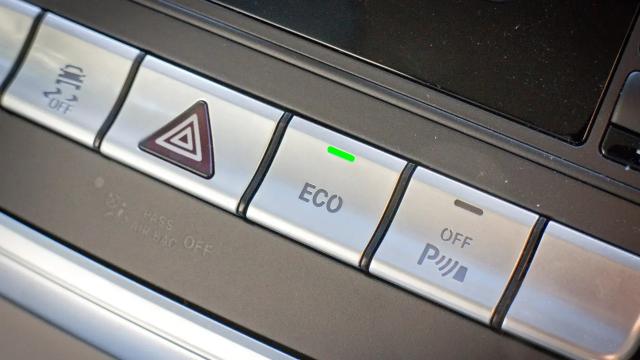
Is Eco Mode Worth Using? What It Actually Changes and When It Helps
Eco mode does save fuel. The changes it makes are real, and in the right conditions they produce a genuine if modest improvement in economy. The catch is that what Eco mode changes...
Do Older Cars Use More Fuel? How to Tell What’s Age, What’s Neglect, and What’s Fixable
Older cars often do use more fuel. But the reason is rarely just age. The most useful distinction is between genuine mechanical wear that accumulates over time, maintenance neglect...

PetrolSavings Editorial
Editorial Team
Explore fuel savings tools
Use calculators and local price searches to plan smarter journeys.
We check for new prices every 5 minutes. Every price shows when it last changed, so check that before comparing deals.