

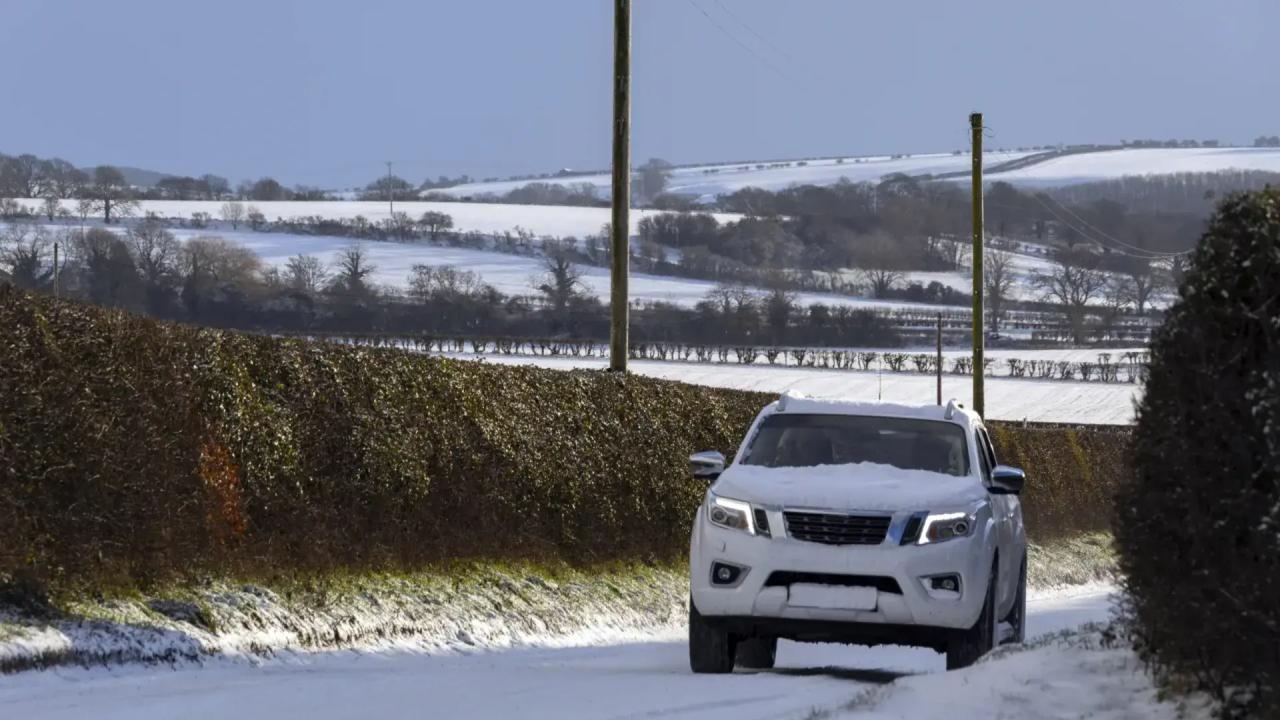
Your car uses more fuel in winter. Some of that is unavoidable because cold engines run richer, cold air is denser, and more electrical systems are in use.
But a meaningful share comes from habits that are easy to change once you understand what they cost. This article identifies the main winter fuel drains, ranks them by impact, and gives you a short list of changes that reduce waste without leaving you in a freezing car.
Key takeaways
- The biggest single source of winter fuel waste for most drivers is unnecessary stationary idling, leaving the car running to warm up or demist before getting in. Driving immediately but gently warms the engine faster and uses less fuel.
- Tyre pressures drop as temperatures fall. A tyre correctly inflated in autumn can be noticeably underinflated by January. Check monthly through winter, not just once.
- Every cold start costs more fuel per mile than a warm one because the engine runs a richer mixture until coolant reaches operating temperature. Two short trips on a cold morning cost more per mile than one combined trip of the same distance.
- Heated seats, rear windscreen heaters and blower motors all add electrical load the alternator must meet. Switch them off when they have done their job, not because the saving is large, but because there is no reason to run them beyond their useful window.
- Some fuel costs in winter are simply worth paying: a warm car is safer to drive and a clear windscreen is not optional. The goal is to spend fuel on comfort and safety, not on waste.
Why your car uses more fuel in winter
Three things drive higher winter fuel consumption. First, cold-start enrichment: the engine runs a richer fuel mix and higher idle revs until coolant reaches operating temperature, which takes longer from a genuinely cold start than from a slightly cool one. Second, reduced tyre pressure as cold air contracts inside the tyre. Third, higher electrical load from lights, the heater blower, heated elements and demisters, all of which the alternator powers by drawing on the engine.
A fourth factor compounds all three: more short trips. The cold-start penalty hits every time the engine starts cold, so a driver making three short runs on a winter morning pays that penalty three times. This is why winter-specific advice differs from generic fuel-economy guidance, and why the habits below are worth building. Checking local forecourt prices reduces what you pay per litre; the habits below reduce how many litres you burn.
The morning habit that wastes the most fuel
Idling to warm up
Leaving a car idling in the driveway to warm the engine, clear the windscreen or heat the cabin wastes fuel. A stationary idling engine does warm up, but more slowly than one being driven gently, because the coolant circulates more effectively under light load than at idle. A modern fuel-injected engine is designed to be driven immediately after a cold start, with gentle throttle inputs, until the temperature gauge begins to move.
The correct habit: start the car, clear the windscreen while the engine is running (using the heated rear screen and blower if needed, or a scraper on the outside), then drive away gently for the first mile or two. Do not rev hard on a cold engine; that is a mechanical concern as well as a fuel-economy one.
Demisting — the fuel cost and the faster method
Running the heater blower and heated rear windscreen to clear a frosted or misted screen uses fuel. Most modern cars automatically engage the AC compressor in demist mode because air conditioning dehumidifies the air, which adds further load.
For heavy frost, the fastest approach is a combination: de-icer spray on the exterior glass, a proper ice scraper for what remains, and the heater running on the interior. This clears the car more quickly than idling alone, which means the engine runs for less time before the car is ready to move.
A windscreen cover placed on the car the night before eliminates exterior frost entirely. Even used three mornings a week, it can save several minutes of idling each time. De-icer, scraper and cover together cost less than £30 and last all winter.
For condensation (no ice), the fastest fix is the heated rear screen and a short blast of AC on the front screen. Once clear, switch both off. Running the rear heater for ten minutes after the glass has cleared is paying for nothing.
Tyre pressure drops in winter — what to check and when
Air contracts as temperature falls. A tyre inflated to the correct pressure at 15°C in September will have lower pressure at 0°C in January; the air inside has contracted, but the tyre volume has not changed. The result is an underinflated tyre that increases rolling resistance, raises fuel consumption and wears unevenly.
For every significant drop in ambient temperature, tyre pressure falls noticeably. A tyre that was correct in autumn may be meaningfully underinflated by mid-winter.
The action: check all four tyres with a pressure gauge once a month from October to March, and after any significant cold snap. The correct pressure is on a sticker inside the driver’s door frame or in the handbook, not on the tyre sidewall, which shows maximum pressure rather than the recommended running pressure.
Most forecourts have free or low-cost air machines. A personal tyre pressure gauge costs £5–15 and allows checking at home before a trip. Buying the gauge is done once. Checking monthly is the habit.
Short trips in winter — the compounding cold-start problem
Every cold start incurs a fuel penalty because the engine runs a richer mixture during the warm-up phase. In winter, the engine starts genuinely cold rather than merely cool, so the warm-up phase takes longer and the penalty per trip is larger.
A driver making two separate 3-mile trips on a cold morning - school run, then back home, then out to the shops - incurs the cold-start penalty twice. A single 6-mile round trip that combines both errands incurs it once. The per-mile fuel cost is lower for the combined trip.
Where possible, sequence errands to create longer single trips rather than multiple short ones. This is easiest to plan the night before: if two errands are within a mile of each other, combine them on the same run rather than making separate cold starts.
Electrical load - the small saving most drivers leave on
Winter loads the alternator more heavily than summer: more hours of headlights, heated rear windscreen, heated seats, and the blower motor running on high. The alternator converts engine power to electricity, so a heavier electrical draw means the engine has to do slightly more work.
The saving from managing this is modest per item. The habit is: switch off heated seats and heated rear windscreen once they have done their job. A heated seat reaches temperature in a couple of minutes; leaving it on for a 40-minute commute is not buying additional warmth. It is burning fuel for an accessory that is no longer needed.
The cabin heater itself is different. The engine produces waste heat regardless of whether you use it, so running the cabin heater does not increase fuel consumption meaningfully because it is recovering heat the engine generates anyway. Turning the heater off to save fuel in winter is a myth. See below.
What is worth the fuel cost — the honest list
Some winter fuel costs are simply correct to accept. This article is about cutting waste, not about enduring discomfort.
Worth the fuel cost without question:
A clear windscreen before driving - front, rear and side windows. Not optional.
Headlights on in low light and during rain, even in daylight hours.
The cabin heater: it uses engine waste heat, not additional fuel.
Windscreen wash fluid: running out in winter is a safety issue.
Worth the fuel cost with a small caveat:
Heated rear windscreen: use it to clear the glass, then switch it off.
Heated seats: use them to warm up, then switch them off once comfortable.
AC in demist mode: use it while the screen is clearing, then switch it off.
The goal is not zero comfort. It is avoiding the specific waste that comes from running things beyond their useful window.
Myths about winter fuel economy
“The heater uses extra fuel”
The cabin heater in a petrol or diesel car uses heat from the engine coolant - waste energy that the engine generates regardless of whether you use it. Running the heater does not meaningfully increase fuel consumption. It is not the same as running the AC, which drives a compressor. Turning the heater off to save fuel in winter is not a saving.
“You need to let the engine warm up before driving”
Idling before driving does not warm the engine faster than driving gently. It keeps the engine at low load, circulates coolant slowly, and burns fuel while the car goes nowhere. Modern fuel-injected engines are designed to be driven immediately after a cold start, at gentle inputs. Start the car, clear the screen, drive away without harsh acceleration for the first mile or two.
“Premium fuel helps in winter”
Premium petrol and diesel contain detergent additives that can keep fuel system components cleaner over time. They do not change how an engine behaves at cold temperatures, how quickly it reaches operating temperature, or how much fuel it uses in the warm-up phase. Premium fuel does not reduce winter fuel consumption.
Quick-reference checklist
One-off / seasonal setup tasks:
- Buy a windscreen cover if you do not own one, use it on forecast frost nights
- Buy a quality ice scraper and keep it in the car
- Buy a de-icer spray, keep one indoors (it does not work frozen) and one in the car
- Buy a tyre pressure gauge if you do not own one
- Check tyre pressure now and note the correct figures from the door sticker
Habit tasks - before or during every relevant winter trip:
- Check tyre pressure monthly, and after any significant cold snap
- Use the windscreen cover the night before forecast frost
- Start the car, clear the screen, and drive immediately - do not idle to warm up
- Switch off heated rear windscreen once the glass is clear
- Switch off heated seats once you are comfortable
- Combine short errands into single trips where possible to reduce cold starts
- Check fuel level - winter is not the time to run low
Optional - for drivers who want to go further:
- Check coolant antifreeze concentration before winter (a garage can do this in minutes)
- Check wiper blades, winter ones shed ice better and improve visibility
Keep reading
Should You Fill Up at Half a Tank or Wait Until Near Empty?
For most drivers, filling up at or before the quarter-tank mark is the sensible habit. Not because running lower is acutely dangerous, but because it removes a cluster of small dis...
The 30-Second Fuel Log: Spot Falling MPG Before It Gets Expensive
The mpg figure on your dashboard is a calculation, not a direct measurement, and it often flatters. If you want to know what your car is actually achieving, and whether that figure…
Tyre Pressure and Fuel Economy: How to Check It, How Often, and What Goes Wrong
Underinflated tyres increase rolling resistance and raise fuel consumption. That part is well known.

PetrolSavings Editorial
Editorial Team
Explore fuel savings tools
Use calculators and local price searches to plan smarter journeys.
We check for new prices every 5 minutes. Every price shows when it last changed, so check that before comparing deals.