

What's in this article
- The distribution chain from refinery gate to forecourt
- What determines what a station pays for its fuel, and what it charges you
- Why branded and unbranded fuel share the same logistics
- Rural areas, low-volume stations, and why they cost more
- Delivery timing, cost bases, and why nearby stations can charge different prices at the same time
- When prices are moving, comparison matters most
Finished petrol leaves the refinery through a network of pipelines and storage terminals before a road tanker delivers it to your forecourt. That last-mile chain, the depot distance, the delivery frequency, and above all the competition from nearby stations, does more to explain local price differences than most drivers realise. This article explains each stage and connects the logistics to the price variation you actually experience at the pump.
Key takeaways
- Petrol moves from refineries and import terminals through a network of pipelines, terminals, rail and maritime links, then by road tanker to individual forecourts. For UK forecourts, the road tanker is the standard last-mile delivery vehicle.
- Delivery cost is one factor in local price differences, but competition between nearby stations is often the larger determinant. A station close to a depot in a low-competition area may charge more than one further away with active local rivals.
- Low-volume sites (rural stations, low-traffic independents) pay proportionally higher per-litre delivery costs because the same fixed lorry cost is spread across fewer litres.
- For the same petrol grade, branded fuels typically share the same pipeline and terminal infrastructure as unbranded fuels. Brand-specific additives are usually injected at the terminal or during tanker loading rather than carried through a separate branded distribution chain.
- During volatile wholesale markets, the gap between cheapest and most expensive local stations tends to widen, making live price comparison most valuable exactly when prices are moving.
The distribution chain from refinery gate to forecourt
Refineries and import terminals. Finished petrol leaves one of the UK’s four major operating refineries (Fawley, Humber, Pembroke, and Stanlow) following the transition of Grangemouth to an import terminal and the cessation of refining operations at Lindsey in 2025, or arrives at an import terminal where refined product shipped from overseas is received. Some imported product bypasses UK refining altogether, arriving at coastal terminals as finished fuel ready for distribution. This article starts here. For the upstream chain, from oil field through to the refinery, see our separate guide to the UK supply chain from oil field to forecourt.
The fuel transfer network. Pipeline infrastructure in England and Wales, including systems such as UKOP, moves large volumes of finished fuel between refineries, import terminals, and regional storage depots. Rail and maritime shipping also play an important role, and there are no pipeline connections between Scotland and England. That difference in logistics can contribute to higher prices in some remote areas, but it is still only one part of the final local pricing picture.
Storage terminals and depots. At the end of a pipeline segment, or at a coastal receiving point, fuel is stored at large terminal complexes. These tank farms hold multiple products (petrol, diesel, aviation fuel) in separate tanks and are a key part of the final finishing stage before forecourt delivery. In UK practice, the ethanol used in E10 petrol is often blended at rail supply locations or road distribution terminals, and branded additive packages are also commonly injected during terminal loading.
A fuel company’s tanker lorry may therefore receive the required petrol grade and its brand-specific additive package at the terminal. An independent distributor loading from the same site may receive the same grade/specification with a different or generic additive package. For petrol of the same grade, branded and unbranded fuel often share the same terminal infrastructure rather than travelling through completely separate supply chains.
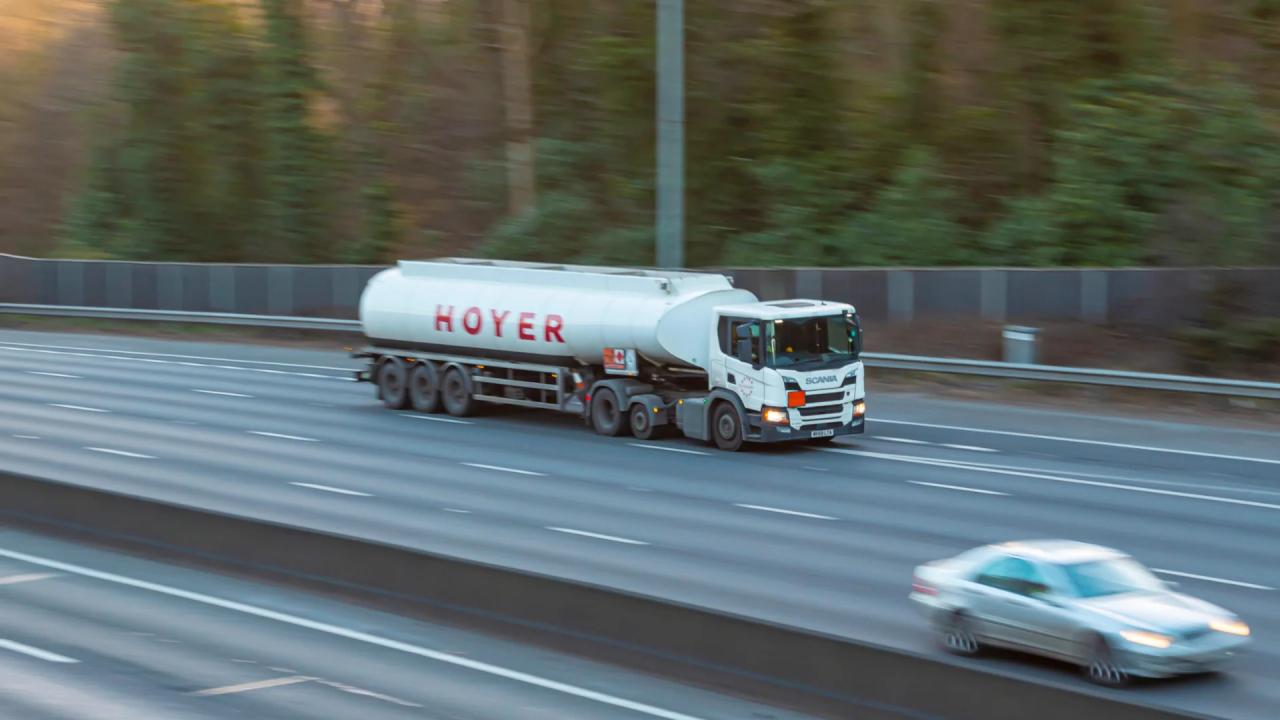
Road tanker delivery. The final stage is the road tanker, the articulated lorry that makes the last-mile delivery to individual forecourts. Each forecourt has underground storage tanks, typically holding large volumes of fuel depending on the site, which are filled through manholes in the forecourt surface. The tanker carries multiple products in separate compartments, so a single delivery can replenish both petrol and diesel. A busy supermarket forecourt may receive deliveries very frequently, while a small rural independent may take them much less often.
Simplified overview of the UK fuel distribution chain from refinery gate to forecourt. Not all sites receive fuel through all stages; pipeline coverage varies by location.
Stage | What happens | UK infrastructure notes |
|---|---|---|
Refinery / import terminal | Finished petrol stored ready for distribution | Four UK refineries plus major coastal import terminals |
Pipeline / rail / maritime transfer | Large-volume movement between refineries, import terminals, and major depots | Pipeline infrastructure in England and Wales is combined with rail and maritime shipping; there are no pipeline connections between Scotland and England |
Storage terminal / depot | Fuel stored in tank farms; ethanol blending and branded additive injection may be completed before tanker loading | Shared infrastructure serves multiple suppliers; for the same fuel grade, branded and unbranded product often loads from the same terminal network |
Road tanker / forecourt | Fuel loaded into compartmented tanker lorries and delivered into the station’s underground tanks | Final forecourt delivery is by road tanker; delivery frequency varies by site volume, turnover, and access |
What determines what a station pays for its fuel, and what it charges you
1. Competition (typically the largest factor). The strongest determinant of what a station charges is how many competing stations are within a few miles. Consider a typical example: a supermarket, a branded forecourt, and an independent on adjacent roads in a medium-sized town will typically price within a few pence of each other, because each operator can see the other’s board and knows drivers can switch easily. Prices in that cluster converge toward a local floor set by competitive pressure.
Now take that same branded forecourt and relocate it to a village where the next option is ten miles away. Its delivery costs might be identical, its wholesale contract might be the same, but without a nearby competitor the operator prices to what the local market will bear. The difference is not logistics. It is competition.
A motorway service station is the extreme version of this. Drivers on the motorway with a dropping fuel gauge have no practical alternative. The operator knows this, and prices accordingly. The CMA has flagged motorway pricing as an ongoing concern. For the full structural explanation of why nearby stations price differently, our article on the structural reasons why nearby stations price differently covers competition, captive demand, and margin behaviour in detail.
2. Delivery distance and route economics. A station closer to its supply depot generally pays a lower per-litre delivery cost because the tanker’s round trip is shorter. For an urban station relatively close to a major depot, the delivery cost per litre is modest. For a rural station much further from the nearest depot on slower roads, the same tanker costs proportionally more per litre to send. This is a real cost difference, but it is typically a smaller factor than competition. A well-connected station with no local rivals will still often charge more than a remote station in a competitive cluster.
3. Delivery volume and frequency. A high-volume supermarket forecourt can spread the fixed cost of each delivery across a large number of litres. A lower-volume independent spreads the same fixed lorry cost across fewer litres, producing a higher per-litre delivery cost. That is one structural reason low-volume sites often price above high-volume supermarkets, even before competition is considered.
4. Wholesale contract type and timing. Different operators can be on different wholesale supply arrangements and delivery cycles. Two stations receiving deliveries at different times in a moving market can therefore have genuinely different cost bases for the fuel sitting in their underground tanks at any given moment.
This is why two stations on the same road can legitimately charge different prices for days after a wholesale move: one may still be selling stock bought before the latest change, while the other has already taken delivery at the newer price.
Fuel duty and VAT still make up a large share of the total pump price, but they do not explain why one nearby station is 3p a litre dearer than another because those tax rates are national.
Directional comparison of how factors interact for different station types. This is a structural generalisation; individual stations vary.
Station type | Competition level | Delivery volume | Delivery frequency | Typical price vs local average |
|---|---|---|---|---|
Supermarket forecourt in competitive area | High | High | Frequent or near-daily | At or below local average |
Branded forecourt in competitive area | High | Medium-high | Frequent | Near local average |
Independent in competitive cluster | High | Medium | Frequent | Near or slightly above local average |
Rural independent with few alternatives | Low | Low | Less frequent | Above local average |
Motorway services | Very low (captive demand) | High | Frequent | Consistently well above local average |
Why branded and unbranded fuel share the same logistics
Major branded fuels (BP, Shell, Esso, and others) often move through the same shared pipeline and terminal infrastructure as unbranded fuels. For petrol of the same grade, there is usually not a separate branded physical supply chain from refinery to depot.
What often differentiates a branded fuel is the additive package introduced at the depot or during tanker loading. That does not mean every litre is identical in every respect: standard and super grades differ, and suppliers may use different additive packages. But for petrol of the same grade/specification, branded and unbranded fuel commonly share the same logistics network before final loading.
The infrastructure is shared; the final product can still be differentiated at the loading stage.
A driver who believes branded fuel travels through a separate, superior supply chain is mistaken in most cases. Whether the branded additive packages are worth the price premium is a separate question, covered in our companion articles on fuel grades and premium petrol.
Rural areas, low-volume stations, and why they cost more
Rural petrol stations face a genuine structural cost disadvantage relative to competitive urban supermarket forecourts. The reasons are cumulative, and understanding the scale helps explain why the price gap is persistent rather than arbitrary.
The depot serving a rural station may be much further away than the depot serving an urban forecourt. Each delivery round trip takes more fuel, more driver time, and spreads those costs across fewer litres sold. A rural station also tends to serve a smaller market than a busy supermarket forecourt, which means the fixed cost of each tanker visit is absorbed over a lower sales volume.
Then there is competition. A rural station with one nearby rival, or none, faces much less pressure to absorb that cost difference in its margin. An urban station in a cluster of five can see the competitor’s price board from the road and responds within hours. A rural station ten miles from the next forecourt does not face that pressure.
The result is structural and persistent: rural stations genuinely cost more to supply, and have less competitive pressure to keep margins tight. This is not unique to petrol. The same dynamic explains why rural shops, rural pubs, and rural services tend to charge more than their urban equivalents. It is the economics of serving a smaller, more dispersed market.
Delivery timing, cost bases, and why nearby stations can charge different prices at the same time
This is the question drivers ask most often: why is the station on one side of the road charging 3p more than the one on the other side? The answer is usually that they bought their fuel at different times.
Petrol sits in underground tanks after delivery. The price on the board reflects, in part, what that fuel cost the station when it was delivered. If station A took delivery on Monday at a wholesale price of, say, 95p per litre, and station B took delivery on Thursday after a wholesale rise to 98p per litre, station B’s costs are genuinely higher for the fuel currently in its tanks. Station A might hold its Monday price until its tank runs low and the next delivery arrives at the higher rate. During that window, the two stations can legitimately charge different prices for an identical product.
The same mechanism works in reverse. When wholesale prices fall, a station that took delivery at the higher price may hold its board price until it has sold through that more expensive stock. A competitor that refills sooner at the new lower price can cut its board price faster. This is why, after a wholesale fall, you sometimes see one station drop its price while the one next door holds for another day or two.
Supermarkets with high volume and frequent deliveries cycle through stock faster, which is one reason they tend to reflect wholesale moves more quickly. An independent receiving deliveries less often may still be selling fuel bought at last week’s price.
Comparison app data reflects what the station last reported to the Fuel Finder scheme. Since 2 February 2026, retailers must submit price updates within 30 minutes of any change. On 2 April 2026, the CMA said that from 1 May 2026 it would start prioritising action against non-compliance where formal action may be appropriate. Even so, there can still be a short lag between the board on the forecourt and the last reported price shown in an app.
A practical rule of thumb is to check the comparison tool before leaving, then verify the board when you arrive if the saving is small. If the gap is large, app data is usually reliable enough to justify the trip. If the gap is only a few pence per litre, the board confirms whether the saving still exists. You can see which stations near you are cheapest right now and make the comparison before you set off.
When prices are moving, comparison matters most
During periods of volatile wholesale markets (the kind driven by a major crude price move, a geopolitical disruption, or a sharp OPEC+ decision) the gap between the cheapest and most expensive local station tends to widen rather than narrow. This is because different operators respond to wholesale changes at different speeds.
A supermarket chain with centralised pricing and frequent deliveries may pass on a wholesale fall more quickly. An independent still selling fuel bought at the old price may hold its board price longer. A motorway service station may also respond differently if its competitive position is unchanged. That is why periods of wholesale volatility often widen the local spread between the cheapest and most expensive stations.
This is exactly when live price comparison is most valuable. When the market is calm and prices are stable, the cheapest station in your area is probably the same one it was last week. When the market is moving, yesterday’s cheapest might be today’s mid-range. Checking before you leave is the response that actually helps.
You can compare nearby forecourt prices before your next fill and act on the current picture rather than guessing from last week’s memory.
Keep reading
UK Petrol Price History: The 2020–2026 Price Shocks, Record Highs, and What They Mean for Drivers Today
UK petrol prices went through more in six years than in the previous two decades. The collapse of 2020, the record-breaking surge of 2022, and the slow retreat that followed left p...
What Happens When Oil Supply Is Disrupted, and Why Prices Spike Before Any Shortage Reaches You
When an oil supply disruption makes the news, crude prices often move within hours. UK pump prices usually follow within one to three weeks, not because the petrol on UK forecourts...
How Oil Is Transported Around the World, and Why a Distant Disruption Can Raise Your Fuel Costs
Most of the world’s crude oil travels by sea, through a small number of narrow straits and canals that handle enormous volumes of daily trade. When any of those chokepoints is thre...

PetrolSavings Editorial
Editorial Team
Explore fuel savings tools
Use calculators and local price searches to plan smarter journeys.
Prices and station info are refreshed continuously. Look for freshness timestamps when comparing fuel deals.