

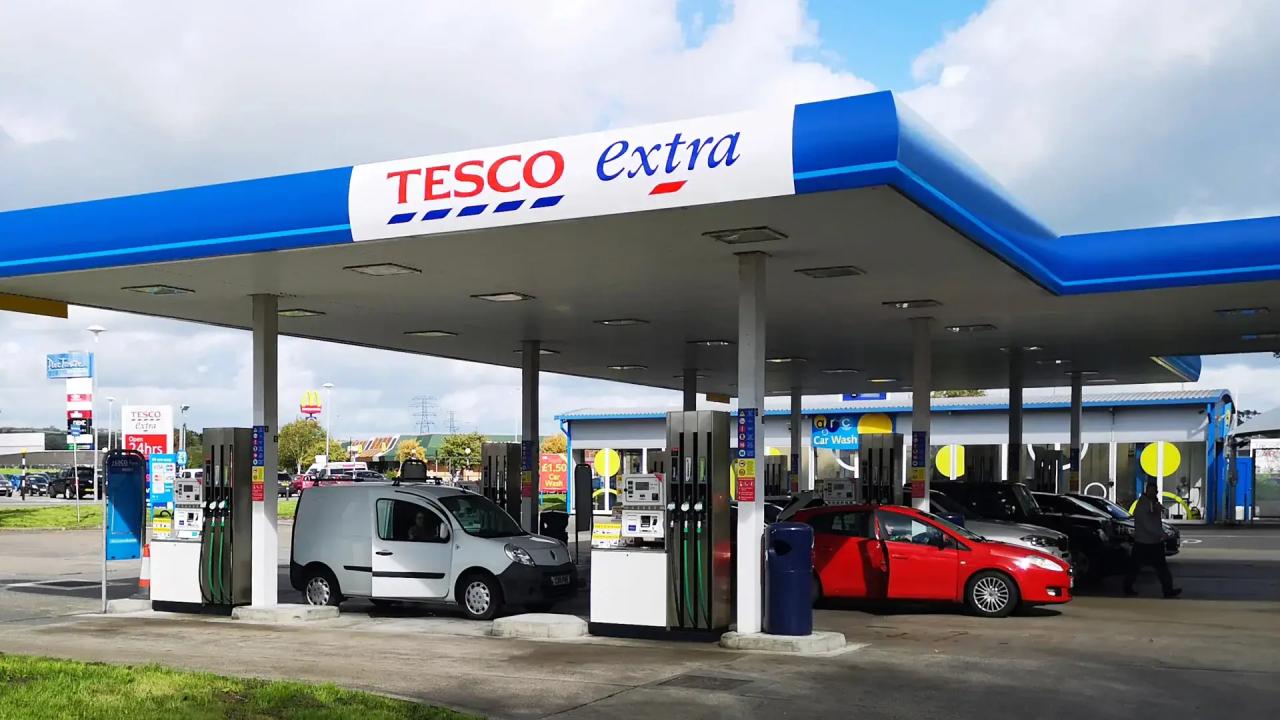
There is no reliably cheapest day to buy petrol in the UK. Some analyses have suggested limited midweek softening in parts of the market under stable conditions, but the effect is inconsistent across regions, disrupted whenever wholesale prices move sharply, and typically smaller than the price difference between nearby stations on the same day.
Key takeaways
- No consistent cheapest day applies across all UK stations, regions, and market conditions. Claims that a specific day is universally cheapest are not reliably sourced to current UK-wide data.
- Where analysts have observed intra-week variation, it has usually been modest and inconsistent. Any saving from timing a fill to a weekday pattern is often smaller than the gap between nearby competing stations.
- Weekly pricing tendencies dissolve when wholesale prices move sharply. Timing strategies built on stable-market observations do not transfer to volatile periods.
- The price gap between nearby stations is usually much larger than any day-of-week effect. Station choice is the bigger lever.
- The morning-versus-evening fuel density claim is not a useful tip for UK drivers. Any real-world difference at UK forecourts is too small and too inconsistent to base a saving strategy on.
Why the cheapest-day question is harder to answer than it looks
The claim that a specific weekday is cheapest has circulated in UK motoring journalism for years. Different sources cite different days (Tuesday, Monday, midweek generally), often without citing the analysis behind the claim, or citing one that is several years old and no longer current.
UK pump prices are not set on a national schedule. They are set by individual forecourt operators responding to their own wholesale supply costs, competitive pressure from nearby stations, their margin requirements, and (for supermarkets) a combination of corporate pricing policy and local competitive response. Because these variables differ by operator, region, and market conditions, any national aggregate is the average of thousands of different local pricing decisions. It is not a signal that applies to the station you use.
What intra-week price variation does exist, and where
What the evidence base looks like. Published UK evidence does not support a universal cheapest day. CMA work, RAC Fuel Watch commentary, and local analyses using Fuel Finder or retailer data sometimes suggest small intra-week movements at some station types in stable market conditions, but the published picture is patchy and not strong enough to support a national rule.
Why supermarkets may sometimes show more of a pattern than independents. Major supermarket fuel retailers can move prices in batches across a network when wholesale costs change. In a stable falling market, that can occasionally create a short-lived local midweek advantage at some sites. But it is not published by retailers as a rule, it is not consistent across all brands or regions, and it can disappear or reverse quickly.
When the tendency disappears. During periods of rapid wholesale price movement forecourts update prices reactively and any apparent weekly cycle can vanish. Since 2 February 2026, retailers reporting to the government's Fuel Finder scheme have had to submit price updates within 30 minutes of a price change, which makes live local comparison more useful than old weekday folklore. The GOV.UK weekly road fuel prices data, published on Tuesdays, can still help you see the broader wholesale direction if you want to track it yourself.
This table summarises the typical pricing behaviour of different UK station types. It is directional guidance, not a prediction of specific station behaviour. Local conditions vary.
Station type | Pricing behaviour | Day-of-week variation likelihood | Consistency |
|---|---|---|---|
Major supermarket | Corporate policy-driven, responds to wholesale moves across network | Small local patterns may appear after wholesale changes, but no reliable national weekday rule | Low; inconsistent across brands, regions and market conditions |
Branded forecourt (BP, Shell, Esso) | Brand pricing guidance plus local management discretion | Primarily driven by local competition and operator response | Low |
Independent forecourt | Owner discretion, local competition-driven | Highly dependent on owner decisions and local competition | Very low |
Motorway services | Premium pricing, captive demand | No meaningful weekday variation; consistently expensive | Not applicable |
Rural / isolated station | Lower competition, price at operator’s discretion | No consistent variation | Very low |
The variables that matter more than the day of the week
Station choice (the largest lever). The difference between nearby stations can easily be several pence per litre and, in some local markets, materially more. That saving is available every day of the week. A driver who fills at the cheapest nearby station on Friday usually saves more than a driver who fills at an average-priced station on a notionally better weekday. You can see which stations near you are cheapest right now and act on it today, without waiting for a specific day.
If you want to understand the structural reasons behind these local price gaps, our article on why prices vary so much between nearby stations explains the mechanics.
Wholesale price direction. If wholesale prices have been falling for several days, forecourt prices are likely to follow, though the CMA has documented asymmetric pricing behaviour, especially in diesel, where pump prices can rise faster than they fall. A driver tracking the GOV.UK weekly road fuel prices data who spots a downward trend may be able to time a fill for a period of lower prices. This requires more effort than most drivers will invest routinely, and it is not the same thing as a weekly pattern.
Local competition. In markets with multiple stations competing actively, prices tend to be lower overall and move together. The timing question matters less when competition has already pushed prices to a local floor.
Journey need versus timing. A driver with 30 miles of range left cannot wait for a cheaper day. Planning fills before the gauge drops to amber gives you flexibility to choose both the station and the timing, rather than filling at whatever is nearest when the light comes on.
How the savings compare
- Timing your fill to a specific weekday (where a pattern exists): usually a modest saving, and not reliably present in every local market.
- Choosing the cheapest station nearby instead of an average one: often the larger and more repeatable saving.
- Station choice is usually the stronger lever, and it works every day of the week.
When timing might help a little
If you already know the cheapest station in your area and have flexibility over when to fill, waiting a day or two during a clear downward wholesale trend may save a small amount. This is most plausible in a competitive local market where supermarket forecourts respond fairly quickly to falling wholesale prices.
But this is a secondary optimisation, not the main strategy. The main strategy remains: compare local prices and avoid filling at an expensive station just because it happens to be the notionally “right” day.
The morning-versus-evening question: why it is not a useful UK saving strategy
The idea that petrol is denser in cool morning air, and that filling up early therefore gets you marginally more fuel for the same price, is based on a real physical property: liquid density decreases as temperature increases. In parts of North America where fuel is dispensed from above-ground storage exposed to ambient temperature swings, the effect can be marginally real.
Many UK forecourts store fuel underground, which dampens short-term temperature swings, and UK equipment can also use standard-temperature accounting in some cases. In practical UK forecourt conditions, any morning-versus-evening density difference is too small and too inconsistent to be a useful consumer strategy.
How to test whether your local stations have a weekly price cycle
If you want to know whether your specific local stations follow an intra-week pricing cycle, the only reliable way is to observe it. National averages will not tell you what the Tesco two miles from your house does on a Wednesday. Checking the same stations on PetrolSavings over several weeks gives you a personal dataset far more relevant than any aggregate analysis.
How to check your local market: five steps
- Identify the two or three stations you would realistically use.
- Note their prices at the same time each day for three to four weeks (PetrolSavings makes this quick).
- Note the day of any wholesale price movement (GOV.UK weekly fuel prices, published Tuesday).
- After four weeks, check whether any station shows a consistent day-of-week advantage relative to its own week-by-week price level.
- If no pattern emerges: focus on station choice rather than timing. That is the honest conclusion for most local markets.
Keep reading
The Real Cost of Driving 10,000 Miles in the UK: Fuel Is Only Part of the Answer
At 10,000 miles a year, a realistic all-in running cost for a typical used petrol family car in the UK is about £4,800 to £5,200 once you include fuel, insurance, servicing, tyres,...
UK Petrol Price History: The 2020–2026 Price Shocks, Record Highs, and What They Mean for Drivers Today
UK petrol prices went through more in six years than in the previous two decades. The collapse of 2020, the record-breaking surge of 2022, and the slow retreat that followed left p...

What Happens When Oil Supply Is Disrupted, and Why Prices Spike Before Any Shortage Reaches You
When an oil supply disruption makes the news, crude prices often move within hours. UK pump prices usually follow within one to three weeks, not because the petrol on UK forecourts...

PetrolSavings Editorial
Editorial Team
Explore fuel savings tools
Use calculators and local price searches to plan smarter journeys.
We check for new prices every 5 minutes. Every price shows when it last changed, so check that before comparing deals.