

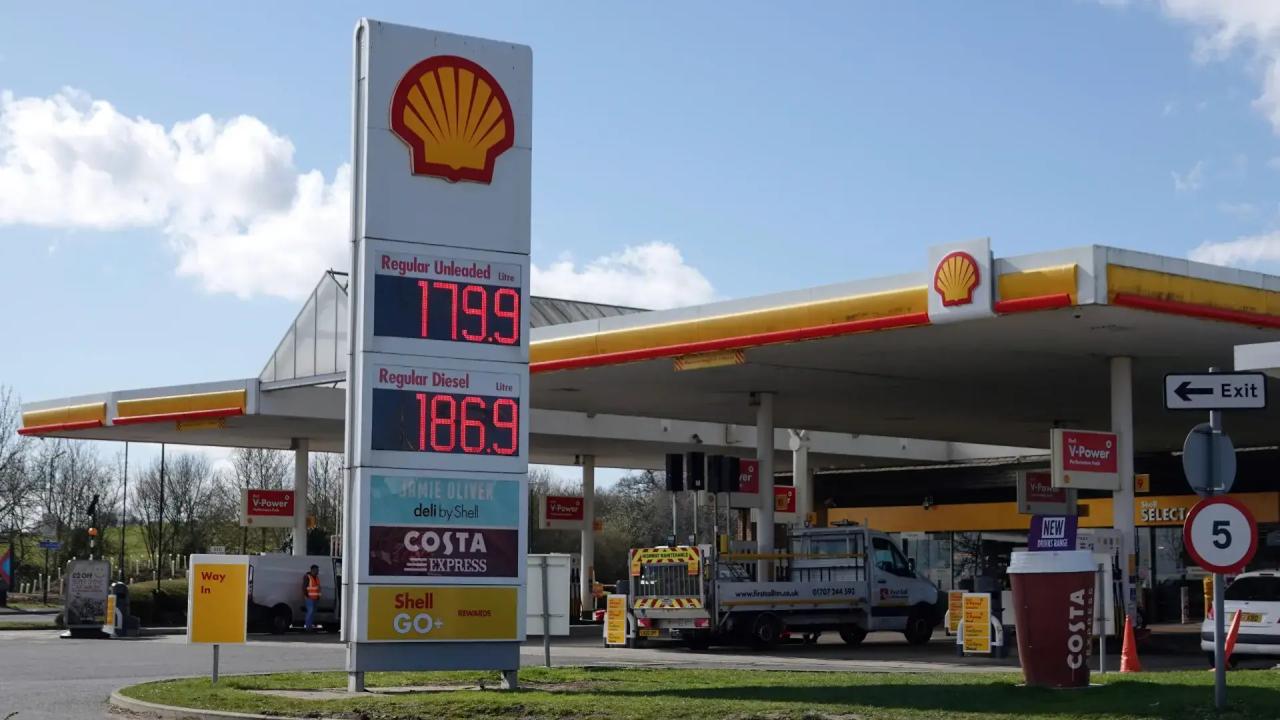
There is no set timetable for when UK petrol stations update their prices. Some can reprice quickly in active markets, while others may hold the same price longer. And the figure on a comparison app may not match the board you see on arrival, because Fuel Finder data is near-real-time rather than a guaranteed live match to the board at that exact moment. This article explains both layers: how often stations actually reprice, and how current the data is by the time it reaches your phone.
Key takeaways
- There is no universal repricing schedule. UK petrol stations can and do update prices at any time, some quickly in competitive markets, others less often.
- Comparison apps draw on Fuel Finder data, which is now reported within 30 minutes of a price change under the scheme rules, not a guaranteed live feed. A price shown on an app can still differ from the board you see on arrival.
- Different station types behave very differently. Supermarkets in competitive areas can update quickly; smaller independents may hold prices longer; motorway services maintain high prices by design, not by slow updating.
- When wholesale prices fall, not all stations pass it on simultaneously. A station that bought its current stock at a higher price may hold that price until the stock is sold through.
- The practical response: use a comparison app before you leave, not at the pump. Treat the app price as a near-real-time estimate and verify the board if a saving of only a few pence per litre is what you are relying on.
There is no universal timetable: what actually drives price changes
UK petrol stations are free to change their prices at any time. There is no legal requirement to hold a price for any minimum period, and no maximum repricing frequency. What triggers a price change at any given station is some combination of: a movement in wholesale fuel costs, competitive pressure from nearby stations, the station’s own stock position (fuel bought at a higher wholesale price before a fall may be held at that price until sold through), and the pricing policy of the brand or operator.
Repricing is event-driven, not scheduled. A sharp overnight fall in wholesale prices can prompt some stations to adjust quickly by morning. A gradual drift might see a supermarket react quickly while an independent waits longer. There is no safe assumption about when a particular station will move. The only reliable source is a current price check before you leave.
How different station types behave, and why
Major supermarket forecourts. Supermarket chains with large forecourt networks typically have centralised pricing operations that can push updates to sites quickly. In competitive local markets, they may react faster than smaller operators to wholesale or local competitive moves. Their scale and purchasing power can also help them cut sooner without waiting as long for existing stock to clear.
Independent forecourts. Independent operators set their own prices and may reprice less frequently, sometimes holding a price longer while nearby supermarkets have already moved. This is not always a disadvantage: an independent that bought fuel cheaply before a wholesale rise may hold a lower price longer than a competitor repricing to current costs. The variability runs in both directions.
Branded forecourts (BP, Shell, Esso). Branded sites operate under different arrangements: some directly operated by the fuel company, others tied dealers, others independent operators using the brand. Pricing behaviour varies accordingly. The brand name is not a reliable predictor of repricing frequency.
Motorway service stations. Motorway services maintain high prices relative to off-motorway alternatives. This is primarily a structural feature of captive demand, not a consequence of slow repricing. They may update as frequently as supermarkets; the updates simply land at a higher level because drivers on the motorway with a low tank have few alternatives. In its 2023 final report, the CMA found motorway service areas were around 20p per litre higher for petrol and 15p per litre higher for diesel on average in 2022.
Rural or isolated stations. With lower competitive pressure and less frequent deliveries, rural stations may hold prices longer. Prices at isolated sites are often higher than in competitive urban markets.
This table summarises typical repricing behaviour by station type. It is directional guidance, not a prediction of specific station behaviour. Local conditions vary.
Station type | Repricing frequency (typical) | What drives it | Price level relative to local market |
|---|---|---|---|
Major supermarket forecourt | Can update quickly in active markets | Centralised pricing policy, competitive response | Typically at or below local market average |
Independent forecourt | Varies widely; may hold prices longer | Owner discretion, stock position, local awareness | Variable; can be cheaper or more expensive |
Branded forecourt | Varies by operating model and local conditions | Brand pricing input plus site-level or operator discretion | Typically mid-market |
Motorway service station | Can update quickly, but to a structurally higher price | Captive demand pricing model | Consistently above local off-motorway prices |
Rural isolated station | Often slower-moving, though variable | Lower competitive pressure, less frequent deliveries | Variable; often higher than competitive urban markets |
What comparison apps actually show: the reporting lag explained
The UK Government’s Fuel Finder open data scheme now requires petrol stations across the UK to report price changes within 30 minutes. This data powers comparison tools, including PetrolSavings. In practice, that makes app prices near-real-time and far more current than old user-uploaded data, but it does not guarantee a perfect match with the board you see at the exact moment you arrive.
The lag. The data reflects the station’s last submitted update, and there can still be a short delay between a repricing event, the report reaching Fuel Finder, and the price showing in an app. If a station changes price and you arrive before the latest update has flowed through, the board may differ. That is not necessarily an error in the app; it can be a normal consequence of reporting and refresh timing. But a mismatch is not always just lag: it can also reflect inaccurate reporting or other data issues, and motorists can report discrepancies directly through Fuel Finder.
When the lag matters and when it does not. For most decisions, identifying the cheapest station in your area or checking whether a detour is worthwhile, the app data is good enough. The comparison is usually not between two stations 1p apart. It is between a competitive supermarket and a branded forecourt with a much wider price gap. At that scale, a short reporting lag does not usually change the conclusion.
Where it matters: if the decision hinges on a small price difference, say two stations the app shows as 2 to 3p apart, the app price alone is not reliable enough to make that call with confidence. Verify the board when you arrive.
You can check current prices at stations near you before you leave and act on the comparison while it is still fresh.
Why nearby stations charge different prices at the same time
When the wholesale price falls, stations that bought their current stock at the previous higher price face a choice: hold the current price until that stock is sold through, or cut immediately and absorb a reduced margin. Different operators make different choices.
A supermarket that replenishes frequently and has volume purchasing power can absorb a price cut faster. An independent that takes delivery once a week and manages tighter margins may hold the older price until the next delivery. Competition is staggered too: if station A cuts first, station B now faces pressure to follow, while station C on a different route may not respond at all.
The CMA has found evidence of this asymmetric pattern, especially in diesel. It is safer to treat this as a market pattern that can appear, rather than a universal rule applying equally to petrol in every period. For the full explanation of the mechanism, our article on why pump prices tend to follow rises faster than they follow falls covers it in detail.
What to do with this information
The two-step rule
STEP 1: Check a comparison tool before you leave home. This identifies the cheapest station in your area and the current price gap between local options.
STEP 2: Verify the board when you arrive. As a practical rule of thumb, if the gap between your chosen station and the alternative is large, the app data is usually reliable enough. If it is small, the board confirms whether the gap still exists.
That is the entire system. It takes less than a minute and works regardless of how frequently any particular station reprices.
Treat the app price as a current estimate, not a real-time guarantee. As a practical rule of thumb, if the gap between nearby stations is large, the app data is usually reliable enough to act on without further verification. If the gap is very small, verify the board or accept that the difference may have disappeared by the time you arrive.
Do not assume that the station you passed yesterday at a low price still has that price today. One repricing event between yesterday and now can change the relative ranking of local stations. The most reliable habit is a quick check before each significant fill, rather than mental notes from a previous visit.
Keep reading
UK Petrol Price History: The 2020–2026 Price Shocks, Record Highs, and What They Mean for Drivers Today
UK petrol prices went through more in six years than in the previous two decades. The collapse of 2020, the record-breaking surge of 2022, and the slow retreat that followed left p...
What Happens When Oil Supply Is Disrupted, and Why Prices Spike Before Any Shortage Reaches You
When an oil supply disruption makes the news, crude prices often move within hours. UK pump prices usually follow within one to three weeks, not because the petrol on UK forecourts...
How Oil Is Transported Around the World, and Why a Distant Disruption Can Raise Your Fuel Costs
Most of the world’s crude oil travels by sea, through a small number of narrow straits and canals that handle enormous volumes of daily trade. When any of those chokepoints is…
PetrolSavings Editorial
Editorial Team
Explore fuel savings tools
Use calculators and local price searches to plan smarter journeys.
We check for new prices every 5 minutes. Every price shows when it last changed, so check that before comparing deals.