

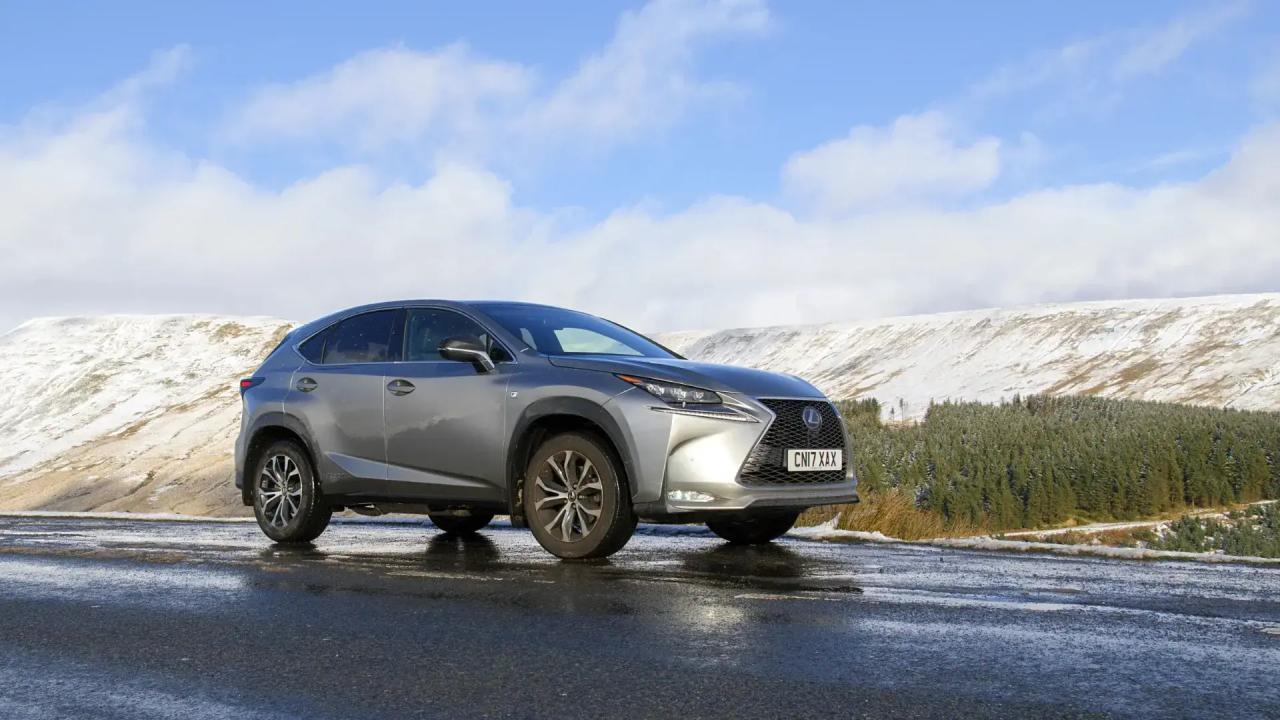
At 12,000 miles a year in mixed UK driving, a representative petrol mid-size SUV costs about £400 more to fuel annually than a comparable petrol family hatchback at current UK average petrol prices. The exact gap depends on mileage, driving pattern, and powertrain: it narrows on motorways, widens in town, and can narrow substantially if the SUV is a full hybrid. This article works through the numbers by scenario so you can find the figure that applies to your situation.
Key takeaways
- At typical UK mileage (10,000–15,000 miles per year), a mid-size petrol SUV costs meaningfully more to fuel annually than a comparable petrol hatchback. At higher mileage the gap compounds into a significant annual sum.
- Urban stop-start driving widens the gap. Motorway driving narrows it. A commuter in city traffic will see a larger difference than a motorway driver.
- A hybrid SUV or crossover can reduce the gap substantially in urban use. In some comparisons, a full hybrid compact SUV costs less to fuel in city driving than a conventional petrol hatchback.
- Mileage is the multiplier. The same pence-per-mile gap at 6,000 miles a year produces a modest annual total; at 18,000 miles it becomes a material cost difference.
- Over three or five years of ownership, even a modest annual fuel cost gap adds up to a figure worth knowing before buying.
The cost gap in plain numbers
The table below shows approximate annual fuel cost by mileage band for three vehicle types. All figures use UK MPG (imperial gallon, 4.546 litres).
The petrol price used is 158.01p/litre, the latest published GOV.UK weekly average for the week commencing 13 April 2026. The MPG assumptions are representative real-world figures based on What Car? reporting: around 49.7mpg for an efficient petrol family hatchback, around 40mpg for a petrol Nissan Qashqai as a representative mid-size SUV, and a conservative 60mpg for a Toyota Yaris Cross full hybrid compact SUV. Real-world results vary by model, tyres, transmission and driving conditions.
Annual mileage | Petrol hatchback (approx 50mpg) | Petrol mid-size SUV (approx 40mpg) | Hybrid compact SUV (approx 60mpg) | Annual gap: hatchback vs petrol SUV |
|---|---|---|---|---|
5,000 miles | £718 | £898 | £598 | £180 |
8,000 miles | £1,149 | £1,436 | £958 | £287 |
10,000 miles | £1,436 | £1,795 | £1,197 | £359 |
12,000 miles | £1,723 | £2,155 | £1,436 | £432 |
15,000 miles | £2,155 | £2,693 | £1,795 | £538 |
20,000 miles | £2,873 | £3,591 | £2,394 | £718 |
Fuel price used: 158.01p/litre. Figures correct as of 14 April 2026. Recalculate with current prices before making decisions.
Over three and five years at 12,000 miles per year
Three-year gap (hatchback vs petrol SUV): approximately £1,296. Five-year gap: approximately £2,160. These figures are fuel cost only, before any difference in servicing, tyres, insurance, or depreciation.
Why driving pattern changes the gap
Urban stop-start driving: where the gap widens most. In slow town traffic, weight is the dominant fuel economy variable. Every time a car accelerates from a standstill, it must overcome its own mass. An SUV that weighs 400–600kg more than a comparable hatchback is doing proportionally more work per low-speed acceleration event. The result: the gap in fuel economy between a small car and a petrol SUV is widest in urban conditions.
A full hybrid SUV partially counteracts this. The electric motor assists at low speeds and regenerative braking recovers energy in stop-start conditions, offsetting some of the weight penalty. In heavy urban traffic, a well-calibrated full hybrid compact SUV can approach the efficiency of a conventional petrol hatchback. A mild hybrid SUV does not offset the weight disadvantage as substantially.
Motorway driving: where the gap narrows. At sustained motorway speeds, aerodynamic drag becomes the dominant factor rather than weight. An SUV often has more frontal area and a less favourable aerodynamic profile than a lower hatchback, but the size of that penalty varies by model. The practical implication: a driver whose mileage is 80% or more motorway will usually see a smaller annual cost gap than the mixed-driving table suggests. A predominantly urban driver will usually see a larger one.
Illustrative figures for a petrol family hatchback vs a petrol mid-size SUV. Figures directional; specific models vary. All MPG and costs indicative.
Driving pattern | Hatchback approx MPG | SUV approx MPG | Gap (mpg) | Annual cost gap at 12,000 miles |
|---|---|---|---|---|
Predominantly urban (stop-start) | 39 | 30 | 9 | £663 |
Mixed (town and A-road) | 50 | 40 | 10 | £431 |
Predominantly motorway | 56 | 45 | 11 | £376 |
Why the gap exists: the mechanical factors, ranked
Weight (biggest factor in urban use). The fuel energy required to accelerate a vehicle from rest is proportional to its mass. Most mid-size SUVs weigh 300–600kg more than a comparable family hatchback. In stop-start urban traffic, this weight penalty is paid on every acceleration cycle.
Aerodynamic profile (biggest factor at higher speeds). An SUV’s taller, more upright body creates more frontal area and typically a less favourable drag coefficient than a lower-profile hatchback. At motorway speeds, aerodynamic drag is the dominant fuel-use factor. The combination of more frontal area and higher Cd produces a penalty that compounds with speed.
Tyre width and rolling resistance. Wider tyres, standard on most SUVs, have higher rolling resistance than narrower tyres at the same pressure. The effect is real but modest relative to weight and aerodynamics.
Drivetrain. All-wheel drive (AWD), available or standard on many SUVs, adds mechanical friction losses and weight compared to a front-wheel drive hatchback. In typical UK use where full four-wheel drive is rarely needed, this is a background cost rather than a primary one.
Trim, wheels, and spec. Larger alloy wheels, wider tyres, sport trims, and all-wheel drive variants can move real-world MPG within the same model family. “Same model” does not always mean “same fuel cost.” An automatic and a manual version of the same car may also differ.
Worked example: turning the MPG gap into an annual cost
Worked example using representative current inputs
A driver covers 13,000 miles a year in mixed conditions. Fuel price: 158.01p/litre.
Petrol hatchback at 50mpg: Fuel used: 13,000 ÷ 50 = 260.0 gallons = 260.0 × 4.546 = 1,182 litres. Annual cost: 1,182 × 158.01p ÷ 100 = £1,868.
Petrol mid-size SUV at 40mpg: Fuel used: 13,000 ÷ 40 = 325.0 gallons = 325.0 × 4.546 = 1,477 litres. Annual cost: 1,477 × 158.01p ÷ 100 = £2,334.
Annual gap: £2,334 - £1,868 = £466. Over three years: £1,398. Over five years: £2,330.
This is the calculation to run with your own figures: your mpg, your mileage, today’s fuel price.
Fuel price of 158.01p/litre and MPG figures of 50mpg and 40mpg used above are representative round-number assumptions only. Run the calculation with your actual figures for an accurate result.
You can calculate your own cost per mile with current prices to see exactly what the gap means for your situation.
Official WLTP fuel-consumption figures are most useful when comparing closely similar cars, not very different body styles, weights, or drivetrain layouts. That is another reason body style on its own is only a rough guide.
When is the gap smaller than you might expect?
Low mileage: At under 7,000 miles a year, the annual gap may be modest in absolute pounds even when the pence-per-mile gap is real. A driver covering 5,000 mostly local miles might find the annual fuel cost difference between a hatchback and a compact SUV is around £170 in mixed conditions. Real, but not large relative to other ownership costs.
Mainly motorway driving: The motorway gap is smaller than the urban gap, as discussed above.
Hybrid SUV or crossover: A well-chosen full hybrid compact SUV in predominantly urban use can approach or match the fuel economy of a conventional petrol hatchback. The purchase premium for the hybrid needs to be factored in, but the running cost gap narrows substantially.
Condition matters: A poorly maintained small car running on under-inflated tyres and overdue a service may not deliver the efficiency advantage the comparison assumes. The numbers above assume both vehicles are in reasonable condition.
A brief note on other running costs
Fuel is not the only cost that differs. Tyres on an SUV are typically larger and more expensive. Insurance premiums are often higher too. VED can also differ: petrol SUVs usually have higher CO2, which often means a higher first-year tax bill, and pricier models may trigger the expensive-car supplement. From the second tax payment onwards, however, most petrol and diesel cars registered on or after 1 April 2017 move to the standard annual rate, so VED is not usually a large ongoing annual gap on its own.
Keep reading
Petrol or Diesel for Low Mileage? It’s Not Just About Fuel Price
The usual advice is that diesel makes financial sense if you drive enough miles. What that advice often leaves out is the other half of the calculation: a diesel engine’s…
Premium Diesel: What You Actually Get for the Extra Pence per Litre
At most UK forecourts, premium diesel sits 5 to 12p per litre above the standard pump price. Over a 60-litre fill, that is £3 to £7 more every time.
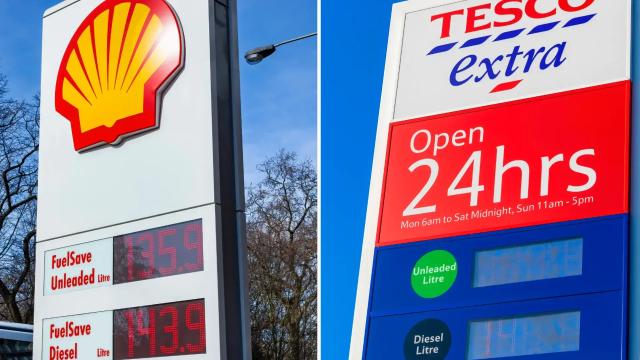
Supermarket Petrol vs Branded Stations: When the Price Gap Is Worth It and When It Isn’t
Supermarket forecourts are usually cheaper than branded stations. That part is straightforward.

PetrolSavings Editorial
Editorial Team
Explore fuel savings tools
Use calculators and local price searches to plan smarter journeys.
We check for new prices every 5 minutes. Every price shows when it last changed, so check that before comparing deals.